Choosing a 10-inch table saw involves balancing power, accuracy, and portability for American shops and job sites. This guide highlights five top 10-inch models that span compact portable units to heavier-duty setups with rolling stands. Each option offers a solid fence, clean bevels, and reliable cutting performance for wood, plywood, and composites. Whether you’re building shelving, trim, or cabinets, the right saw can streamline tasks and improve precision. The selections below pair concise product details with practical buying guidance to help you pick the best fit for your workspace.
| Product | Brand | Rip Capacity | Notable Feature |
|---|---|---|---|
| DEWALT DWE7491RS | DEWALT | 32-1/2″ | Rolling stand; Rack & Pinion fence |
| SKIL TS6307-00 | Skil | Not specified | Integrated folding stand; Parallel blade alignment |
| Evolution R10TS | EVOLUTION | 26″ | 15A motor; Dual rack & pinion fence |
| Bosch GTS15-10 | Bosch | 32-1/8″ | Gravity-Rise wheeled stand; Convenience brake |
| Prostormer 10-Inch Table Saw | Prostormer | Not specified | Dust port; Left/right storage; 45° bevel capable |
Below you’ll find concise profiles of each model, followed by a practical buying guide to help you compare these saws against the needs of your shop, budget, and typical projects. Each section sticks to objective specs and observed capabilities to support a well-informed choice.
DEWALT 10-Inch Table Saw With Rolling Stand

DEWALT’s DWE7491RS combines a 10-inch blade with a rolling stand for jobsite mobility. The rack-and-pinion telescoping fence system makes fence adjustments fast, smooth, and accurate, while a patented material support helps manage longer stock during cuts. This setup is designed to stay stable on typical jobsite floors, reducing the need for constant releveling on uneven surfaces.
With a substantial 32-1/2 inch rip capacity, the saw handles a variety of larger shelving, trim, and panel materials. The design emphasizes durability and consistent performance, offering a broad workspace for miters and crosscuts. It’s well-suited for woodworkers and contractors who require reliable cutting power in a portable, ready-to-move package.
SKIL 10-Inch Portable Table Saw With Folding Stand

The SKIL TS6307-00 emphasizes portability, featuring an integrated folding stand that folds quickly for transport and compact storage. The rack-and-pinion fence rails ensure the fence stays parallel to the blade for fast, smooth, accurate cuts, making it a practical choice for on-site work or tight-space workshops where mobility matters.
Its design also highlights parallel blade alignment, with micro-adjustment available to keep the blade in proper relation to the rip fence and miter slot. These alignment features help reduce miscuts on a range of materials, from plywood to hardwood sheets. This model is well-suited for DIYers and contractors who prioritize easy setup and transport without sacrificing accuracy.
Evolution R10TS 10-Inch Jobsite Table Saw

Evolution’s R10TS is built for demanding jobsite work, powered by a high-torque 15A motor with soft start to deliver steady power through hardwood, plywood, and composites. The saw ships with a premium 10-inch blade designed for clean, precise cuts, supporting a range of material types on tough jobs.
A standout feature is the large 26-inch rip capacity paired with a 3-3/8 inch max cut depth, enabling you to handle sheet materials and thicker stock more easily. The dual rack-and-pinion fence system provides micro-adjustable accuracy, while tool-free parallel blade alignment and a precise blade-height adjustment aim to deliver repeatable results across repeated cuts.
Bosch GTS15-10 Portable Jobsite Table Saw
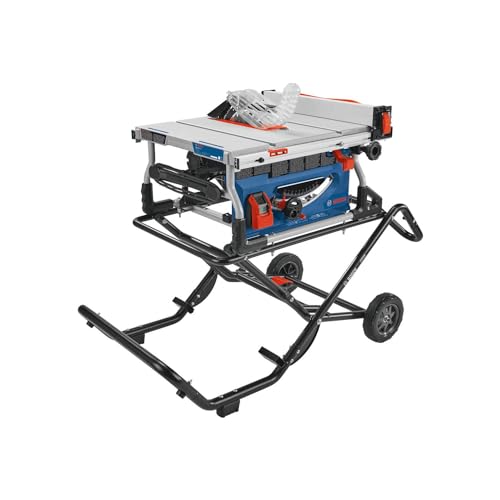
Bosch’s GTS15-10 is designed for jobsite versatility with a 15-Amp motor that delivers up to 3,800 RPM for both ripping and cross-cutting hardwoods and composites. The saw is paired with a gravity-rise wheeled stand that simplifies setup and transport across uneven terrain, making it an accessible option for mobile crews and backyard projects alike.
From a safety and productivity perspective, the model includes a convenient blade brake to help stop the blade quickly, and a ClampZone area to provide additional workspace for small parts or secondary tasks. While the exact rip capacity is listed at 32-1/8 inches in the product title, the overall design focuses on stability, quick adjustments, and practical on-site workflow enhancements.
Prostormer 10-Inch Table Saw With Stand

Prostormer’s 10-inch table saw with stand offers a robust no-load speed of 5000 RPM and a 15A motor, delivering strong performance for common woodworking tasks. A dedicated dust port supports cleaner operation when connected to a dust collector (note: the system does not include a collector itself), helping maintain a tidier workspace on job sites or in the shop. Storage compartments on the left and right sides provide convenient space for wrenches and push sticks.
The design emphasizes safety and stability, with a clear blade guard for better visibility and a push stick included to enhance operation security. The unit’s bevel capability goes up to 45 degrees, enabling precise bevel cuts for miters and angled joinery without requiring a separate jig or large footprint on the bench.
Buying Guide
Choosing the right 10-inch table saw involves evaluating how power, precision, portability, and dust management align with your typical projects. The following factors help compare options across the five models above and similar saws on the market. Use these considerations to balance budget with long-term value and workflow efficiency.
Power And Cutting Power
Motor amperage and rotational speed determine how well a saw handles tough cuts. For dense hardwoods or composite materials, look for a 15A motor or higher and a no-load speed in the 3,000–5,000 RPM range. Soft-start features can protect both the motor and the workpiece by reducing sudden power surges. If you frequently cut thick stock or sheet goods, prioritize models with higher torque and a robust blade designed for clean, repeatable cuts.
Fence System And Alignment
The fence system is central to accuracy. Rack-and-pinion fences provide quick, repeatable adjustments and help keep the fence parallel to the blade. A fence that remains true under heavy cuts reduces kickback risk and improves layout accuracy for crosscuts, dados, and fine joinery. Dual rack-and-pinion designs and micro-adjustments are especially valuable for long runs and cabinet-grade work.
Rip Capacity And Bevel Range
Rip capacity determines how large panels you can process without flipping material or ripping pieces in sections. Typical 10-inch jobsite saws offer 26–32 inches of rip capacity. Bevel range is also important for angled cuts; a 0–45 degree bevel is common, while some models offer positive stops at common angles for faster setup. Consider your most common cut types when evaluating these specs.
Portability, Setup, And Sturdiness
Jobsite use favors portable stands, quick setup, and stability on varied surfaces. Folding or rolling stands reduce transport hassle, while leg designs that telescope or brace against the work surface improve rigidity during operation. If you move between sites often, prioritize a wheeled stand and a compact footprint for storage in a truck bed or workshop corner.
Dust Collection And Workspace
A built-in dust port helps manage debris and maintain cleaner air in enclosed spaces. Compatibility with standard vacuums increases overall dust extraction efficiency. Adequate workspace around the blade and extension table surfaces reduces the risk of kickback and supports safer, more comfortable operations during long sessions.
Value, Warranty, And Support
Consider the warranty length, availability of replacement parts, and access to a service network. A model with a reliable manufacturer’s support policy tends to offer lower long-term ownership costs. For frequent projects, investing in a saw with durable cast-iron components, hardened blades, and a solid fence system often pays off in fewer re-cuts and higher yield.
Across these five models, the choice narrows to how much you value mobility versus raw cutting capacity, how often you work on large panels, and how much space you have to store a stand and bench. For jobsite efficiency, a portable saw with a rolling or folding stand and a reliable fence typically delivers the best balance of performance and practicality. For stationary shop setups, prioritize a larger rip capacity, rugged fences, and ease of maintenance, even if the unit takes a bit more space.