Choosing an air conditioning leak detector involves balancing sensitivity, gas coverage, power options, and portability. This guide highlights five top-rated models that perform well in residential and automotive HVAC work. From infrared sensors that quickly locate halogen refrigerant leaks to UV-dye kits that visibly mark leak sites, the selections below cover common service scenarios. Each product section provides practical details, while the Buying Guide helps you compare options and pick the right tool for your needs.
| Product | Brand | Key Feature |
|---|---|---|
| Elitech ILD-200 Infrared Leak Detector | Elitech | Infrared sensor; strong anti-interference; detects all halogenated gases |
| COSOOS Air Conditioner Leak Detector Tool | COSOOS | Ultra-compact; 21 high-intensity LEDs; UV protective glasses |
| SENSYX Rechargeable HVAC Leak Detector | SENSYX | Rechargeable; high-sensitivity Japan-made sensor; adjustable levels |
| Elitech Freon Leak Detector WJL-6000S | Elitech | All halogenated gases; 7 adjustable sensitivity; audible/visual indicators |
| REALHUNLEE UV Dye Leak Detector Kit | REALHUNLEE | 68-LED UV flashlight; protective glasses; bright, dye-based detection |
Elitech ILD-200 Infrared Leak Detector
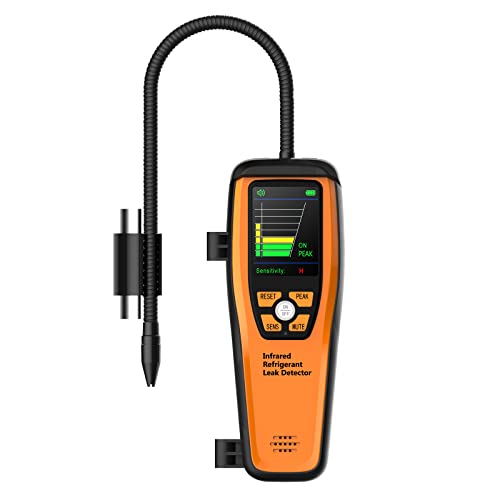
The ILD-200 leverages an infrared sensor to deliver rapid, reliable refrigerant leak detection with reduced interference compared to heated-diode models. Its infrared architecture offers faster response times and extended service life, making it well suited for frequent field use in automotive and residential cooling systems. The detector’s capability spans all halogenated refrigerants, including CFCs, HFCs, HCFCs, HCs, and HFOs, as well as blends such as R11, R22, R404A, R410A, R600a, and R1234yf. This broad gas compatibility helps technicians locate leaks across diverse systems without switching tools.
Sensitivity is adjustable across High, Medium, and Low, enabling operators to balance speed and accuracy in varying environments. The maximum sensitivity reaches about 0.14 oz/yr, making it effective for early leak detection in both engines and HVAC units. The ILD-200 is appropriate for automotive AC diagnostics, home or commercial HVAC service calls, and preventative maintenance where quick verification of leak presence matters. Its robust build and straightforward operation support technicians who need dependable performance in challenging work conditions.
COSOOS Air Conditioner Leak Detector Tool

The COSOOS kit is designed for automotive air conditioning leak detection with a professional-grade, high-intensity LED flashlight system. Its 21 bright LEDs help illuminate leak paths quickly, enabling precise pinpointing in seconds. The package includes UV protective glasses, enhancing visibility when using UV dye for trace leaks. The tool is compact and built from premium aluminum, measuring roughly 3.7 by 1.2 by 1.2 inches, making it easy to carry in a pocket or tool bag and ideal for on-the-road service calls. The included protective glasses and compact design address both safety and portability concerns for technicians who work in tight engine compartments or crowded equipment rooms.
In practice, this detector shines in situations where quick localization of leaks is critical and where UV dye is used as a supplementary tracer. The compact form factor does not compromise its detection capability, and the aluminum construction provides durability for daily field use. For users who want a straightforward tool with strong visual cues and dye compatibility, COSOOS offers a practical balance of performance and portability.
SENSYX Rechargeable HVAC Leak Detector

The SENSYX model emphasizes cordless convenience with a rechargeable lithium battery, complemented by a USB-C charging cable. This enables enhanced mobility for technicians working away from power outlets. A Japan-made heat dioxide semiconductor sensor underpins the detector’s high performance, delivering reliable leak detection with good sensitivity across halogenated refrigerants. The device offers adjustable sensitivity with High and Low settings, allowing users to tailor detection to the environment—lower sensitivity to reduce false alarms in cluttered spaces, or higher sensitivity when chasing faint traces of refrigerant. The combination of portability and dependable sensing makes SENSYX a strong option for service technicians who need a reliable, battery-powered tool.
Users should note the USB-C charging setup supports quick power-ups between calls, and the sensor’s sensitivity can be tuned to suit different refrigerant scenarios, from small automotive leaks to mid-sized residential AC systems. The SFD201’s compact footprint and cordless operation align with field service workflows where maneuverability and ease of use are priorities, especially in multi-unit dwellings or commercial setups requiring rapid diagnostics.
Elitech Freon Leak Detector WJL-6000S

The WJL-6000S from Elitech detects all halogenated refrigerants, including CFCs, HFCs, HCFCs, blends, and newer refrigerants. It features seven adjustable sensitivity levels, enabling precise tuning for different system sizes and leak severities. The detector’s maximum sensitivity reaches about 0.21 oz/yr, which supports self-testing and detection across automotive and home HVAC applications. Audible and visual gas leakage indicators help technicians quickly confirm leak presence, while dual battery indicators provide clear power status. This combination of broad gas coverage, adjustable sensitivity, and multi-sensory alerts makes the WJL-6000S a robust choice for professional use in busy shops or field service teams needing dependable performance across diverse refrigerants.
For technicians performing routine automotive AC work or servicing larger HVAC units, the WJL-6000S offers a balance of sensitivity, stability, and ease of use. The device is particularly effective when paired with standard leak checks around connections, condensers, and lines where halogenated refrigerants are prevalent. Its clear indicators help reduce diagnostic time, contributing to faster repairs and fewer callbacks.
REALHUNLEE UV Dye Leak Detector Kit

The REALHUNLEE UV Dye Leak Detector Kit centers on a high-visibility UV dye approach. It features a true UV leak-detection flashlight rated at 12.3 watts in the 385–395 nm range, with 68 top-quality LEDs for bright, uniform illumination. The kit includes protective glasses to shield eyes from UV exposure and maximize dye visibility under UV light, making leak stains easy to spot on various surfaces. The flashlight is notably brighter than many rivals, aiding detection even in partially lit environments. This tool is well-suited for automotive A/C systems and other refrigerant-based installations where UV dye tracing gives clear, visible evidence of leaks.
Users should consider that this kit relies on UV dye staining to reveal leaks, so dye compatibility with the refrigerant in use is important. The included glasses and robust flashlight design enhance safety and detection efficacy during inspections, repairs, and system diagnostics. For technicians who frequently work with dye-based tracers or perform post-repair verification, the REALHUNLEE kit provides a practical, portable option for clear leak localization.
Buying Guide
Choosing the right AC leak detector depends on how you work, the systems you service, and the environments you encounter. The following considerations cover key purchase factors and help you compare models across infrared and UV-dye approaches.
- Detector Type and Gas Coverage
- Infrared detectors (like ILD-200 and WJL-6000S) sense a broad range of halogenated refrigerants without relying on dye, making them versatile for automotive and residential systems where multiple refrigerants may be present.
- UV-dye kits (like REALHUNLEE) rely on dye tracers to visualize leaks. They are effective for pinpointing leak sites but require dye compatibility with the refrigerant and dye handling practices.
- Sensitivity and Range
- Look for adjustable sensitivity (High/Medium/Low) to balance prompt leak detection with accuracy in cluttered environments.
- Consider the maximum detectable rate (for example, 0.14 oz/yr or 0.21 oz/yr) as an indicator of how small leaks can be identified during inspection.
- Power, Portability, and Ergonomics
- Cordless designs and USB-C charging offer mobility for on-site work and service calls away from outlets.
- Compact form factors improve portability, especially for automotive use or tight equipment spaces.
- Indicators and Safety
- Audible and visual indicators speed up triage in noisy shop environments or dimly lit areas.
- UV-dye tools should include UV protection eyewear to reduce eye exposure and improve visibility of the trace.
- Kit Inclusions and Practicality
- UV-dye kits often ship with protective glasses and dye cartridges; infrared detectors focus more on sensor performance and may include batteries and cases.
- Assess whether the kit includes essential accessories (glasses, bags, calibration tools) that reduce extra purchases.
- Use Case Fit
- Automotive technicians may prefer compact, fast-response infrared detectors with broad gas coverage for quick checks on vehicles and under-hood areas.
- HVAC contractors working on multi-unit residential systems or larger commercial equipment might favor detectors with stronger indicators and higher sensitivity for larger leaks.
- DIY enthusiasts may benefit from simpler kits with clear dye visibility and UV protection for learning and basic maintenance checks.
- Maintenance and Longevity
- Infrared sensors can offer long service life with proper care; check whether a warranty or spare parts are available.
- Battery life and charging convenience matter for field service, especially when multiple units are tested per day.
In summary, for broad refrigerant coverage and quick field checks, infrared detectors like the Elitech ILD-200 or WJL-6000S are solid choices. If you primarily work with dye-traced systems or want a visible verification method, a UV-dye kit such as REALHUNLEE provides a straightforward approach. For portability and a balance of features, the COSOOS and SENSYX options offer compact forms and rechargeable power. Evaluate your typical job sites, refrigerants used, and the importance of quick visual confirmation when making your selection.
Bottom line: the best detector depends on your workflow—opt for infrared for quick, gas-wide detection; choose UV-dye kits when dye tracing fits your maintenance procedures—and pair your pick with the appropriate safety gear and accessories to maximize leak detection effectiveness.