The best acrylic pouring paint is designed to flow smoothly, mix easily with added mediums, and work across multiple surfaces. This guide highlights five top options that balance ready-to-pour convenience with vibrant, long-lasting color. Ideal buyers include beginners seeking all-in-one kits, hobby artists pursuing bold metallics, and crafters working on canvases, glass, wood, or ceramics. Below, you’ll find concise comparisons, what each product is best for, and practical buying tips.
| Product | Best For | Key Benefit | Limitations |
|---|---|---|---|
| ABEIER Metallic Acrylic Pouring Paint Set (18 colors) | All-around beginners to intermediate artists | Ready-to-pour with shimmering metallics | Metallics may require layering for opacity |
| Nicpro Titanium White 33.8oz + Silicone Oil | Large projects and cell effects | Extra large volume; includes silicone oil | Not traditional acrylic—pouring formula only |
| Nicpro 18 Colors 8.45oz Metallic Set | Users who want a broad metallic palette | 18 colors including gold and silver | Some colors limited on non-porous surfaces |
| Funto 36 Bottles Premium Set | Diverse techniques and beginners | Wide color range with silicone oil | Varied bottle sizes; shake before use |
| Acro Color 30 Colors 2oz Kit | Budget-conscious beginners | Large shade variety in smaller bottles | Smaller bottle size may need refills sooner |
ABEIER Metallic Pouring Paint Set

Features include 18 shimmering metallic colors that can create cellular effects. The paints are pre-mixed with pouring medium, ready to pour without extra additives. Suitable for canvas, glass, wood, ceramic, rocks, and more. The finish dries to a waterproof layer, and colors retain vibrancy after drying.
Best for: Artists who want a versatile metallic palette in ready-to-pour bottles for varied surfaces.
Why selected: Combines a broad metallic range with pre-mixed consistency, reducing prep time for quick projects.
Caution: Metallic pigments can be opaque; layering or layering with complementary shades may be needed for depth.
Nicpro Titanium White 33.8oz Pour Paint
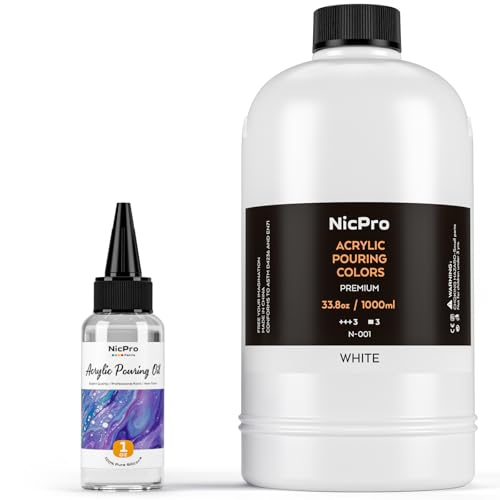
This large-volume white pour paint comes with 1 ounce silicone pour oil and gloves. It is formulated to flow easily without additional mediums. Notably thinner than traditional acrylics, it’s designed for creating cells and multi-layered pours with a single step. Drying typically takes a couple of days at room temperature.
Best for: Big canvases or projects where white is used as a primary or background color and cells are desired.
Why selected: The extra-large white supply supports extended sessions and multiple pieces from a single purchase.
Caution: This is a pour-specific formulation, not standard acrylic paint; adjust expectations if mixing with other mediums.
Nicpro 18 Colors 8.45oz Metallic Kit
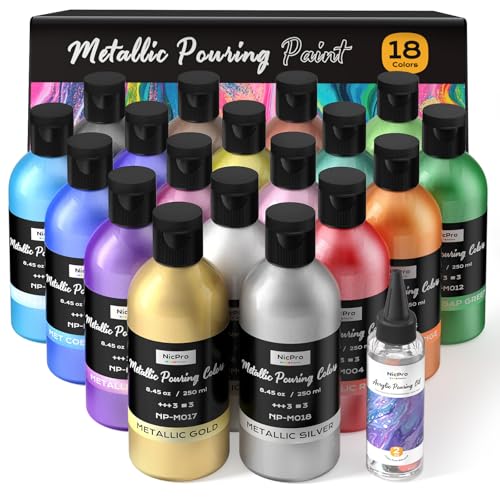
Includes 18 metallic colors, including white, gold, and silver, plus 15 additional hues. The kit is designed for ready-to-pour use on canvas, glass, wood, ceramic, fabrics, and more. Silicone oil is included to help create cells and texture. The paints are non-toxic and suitable for both professionals and beginners.
Best for: Artists who want a complete metallic set with a broad color range for rich, layered pours.
Why selected: The volume and color variety make it easier to plan multi-piece projects with cohesive palettes.
Caution: Metallics can streak on dark backgrounds; test palettes before large pours.
Funto Acrylic Pouring Paint Set
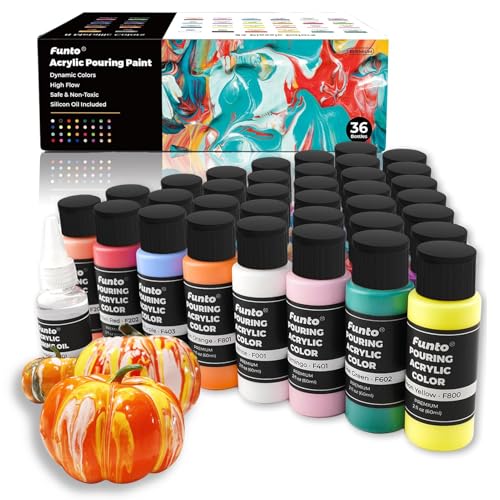
With 36 bottles, this set covers a wide color range, including neon, metallic, pastel, and classic shades. Pre-mixed with a ready-to-pour ratio, it includes one bottle of silicone oil for cell effects and a note to shake well before use. It supports a variety of pouring techniques such as Dirty Pour, Dutch Pour, and Tree Ring Pour.
Best for: Beginners exploring multiple techniques and color experiments in one purchase.
Why selected: The broad palette and technique versatility help new artists practice different pouring styles without buying separate supplies.
Caution: The larger kit requires organization to manage multiple color types and ensure even mixing.
Acro Color Acrylic Pour Paint Set

This set offers 30 colors across basic, neon, metallic, and pastel shades in 2-ounce bottles. Ready-to-pour formula means less prep time and straightforward use on canvas, paper, wood, and other surfaces. The non-toxic composition makes it a family-friendly option for at-home projects and classroom use.
Best for: Beginners seeking a cost-effective starter kit with a wide array of options.
Why selected: The small bottle size allows newcomers to test many colors before committing to larger purchases.
Caution: Smaller bottles may require frequent refills for large projects.
Buying Guide: Key Considerations When Choosing Acrylic Pour Paint
What surfaces will you be painting?
Most pouring paints work well on canvas, wood, glass, and ceramic. If you plan to work on non-traditional surfaces like tile or stone, choose a formula that explicitly lists those materials in its versatile surface coverage.
Do you want ready-to-pour ease or broader control?
Ready-to-pour kits save time and reduce mess, while non-ready options offer more control over consistency and drying times. Consider your experience level and preferred techniques when deciding.
Are metallics or neons part of your palette?
Metallic and neon shades add depth and drama but can present more streaking on dark backgrounds. Testing swatches helps you see how they layer with other colors.
How important is volume?
For large projects or multiple artworks, larger bottles save time and reduce replenishment needs. Beginners may start with smaller sets to explore color options first.
Is silicone oil included or required?
Silicone oil is commonly used to create cells and texture in pours. Some sets include it; others expect you to purchase separately. Verify whether you need to buy oil to achieve the effect you want.
Safety and non-toxicity
All listed products claim non-toxic formulations suitable for adults and kids in many cases. Always follow manufacturer guidelines, especially when children are involved.
Storage and durability
Pouring paints typically dry to water-resistant finishes. Store bottles upright in a cool, dry place to maintain consistency and prevent separation of pigments.
FAQ
- What makes acrylic pour paints different from regular acrylic paints? Pour paints are pre-mixed with a pouring medium to flow smoothly and create cells, while regular acrylics require separate mediums for pouring techniques.
- Do I need to seal poured artwork? Sealing is common to protect the finish and enhance color longevity, especially for works exposed to moisture or sunlight.
- Can I mix different brands of pour paints? Yes, but results can vary. Start with small test pours to ensure compatible flow and drying behavior.
- How do I prevent cracking in poured surfaces? Use proper pouring ratios, avoid overly thick pours, and allow sufficient drying time between layers when layering works.
- What surface is best for learning acrylic pours? Canvas boards are forgiving and cost-effective for practicing new techniques before moving to canvas or wood.
- Are these paints safe for children? Most sets are labeled non-toxic, but supervision is advised for younger artists and always follow the product’s safety guidelines.