For builders, DIYers, and designers seeking a deep black finish on concrete, choosing the right dye or pigment is essential for lasting, uniform color. This guide highlights five reliable options that work well for cement, grout, mortar, plaster, and decorative concrete projects. The list covers liquid colorants and dry iron oxide pigments, each with distinct strengths. Whether you’re staining a patio, countertop, or decorative piece, there’s a black dye suited to your material and environment.
| Product | Best For | Type | Notes |
|---|---|---|---|
| Quikrete Charcoal Liquid Cement Color | Projects needing easy-to-use liquid color with durable results | Liquid dye | USA-made; durable; simple application |
| Matte Black Iron Oxide Powder – Rock N Soil | Coloring cement, grout, mortar, and decorative cement surfaces | Dry pigment powder | Easily dispersible; UV and corrosion resistant |
| GOODTAKE Concrete Pigment, Black Iron Oxide (4 oz) | Precise color matching in small batches | Dry pigment powder | High iron oxide content; suitable for multiple cement-based materials |
| 8 oz Black Iron Oxide Powder – AOSWTLIF | Medium-sized projects needing strong, fade-resistant black | Dry pigment powder | High iron oxide content; alkali and UV resistant |
| MARBLERS Premium Water-Based Liquid Pigment [Jet Black] | Liquid pigment for flexible color control in concrete and plaster | Liquid pigment | Ultra-concentrated; suitable for plaster, cement, and Jesmonite-like systems |
Quikrete Charcoal 10 Oz. Liquid Cement Color

Best for: DIYers who want a straightforward liquid concentrate that blends evenly into cement mixes. This product is marketed as durable and easy to use, and it is manufactured in the USA, appealing to buyers prioritizing local production and reliable performance. Consider this option if you prefer a simple mix-in liquid dye over powders.
Why selected: Liquid colorants can integrate quickly into wet concrete, reducing streaks and providing consistent tone across large slabs. This Quikrete option emphasizes durability and ease of use, making it a solid baseline for black shade achievement in concrete projects.
Caution: Liquid dyes can darken unevenly if not fully mixed; ensure thorough stirring and proper slump control to avoid color blotching.
Matte Black Iron Oxide Powder – Rock N Soil

Best for: Builders seeking a versatile dry pigment that can color cement, grout, mortar, stucco, and more while offering good dispersion and long-lasting color. This pigment is suitable for both decorative and structural elements where a deep black hue is desired.
Why selected: The product is formulated to tint a wide range of cement-based materials, and it claims durability with alkali resistance and UV protection. It is a practical, all-purpose black pigment for multiple surfaces, making it a fit for mixed-material projects.
Caution: Particle size is designed for even dispersal; improper dry-mixing can lead to clumps in large batches. Pre-mix with a portion of the dry mix to improve uniformity.
GOODTAKE Concrete Pigment, Black Iron Oxide (4 oz)

Best for: Small to medium projects where precise color control is important and color matching across batches matters. This pigment’s high iron oxide content supports strong, fade-resistant black color in cementitious materials.
Why selected: The pigment is described as pure natural iron oxide with high hiding power and a defined mix ratio, which helps achieve consistent color across batches. It also notes compatibility with multiple cement-based products, aiding versatility.
Caution: The recommended color mix ratio is 3–10%; follow guidelines closely to avoid overly dark or under-dyed results. Start with smaller test pours to verify results before large pours.
8 oz Black Iron Oxide Powder – AOSWTLIF

Best for: Medium-to-large projects requiring strong black color with good fade resistance, especially where UV exposure is a concern. Suitable for cement-based materials including grout and mortar.
Why selected: This pigment highlights high iron oxide content and alkali resistance, which helps maintain color stability in outdoor or bright-lit interiors. It disperses well in dry mixes, aiding consistent color delivery.
Caution: Like other dry pigments, thorough mixing is essential. Avoid added moisture during blending to prevent clumping.
MARBLERS Premium Water-Based Liquid Pigment [Jet Black]
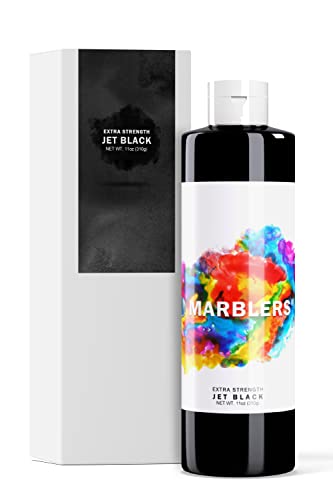
Best for: Projects where a concentrated liquid colorant is preferred for clean mixing and adjustable color depth. Ideal for plaster, cement, grout, and decorative coatings that benefit from a smooth liquid formula.
Why selected: Ultra-concentrated liquids offer strong pigmentation with small dosing amounts, enabling flexible color control. The product supports even dispersion and can be used in conjunction with various water-based systems.
Caution: Liquid pigments can settle; stir well before and during use to maintain consistent color. Verify compatibility with the concrete mix to avoid separation or staining.
Buying Guide: Key Considerations For Black Concrete Dyes And Pigments
What type of dye should I choose?
- Liquid dyes: Easy to mix, fast color development, ideal for large slabs or projects needing quick setup. Best for uniform color when you can achieve thorough mixing.
- Dry iron oxide pigments: Highly durable, color-stable, and versatile across multiple cement-based materials. Great for consistent color across textured or irregular surfaces.
What color depth do I need?
- Liquid colors often allow easier light-to-dark control by adjusting the amount added. Start with small amounts and test on a sample area.
- Powders require precise mixing ratios (often 3–10% of pigment by weight) to achieve the desired shade. Always conduct tests before full pours.
Where will the project be used?
- Outdoor or sunlit areas benefit from UV-resistant pigments to prevent fading. Look for products claiming UV protection and alkali resistance.
- Indoor decorative surfaces may prioritize ease of mixing and color uniformity over extreme outdoor durability.
Compatibility and safety
- Check that the pigment is suitable for your substrate (concrete, grout, mortar, plaster, etc.).
- Confirm non-toxicity and clean-up requirements if applying in occupied spaces or near food-safe surfaces.
Application tips
- Always mix pigments with a portion of the dry blend or water-based binder before adding to the full batch to prevent color streaks.
- Test color in a small sample or test panel to gauge final appearance, as color can vary with mix ratios and concrete porosity.
Frequently Asked Questions
- What is the easiest black dye for concrete to use?
– Liquid dyes, like Quikrete Charcoal Liquid Cement Color, offer simple mixing and quick color development for straightforward projects. - Will black pigments fade over time?
– Many iron oxide pigments are designed to be fade-resistant and UV-stable, but outdoor installations may still show gradual changes with exposure; choose UV-resistant products for outdoor use. - Can I mix black pigment with other colors?
– Yes. Pigments can be blended to achieve custom shades, but perform small-scale tests to avoid unexpected results. - How much pigment should I add?
– For powders, follow the stated mixing ratios (often 3–10%). For liquids, start with small drops and increase as needed while testing. - Are black pigments safe for indoor use?
– Most pigments are non-toxic in bulk form; always follow product safety data sheets and ensure proper ventilation during application and curing. - Do I need a sealer after staining concrete black?
– Sealing is recommended to protect color and provide stain resistance, especially for indoor floors and high-traffic areas.