Selecting the right blade for a table saw is essential for achieving clean, accurate cuts and maximizing blade life. This guide highlights five high-performance blades that balance finish quality, durability, and versatility. Whether you mostly face hardwoods, plywood, or laminated panels, the right blade can dramatically improve your results with less effort and waste. Below you’ll find a quick comparison table and in-depth product sections to help you choose the best blade for your table saw workflow.
| Product | Brand | Teeth | Arbor | Best For |
|---|---|---|---|---|
| WEN 60-Tooth Fine Finish Table Saw Blade | WEN | 60 | 5/8 inch | Fine finish on soft/hardwoods |
| WEN 80-Tooth Ultra-Fine Finish Blade | WEN | 80 | 5/8 inch | Ultra-fine finish on precision work |
| DEWALT 40-Tooth Fine Finish Blade | DEWALT | 40 | 5/8 inch | Balanced finish and life |
| DEWALT 80-Tooth Fine Finish Blade | DEWALT | 80 | 5/8 inch | Low vibration, high finish quality |
| OA-BRES 80-Tooth ATB Fine Finish Blade | OA-BRES | 80 | 5/8 inch | ATB geometry for smooth finishes |
When choosing a blade, consider the material you cut most often, the finish you require, and your table saw’s capabilities. The blades below represent a mix of finish-oriented and all-purpose options that perform well in typical American workshop scenarios. Each blade is compatible with standard 5/8-inch arbors and supports common table saw RPM ranges, helping you achieve reliable results across projects.
WEN 60-Tooth Fine-Finish Blade For Table Saws
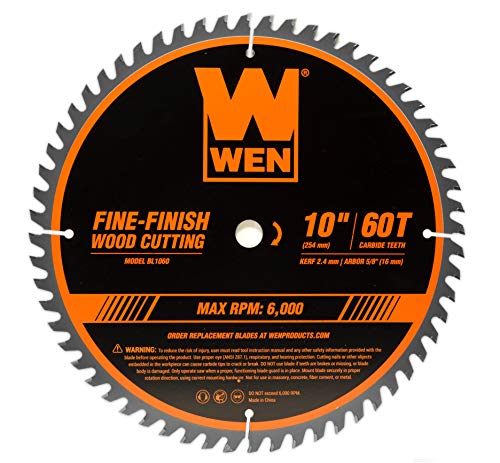
The WEN BL1060 blade features a 10-inch diameter and a 5/8-inch arbor, handling speeds up to 6000 RPM. Its 60 teeth strike a balance between removal rate and finish quality, making it suitable for both softwoods and hardwoods. The ultra-thin kerf, approximately 0.1 inches (2.4 mm), reduces waste and delivers cleaner cuts with less drag through the workpiece. This blade shines on fine furniture components, cabinetry components, and finish-pass work where a smooth surface is essential. It integrates well with standard miter and table saw setups common in American workshops.
With its carbide formulation and precise tooth geometry, the blade minimizes tear-out on tricky grain patterns while maintaining rigidity during heavy cuts. Users report consistent results across a variety of softwood and hardwood species, particularly when finishing panels or trim pieces. Regular cleaning and proper feed rate help maximize the blade’s lifespan and cut quality. This blade is a reliable, versatile choice for general-purpose precision cutting on table saws.
WEN 80-Tooth Ultra-Fine Finish Blade

The WEN BL1080 is designed for ultra-fine finishes on a variety of woods, with an 80-tooth configuration that yields exceptionally smooth results on cross-cuts and finish passes. The blade uses a 10-inch diameter and a 5/8-inch arbor, compatible with most standard table saws and miter saws. With a 6000 RPM rating, it maintains stable performance under typical workshop workloads. The ultra-thin kerf preserves material, reduces power requirements, and limits deflection for precise cuts through delicate lumber and plywood.
For projects that require a high-quality surface on face-grain work, cabinet doors, drawer fronts, or shelving components, this blade delivers a refined edge with minimal sanding. The carbide-tipped teeth stay sharp longer under routine use, and consistent tooth geometry supports repeatable results across multiple pieces. This blade is particularly advantageous when finish quality is prioritized over aggressive material removal.
DEWALT 40-Tooth Fine Finish Table Saw Blade

DEWALT’s 40-tooth blade offers a balance between aggressive cutting and finish quality, with an emphasis on long blade life. The blade is designed forFine finish with carbide tips that stay sharp, supporting clean cuts with reduced chipping and tear-out. It is optimized for improved accuracy and reliable performance, especially when working with hardwoods, plywood, and laminates on table saws. The blade geometry aims to minimize wobble and vibration, contributing to steadier cuts and less post-processing work. Its durability makes it suitable for frequent use in shop environments that stress tool life.
While the tooth count is lower than some finish blades, this blade remains versatile for tasks that require a faster feed and a good surface finish. It’s well-suited for cabinet work where consistent edge quality is vital. Regular maintenance and correct mounting help preserve the blade’s true run, ensuring consistent results across jobs without frequent blade changes.
DEWALT 80-Tooth Fine Finish Blade

The DEWALT DWA11080 blade combines an 80-tooth configuration with a finely tuned geometry for high-precision finish work. The blade is marketed for longer life, thanks to optimized tooth design that supports better chip removal and heat management during cuts. A patented body slot design helps minimize vibration, promoting smoother operation and more accurate results on finish passes. This blade excels in cabinetmaking, furniture components, and other precision woodworking where a premium surface is required after cutting and minimal subsequent sanding is necessary.
Carbide-tipped teeth and a robust carbide matrix contribute to edge stability and longevity in a busy shop. To maximize performance, ensure the blade is mounted correctly and rotated in the proper direction, with a clean arbor and no runout. Pair with sharp cuts and good feed technique to achieve consistent, high-quality finishes across workpieces.
OA-BRES 80-Tooth ATB Fine Finish Blade

The OA-BRES blade uses an ATB (Alternating Top Bevel) tooth arrangement to reduce tear-out while delivering a polished finish. Featuring an 80-tooth configuration and a 5/8-inch arbor, it’s designed for fine finish work on table saws and miter saws. The blade body is built from durable alloy steel with hardened carbide teeth, providing reliable performance under routine woodworking tasks. The chrome-plated, polished surface helps minimize friction and heat buildup for smoother cuts through plywood, laminates, and solid wood. This blade is a solid choice for finish carpentry and cabinetry projects that demand clean edges.
Users appreciate the combination of sharp carbide teeth and a meticulously finished surface, which reduces sanding time and enhances edge quality. Like all precision blades, it benefits from proper alignment, clean blades, and controlled cutting speeds. This blade is especially effective for high-appearance face cuts and producing ready-to-finish stock for painting or veneering.
Buying Guide
Tooth Count And Finish Quality
Tooth count directly influences finish and cut speed. Fewer teeth (around 40) cut faster but leave a rougher edge, while higher tooth counts (60–80) yield smoother surfaces suitable for finer finishes. ATB geometry, common on finish-focused blades, helps reduce tear-out by staggering cutting angles. For cabinetmaking and furniture parts, prefer 60–80 teeth with carbide tips and stable heat performance. If you need quick rough cuts, a blade with fewer teeth may be more efficient, but you’ll likely sand more afterward.
Kerf, Thickness, And Cut Quality
Kerf width affects material waste and cutting resistance. Thinner kerfs reduce waste and require less power, which is beneficial on low-powered saws or when cutting expensive lumber. However, very thin blades can be more sensitive to deflection in dense woods. A typical kerf in consumer blades ranges from 0.098 to 0.1 inches. For smooth finishes, ensure the kerf promotes clean edge quality and minimal vibration. Regularly check perpendicular alignment to maintain straight cuts and reduce the need for rework.
Arbor Size And RPM Compatibility
Most American table saws use a 5/8-inch arbor, which matches the blades listed here. Always confirm arbor compatibility before purchasing. RPM ratings indicate the maximum safe operating speed; ensure your saw’s RPM falls within the blade’s capability to prevent scorching or dulling. A blade rated around 6000 RPM is common for residential saws and provides a balance of speed and finish quality. For high-speed saws or heavy ripping, verify the blade’s compatibility and consider overbuilt options for extended blade life.
Blade Material And Fit
Carbide-tipped blades offer extended life and consistent performance compared to high-carbon steel blades. Carbide teeth stay sharp longer and resist dulling when cutting denser woods, plywood, laminates, and composites. A robust blade body and reinforced teeth help resist chipping and bending during feeds. When selecting a blade, look for reputable brands with proven carbide formulations and precision manufacturing. A well-made blade reduces the need for frequent sharpening and yields uniform cuts across pieces.
Application And Materials
Different blades excel with different tasks. Finishing blades with high tooth counts are ideal for cross-cutting and face cuts on plywood and MDF, while lower-tooth blades are more suited for aggressive ripping. For cabinet work, a fine-finish blade reduces sanding time and yields ready-to-assemble edges. Laminates require blades designed to minimize chipping, often with ATB geometry. Consider the typical material mix in your shop and pick blades designed for those use cases to maximize efficiency and quality.
Maintenance, Safety, And Longevity
Regular cleaning, proper mounting, and correct alignment extend blade life and cutting quality. Keep blades free of pitch and resin buildup, which can cause heat and vibration. Use the correct feed rate and avoid forcing the blade through the cut. Store blades in their protective cases to prevent edge damage. Safety features such as riving knives and blade guards should remain engaged when appropriate to reduce kickback and protect operators. Routine checks help ensure blades perform consistently and safely over time.