For hobbyists, DIY enthusiasts, or pro remodelers working in tight spaces, a compact miter saw can be a game changer. The right model combines portability with accurate cutting, reliable power, and smart features that reduce setup time. This guide highlights five top-performing compact miter saws, comparing their power, portability, and precision to help you choose the best fit for small workshops or job sites. We’ll cover cordless and corded options, bevel and miter capabilities, and practical tips for selecting the right blade and dust control system.
| Product | Key Benefit | Representative Feature |
|---|---|---|
| Metabo HPT 10-Inch Compound Miter Saw | Strong power with portable design | 15-Amp motor, 5,000 RPM, 24.2 lb weight, 0-45° single bevel |
| Bosch CM10GD Compact Miter Saw | Wide cross-cut capacity with precise alignment | Axial-Glide system, upfront bevel controls, square lock fences |
| SKIL 10 Amp Compact Miter Saw | Small footprint with modern visibility aids | LED Shadow Line, compact rail system, 7-1/4″ blade |
| DEWALT 20V MAX 7-1/4″ Miter Saw | Cordless convenience with accurate cut line | Tool-only, cut line positioning system, 11 positive stops |
| RYOBI 18V ONE+ 7-1/4″ Miter Saw | Long battery life for extended use | Up to 900 cuts per charge with ONE+ battery (battery not included) |
Metabo HPT 10-Inch Compound Miter Saw
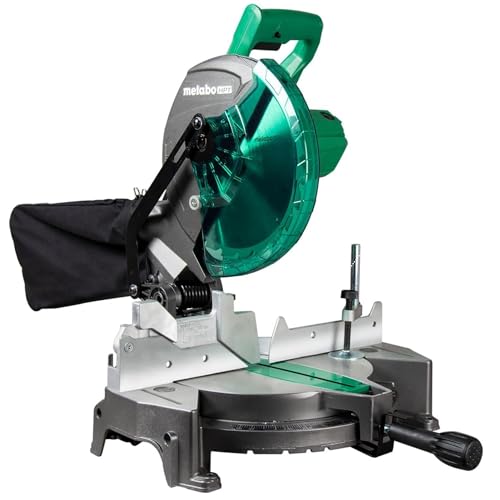
The Metabo HPT C10FCGS pairs a robust 15-Amp motor with a high no-load speed of up to 5,000 RPM, delivering consistent, clean cuts through hardwoods and composites. Its 10-inch blade on a sturdy, compact table provides solid material support while remaining light enough to haul between job sites. The saw features a single bevel from 0 to 45 degrees and thumb-actuated positive stops for quick miter settings, which helps maintain accuracy even with repetitive cuts. At just 24.2 pounds, it balances power and portability for contractors who move between sites frequently.
Designed for practicality, this model prioritizes safety and steadiness. The included positive stops, a reliable clamping system, and a large table make cross cuts and miters easier to control under typical shop or job-site conditions. Its compact form doesn’t sacrifice performance, making it a strong option for woodworkers who need a true, portable cutting solution without stepping up to a larger, heavier saw.
Bosch CM10GD Compact Miter Saw
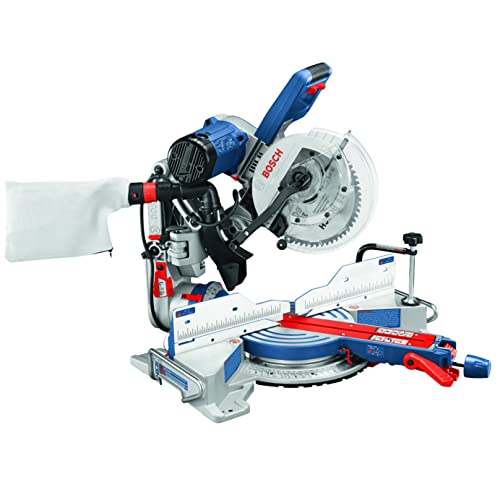
The Bosch CM10GD uses an Axial-Glide system that enables wider cross cuts and more precise alignment in a compact footprint. This design reduces the space required for operation while maintaining strong cutting capacity. Upfront bevel controls and Square Lock fences simplify alignment, and the included dust collection chute with a vacuum adapter makes clean-up quicker on job sites or in a workshop. The 60-Tooth Carbide Saw Blade provides smooth, accurate cuts across a variety of materials, making maintenance and adjustments straightforward for everyday tasks.
In terms of control and reliability, the CM10GD emphasizes intuitive adjustments and repeatable accuracy. Its glide mechanism minimizes backlash and flex during cuts, which helps when cutting angles for trim, cabinetry, or baseboards. This model suits woodworkers who value precise alignment and a clean workspace, even when space is at a premium and dust management is a priority.
SKIL 10 Amp Compact Miter Saw

The SKIL MS6306-00 emphasizes a compact footprint with a practical LED Shadow Line that aids visibility for precise crosscuts and miters. The compact rail system reduces the saw’s footprint, which is ideal for flush cuts against walls or tight corners in small workspaces. Equipped with a 7-1/4″ blade and a single bevel, this model suits light to medium-duty woodworking, including trim and casing installation where space is constrained but accuracy matters. It also offers quick miter adjustments for rapid, repeatable cuts on projects with consistent angles.
Users appreciate the combination of a smaller overall size with helpful alignment cues. The LED Shadow Line enhances cut-line visibility in varying lighting conditions, reducing the likelihood of miscuts. For homeowners or hobbyists upgrading from a basic hand saw or relying on bench space, this compact option provides a convenient balance of portability and precision.
DEWALT 20V MAX 7-1/4-Inch Miter Saw

This cordless DeWALT model provides freedom from a power cord without sacrificing precision. It includes an integrated cut line cross-cut positioning system to indicate accurate cut lines, making adjustments easier and visibility clearer. The saw is capable of handling nested crown and base cabinets with capacities listed as 3 5/8 inches and 3 1/2 inches respectively, and it features an adjustable stainless steel miter detent plate with 11 positive stops to enhance cutting accuracy and productivity. Being cordless, it’s ideal for on-site tasks where a power supply isn’t readily available.
As a tool-only option, the DCS361B emphasizes portability and versatility for craftsmen who rely on a modular battery system. The combination of a cut-line indicator, positive stops, and compact design makes it a practical choice for trim work, small framing projects, and rapid provisioning on-site when a complete workshop setup isn’t feasible.
RYOBI 18V ONE+ 7-1/4″ Miter Saw

The Ryobi P553 Miter Saw uses the ONE+ 18V platform for cordless convenience, designed to deliver portability on job sites where access to power outlets is limited. It offers a capable cutting performance with up to 900 cuts per charge when paired with a 4 Ah ONE+ battery, providing substantial work time for quick trim work, decking, or cabinetry projects. This model is tool-only, which keeps initial costs lower for buyers who already own ONE+ batteries and chargers. It embodies the modern balance of battery-powered autonomy and sufficient cutting capacity for most light to medium-duty tasks.
Buying Guide
Key purchase considerations for a compact miter saw include blade size, motor power, and bevel/miter range. A 7-1/4″ blade is enough for most baseboard, crown molding, and trim tasks, while a 10″ blade handles a wider range of materials with less frequent blade changes. Look for motors in the 15-amp class for corded models to maintain steady performance in hardwoods, and for cordless options, confirm the tool’s compatibility with your existing battery platform and runtime expectations.
Bevel and miter options determine how flexibly you can cut angles without repositioning the workpiece. Dual-bevel designs offer positive versatility, whereas single-bevel saws can be lighter and more affordable but may require flipping the workpiece for certain cuts. A reliable clamp system and a stable fence are essential for repeatable accuracy, especially when working with baseboards, casing, or crown molding. Dust collection efficiency matters for cleaner work environments; a dedicated dust port or vacuum adapter can minimize cleanup time.
Portability should align with your typical work environment. Cordless models deliver true portability, but they require spare batteries and careful battery management for extended projects. Weight is a practical concern for transporting between jobsites; models in the 24–40 lb range offer a good balance of power and portability. Finally, consider accessibility features such as LED cut-line guides, easy-to-read bevel scales, and positive stops, which reduce setup time and increase cut accuracy over long workflows.
Comparisons among the five models reflect different priorities. For pure portability without sacrificing power, cordless options from DeWALT or Ryobi are compelling choices. If you value maximum alignment accuracy and minimal workspace footprint, the Bosch CM10GD and Bosch Axial-Glide system stand out. For users seeking a budget-friendly yet capable option with strong basic features, SKIL and Metabo HPT provide solid performance with convenient control layouts. Your selection should balance price, intended use, and the environment in which the saw will operate most often.