When selecting a vinyl contact cement, look for a strong, flexible bond that works across PVC, vinyl, and related materials, plus water and temperature tolerance. This guide covers five top options ideal for tarps, pool liners, inflatables, furniture, and outdoor gear. It helps buyers choose by material compatibility, safety considerations, and application notes.
Summary of selected products for vinyl repair and bonding:
| Product | Brand | Best For | Key Point |
|---|---|---|---|
| HH-66 Vinyl Cement 4 oz | RH Adhesives | Professional repairs on vinyl, tarps, pool liners | Underwater bonding capability; broad temperature range |
| ARVYNE PVC Cement 4 oz | arvyne | Heavy-duty vinyl and PVC fabric repairs | Leak-proof, underwater-friendly, post-cure flexibility |
| EPN Vinyl Cement | EPN | Inflatables, pool liners, boats | Dual repair patches included for quick fixes |
| Stnkeno Vinyl Contact Cement 4.4 oz | Stnkeno | Tents, awnings, tarps, inflatables | High-strength, waterproof, outdoor-capable |
| Wonshine Contact Cement 4.16 oz | Wonshine | Woodworking, leather, furniture repairs | Built-in brush for precise control |
HH-66 Vinyl Cement 4 oz

Best for: professional repairs where reliability is critical, such as tarps, pool liners, and inflatable PVC products. This industrial-strength vinyl adhesive bonds across PVC and vinyl surfaces and remains flexible after curing. It can bond in cool or damp conditions, and is suitable for long-term outdoor use. Use this when the project requires a tough, durable seal that resists cracking over time. Caution: working with any solvent-based cement requires good ventilation and skin protection.
ARVYNE PVC Cement 4 oz

Best for: professional-grade vinyl and PVC fabric repairs where a leak-proof, flexible bond matters. ARVYNE shows a strong, durable bond that remains flexible under load, suitable for tarps, pool liners, and marine vinyl. It is designed for underwater bonding conditions and can accommodate higher-stress applications. Caution: cure times vary with temperature; allow sufficient time for full strength before heavy use.
EPN Vinyl Cement
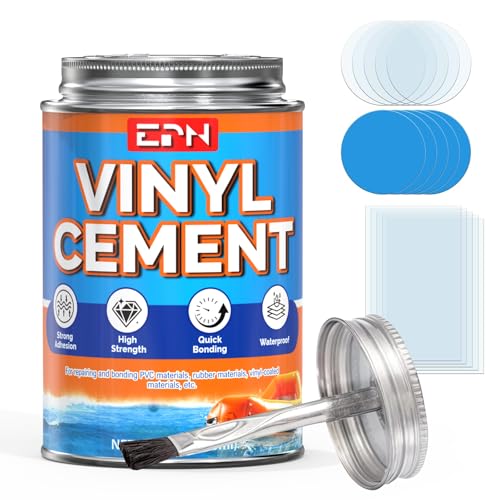
Best for: high-performance repairs on inflatables, pool liners, and boats where wear resistance and water sealing are critical. EPN’s formula emphasizes strong adhesion to PVC, EVA, and rubber, with included blue and transparent patches for quick, precise repairs. Caution: follow patch sizing guidance to ensure a clean, durable bond and avoid mixed results if mismatched patches are used.
Stnkeno Vinyl Contact Cement

Best for: outdoor repair projects like tents, awnings, tarps, and bounce houses where robust waterproof bonding is needed. Stnkeno emphasizes strong adhesion and flexibility after curing, helping withstand wind, sun, and water exposure. Caution: avoid using on surfaces that require heat resistance beyond the product’s specified range.
Wonshine Contact Cement 4.16 oz

Best for: woodworking, leather repairs, and furniture where a strong yet flexible bond is needed. Wonshine’s cement includes a built-in brush for precise application, making it a good choice for projects that require control and neatness. Caution: primer or surface prep can affect bond strength; ensure surfaces are clean and dry before applying.
Buying Guide: Key Factors to Consider
What materials will you bond? Choose a cement formulated for vinyl, PVC, and related fabrics. If you’ll be bonding underwater or in damp conditions, prioritize products with underwater bonding capability and waterproof seals.
How important is cure time? Some cements cure quickly for handling in minutes, while others require hours for full strength. For large or high-stress repairs, plan for longer cure times and proper curing conditions.
What surfaces will be bonded? Some formulations bond best to vinyl-coated fabrics, PVC, neoprene, and foam. For leather or wood accents, look for multi-surface cements that advertise compatibility with those substrates.
Are environmental and safety considerations important? If you need a toluene-free option, consider the TF variant or other low-VOC formulations. Always use in a well-ventilated area and follow product safety data.
What accessories help the job? Patches, brushes, or built-in applicators can improve results. Patches included with some products help ensure a clean repair edge and consistent bonding.
Frequently Asked Questions
- What kind of surfaces does vinyl contact cement bond well to?
It bonds to PVC, vinyl, vinyl-coated fabrics, canvas, fiberglass, neoprene, leather, EVA, and similar plastics. - Can vinyl cement be used underwater?
Yes, several products are designed to cure and bond under water or in damp conditions. - Is a toluene-free option available?
Yes, some variants are labeled “TF” for toluene-free formulations. - Do these cements require a patch or primer?
Some repairs benefit from a patch (often included) and clean, dry surfaces; check the product details for guidance. - How should I store vinyl cement?
Store in a cool, dry place away from heat sources and direct sunlight to extend shelf life and avoid premature curing. - Is this adhesive suitable for outdoor use?
Many options are designed for outdoor exposure with flexible, waterproof bonds; verify UV resistance and temperature tolerance for your climate.