Finding the right dark brown wood putty helps repair scratches, holes, and dents with a finish that blends into existing wood. This guide highlights five top options, explains who each product suits best, and provides practical buying tips. Ideal buyers include DIY homeowners tackling furniture restoration, floor repairs, and interior carpentry projects. The table below summarizes key choices at a glance.
| Product | Best For | Why Pick It |
|---|---|---|
| Roberts Palette Quick-Repair Putty | Wood, laminate, vinyl floors | Multi-surface use with easy sanding, no shrinking |
| Gorilla All Purpose Wood Filler Walnut | Indoor/outdoor repairs | Water resistant and durable finish |
| A-HEYIDA Walnut Wood Filler Putty | Furniture, floors, cabinets | Paintable and stainable for precise matching |
| Minwax Wood Putty Walnut | Minor scratches and nail holes | Pre-matched to common stains |
| Varathane Premium Wood Putty Dark Walnut | General repairs | Non-hardening, easy to apply |
Note: The products listed here vary in finish, drying times, and suitability for indoor vs outdoor use. When choosing, consider the wood type, whether you need stainable or paintable patching, and whether you require water resistance for high-humidity or exterior conditions.
Roberts Palette Quick-Repair Putty for Wood, Laminate & Vinyl – Dark Brown

Key features: Acrylic-based, ideal for filling gaps, nicks, and scratches on wood, laminate, and vinyl flooring. Can be used during floor installation to fill nail and screw holes or repair existing floors. Easy to sand and does not shrink. Best for homeowners and floor installers who want a versatile, quick-drying solution that blends with darker woods.
Who it’s best for: This putty suits DIYers working on flooring projects or furniture that needs a quick color-matched patch. It’s also helpful for professionals who want a sandable, non-shrinking option. Limitations: It’s designed for interior use and may require top-coating to match very dark finishes exactly.
Gorilla All Purpose Wood Filler, Walnut Color
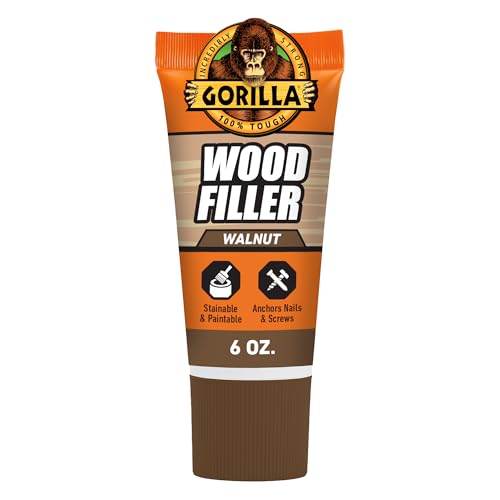
Key features: Water-resistant indoor/outdoor use, natural finish, easy to spread for a smooth look. This filler resists cracking and shrinking, making it a solid choice for repairs on floors, furniture, and cabinetry where a durable, stain-friendly result is needed.
Who it’s best for: Choose this if you need a robust, water-resistant option for spaces that may encounter moisture or humidity. Better for outdoor or high-traffic indoor areas. Caution: It’s a general-purpose filler, so precise color matching with very dark finishes may require staining or painting to achieve a seamless blend.
Walnut Wood Filler Putty – A-HEYIDA

Key features: Paintable and stainable, high adhesion, suitable for wood veneers, desks, tables, and floors. Easy to apply, sand, and finish with paint or wood stain to blend with surrounding wood tones. Best for furniture restoration and detailed repairs where color matching matters.
Who it’s best for: Ideal for professionals and DIYers who want a finish that can be tuned after curing. Limitation: Requires sanding and finishing steps to achieve a perfect match on complex grain patterns.
Minwax Wood Putty, Walnut
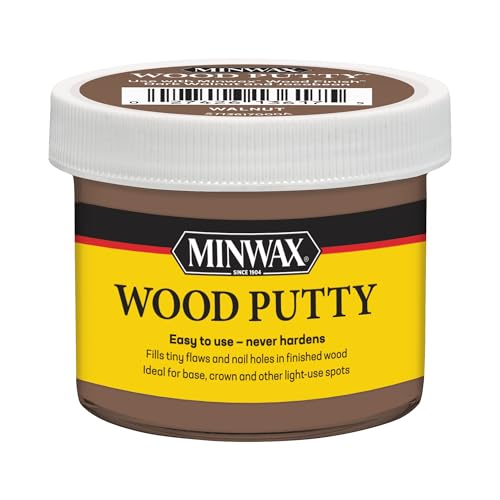
Key features: Non-hardening, pre-mixed, color-matched to common stains. Repairs nail holes and minor imperfections in bare, painted, stained, and finished wood. Walnut color is tuned to pair with Dark Walnut, Espresso, and Jacobean shades.
Who it’s best for: Choose this for quick, no-muss repairs that won’t harden over time. Suitable for projects where a simple, consistent color is acceptable. Caution: Non-hardening means it won’t form a rigid bond for deep gouges; deeper repairs may require a structural filler in addition to surface putty.
Varathane Premium Wood Putty, Dark Walnut

Key features: Non-hardening formula, easy application, and clean up with soap and water. It’s designed for seamless nail holes, scratches, and dents, with a dark walnut finish that blends with rich wood tones.
Who it’s best for: Choose this when you want a straightforward, user-friendly patch for quick repairs around furniture or floors. Limitation: Being non-hardening, it may not be suitable for deep structural repairs or areas that endure heavy impact.)
Buying Guide
Wood putty selection hinges on finish type, durability, and project location. Consider whether you need stainable or paintable results, indoor versus outdoor use, and whether you require a non-hardening option for quick cosmetic repairs.
- Finish compatibility: If you plan to stain, choose a product labeled stainable or paintable. For painted surfaces, paintable putties are preferable.
- Durability and moisture: Outdoor or basement areas benefit from water-resistant or exterior-rated fillers. For kitchens and bathrooms, moisture resistance is helpful.
- Hardening behavior: Non-hardening putties are simple to apply and sand but may not provide a rigid repair for deeper holes. Consider a stronger epoxy or wood filler if load-bearing or structural repair is needed.
- Color matching: Dark walnut or dark brown shades blend best with rich woods like walnut, espresso, or jacobean finishes. Mixing or staining may be necessary for a perfect match.
- Finish readiness: Some products accept staining after curing, while others require priming or painting. Plan finishing steps accordingly.
Practical tips for better results
- Clean the repair area before applying putty to improve adhesion.
- Apply in thin layers to avoid shrinkage and sanding bumps.
- Let each layer dry completely before adding more material or finishing.
FAQ
- What is the difference between wood putty and wood filler? – Wood putty typically dries harder and is used for cosmetic repairs; wood filler is often stronger and more durable for structural issues. Always check product specifications for hardness and curing properties.
- Can I stain over non-stainable putty? – Generally not without risk of mismatched color. Use stainable putty if you plan to match a wood stain precisely.
- Is a non-hardening putty suitable for floors? – It can be used for minor cosmetic repairs but may not hold up under heavy foot traffic. For floors, consider a filler designed for floor use or a epoxy-based repair for durability.
- How do I choose the right color? – Compare the product color to your wood finish (dark walnut, espresso, jacobean). When in doubt, pick a slightly lighter shade and finish with a stain or glaze to blend.
- Do I need a topcoat after applying putty? – A topcoat, such as stain, varnish, or polyurethane, is often recommended to match the finish and protect the repair.