The best drywall sander machine choices for American buyers balance powerful sanding, integrated dust collection, and user-friendly design. This guide focuses on models suited for home renovators, DIY enthusiasts, and professionals who need efficient popcorn ceiling removal or smooth wall finishing. Top picks emphasize dust control, adjustable speeds, and extendable handles for reaching ceilings. Below you’ll find five strong options with clear, objective comparisons and practical buying notes.
| Product | Best For | Key Benefit |
|---|---|---|
| Drywall Sander, 1000W Popcorn Ceiling Removal Tool | Homeowners, DIYers | High suction, extendable pole |
| Drywall Sander with Vacuum Dust Collector, 1000W | Detail-oriented projects | Digital display, 9 speeds |
| MYTOL Drywall Sander, 7.2A | Medium-scale renovations | 10-hole auto dust system, LED |
| ZENY 800W Electric Drywall Sander | Budget-conscious projects | 6 sanding pads, removable base |
| KUPERIA 8.5 Amp Popcorn Ceiling Tool | Heavy-duty sanding | Dual-channel vacuum, LED light |
Drywall Sander, 1000W Popcorn Ceiling Removal Tool
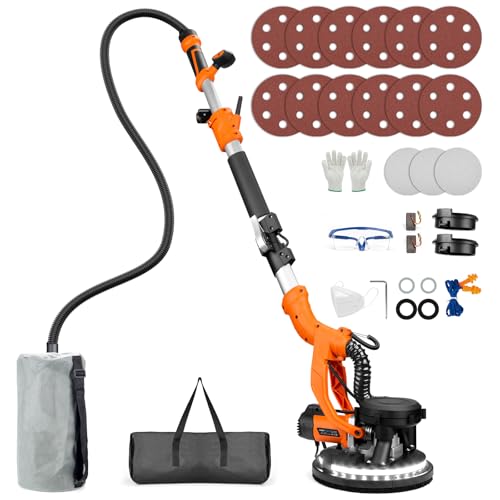
Best for mid-size projects where strong suction and reach are priorities. This model uses a 1000W copper motor with a 6-step speed range (800-2200 RPM) to handle drywall, painted surfaces, and popcorn ceilings. A built-in vacuum and 6-hole disc design maximize dust control, while a foldable extendable handle helps reach higher areas. The included sanding discs provide immediate setup for clean work. Consider this option if you want a powerful, all-purpose sander with excellent dust collection for typical home renovations.
Who it’s best for: DIYers and small professionals needing a versatile, fast-sanding tool with solid dust control. Limitations: The extended reach is good, but heavier use may require breaks due to motor heat on very large jobs.
Drywall Sander with Vacuum Dust Collector, 1000W

Best for projects that require precise speed control and visibility. This sander features a 1000W copper motor and 9 adjustable speeds (800-2100 RPM) with a digital display. It delivers up to 98.5% dust extraction efficiency and a fully enclosed design to reduce dust release. An extendable aluminum rod adjusts from 4.9 to 6.2 feet for ceiling work without ladders. Choose this if precise speed readouts and strong dust control are essential for your workflow.
Who it’s best for: Detail-focused renovators and those who value on-tool speed visibility. Limitation: The higher tech display may add a marginal learning curve for first-time users.
MYTOL Drywall Sander, 7.2A Electric Sander

Best for mid-sized tasks needing strong power and easy cleanup. This sander uses a 7.2-amp copper motor with a 900-1800 RPM range and features a three-in-one vacuum design (ring cleaning brush, flexible dust hose, and dust bag). An integrated LED helps illuminate sanding edges in dim spaces. The telescopic handle supports surfaces from floor to ceiling. Select this if you want an all-in-one system that prioritizes dust management and reach.
Who it’s best for: Homeowners tackling walls and ceilings with frequent dust control needs. Limitation: Heavier weight compared to lighter tools may affect long sessions.
ZENY 800W Electric Drywall Sander

Best for budget-minded buyers needing reliable performance. This model offers 800W power and a 1000-2000 RPM range with 6 sanding pads included. A detachable sander base makes edge work easier, and the locking switch reduces fatigue by keeping a steady speed. It’s a straightforward option for standard drywall finishing tasks where price is a consideration.
Who it’s best for: DIYers and hobby renovators seeking a simple, cost-effective sander. Limitation: Fewer advanced features and slightly lower suction than premium models.
Drywall Sander Tool, KUPERIA 8.5 Amp

Best for heavy-duty popcorn ceiling removal and tough surfaces. This sander uses an 8.5-amp copper motor with 7-speed options (800-1800 RPM) and a dual-channel auto vacuum system. It also includes a detachable chassis and a 360° LED light strip for hard-to-reach areas. Choose this if you need robust power, strong dust control, and good illumination for ceiling work.
Who it’s best for: Pros and serious DIYers tackling difficult ceilings or large areas. Limitation: Higher power and price may be overkill for light-touch tasks.
Buying Guide
Key considerations for selecting a drywall sander machine:
- Dust control: Look for built-in vacuums, multiple dust ports, or high extraction efficiency (above 90%).
- Power and speed: Higher wattage and wider RPM range improve finishing speed and adaptability to surfaces.
- Extendable handle and telescoping shaft: Essential for ceilings and tall walls; check minimum/maximum reach.
- Disc system: 6-hole or 10-hole discs are common. Ensure compatibility with the discs you prefer.
- LED lighting: Improves visibility in dark corners and helps identify sanding imperfections.
- Weight and ergonomics: For long sessions, a lighter unit with an ergonomic handle reduces fatigue.
- Extra accessories: Additional sanding discs, brushes, and bags can influence overall value.
- Maintenance: A sturdy motor and sealed housing minimize dust intrusion and prolong life.
FAQ
- Q: Which sander is best for popcorn ceiling removal? A: Models with strong suction, 8-9 amp motors, and an extended reach are typically preferred for popcorn ceiling work.
- Q: Do these sanders require a vacuum? A: Yes, most top models rely on integrated vacuum systems to maintain a clean workspace and reduce dust exposure.
- Q: Can I use any sanding discs with these machines? A: Most use standard hook-and-loop discs; check the disc size and hole pattern (e.g., 6-hole, 10-hole) for compatibility.
- Q: Is the LED light essential? A: For dim rooms and ceiling work, LED lighting helps ensure even sanding and spotting irregularities.
- Q: Are these tools suitable for beginners? A: Yes, but start with a lower speed, practice on a scrap area, and wear a mask to manage dust.
- Q: What safety precautions should I follow? A: Use eye protection, a dust mask or respirator, and ensure proper vacuum attachment to minimize dust exposure.