Drywall cutout tools are essential for precise openings for outlets, switches, and vents. This guide highlights five top options available on Amazon, covering brushless performance, cordless versatility, and quick bit changes. Each pick is evaluated for cutting speed, control, depth adjustment, and compatibility with common battery systems. Whether you’re a DIY homeowner or a professional, these tools offer reliable results for sheetrock work.
| Product | Brand | Key Feature |
|---|---|---|
| DEWALT 20V MAX XR Brushless Drywall Cut-Out Tool (Tool Only) (DCE555B) | DEWALT | Brushless motor, 26,000 RPM, easy on/off button |
| DEWALT Rotary Saw with 1/8-Inch and 1/4-Inch Collets (DW660) | DEWALT | Tool-free bit changes, high-speed 30,000 RPM |
| Cordless Drywall Cut-Out Tool for Dewalt 20V Battery (VERVEWAVE) | VERVEWAVE | 30,000 RPM brushless motor, adjustable depth |
| MILWAUKEE’S 2627-20 M18 Cut Out Tool Bare Tool | Milwaukee | Compact spiral saw, overload protection |
| RYOBI 18 V ONE+ Cut-Out Tool (Cordless, Tool Only) | RYOBI | Basic 18V cordless option with 1/8″ bit included |
Below are five hand-picked products with concise details to help you compare capabilities, battery ecosystems, and practical usage. Each item includes a direct Amazon link, an image, and key features to consider for your next drywall project.
DEWALT DCE555B Brushless Drywall Cut-Out Tool

The DCE555B is a compact, brushless drywall cut-out tool designed for precision in tight spaces. Its 26,000 RPM brushless motor provides fast, consistent cuts, helping reduce heat buildup during extended use. The motor efficiency translates to longer runtime on a single battery charge and smoother performance for intermittent cuts. The forward-positioned on/off button is built for ergonomic operation, allowing quick starts and stops without repositioning the hand.
DEWALT Rotary Saw With 1/8-Inch and 1/4-Inch Collets (DW660)

The DW660 cordless rotary tool focuses on ease of use with tool-free bit changes, allowing rapid bit swaps without tools. Its 5.0-amp motor turns up to 30,000 RPM, delivering more cutting power for drywall openings and lighter framing tasks. A simple turn-on/bump-off switch helps you quickly shut off the tool when needed, contributing to safer operation in awkward spaces.
VERVEWAVE Cordless Drywall Cut-Out Tool (Tool Only)
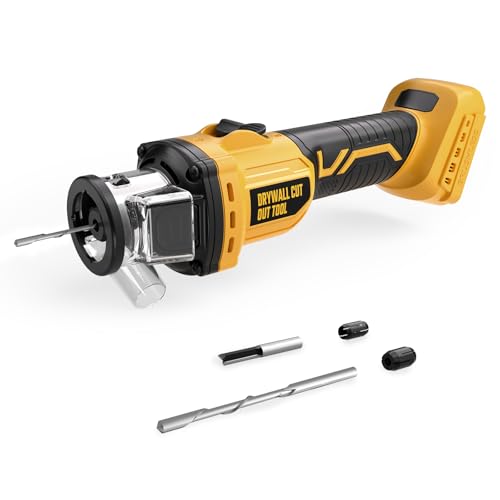
The VERVEWAVE tool is designed for compatibility with DEWALT 20V batteries, expanding your existing power system. It features a 30,000 RPM brushless motor to maximize cutting efficiency and minimize heat. The adjustable depth helps tailor cuts for various materials beyond drywall, including wood and plastic, making it versatile for mixed-material projects on a job site.
MILWAUKEE 2627-20 M18 Cut Out Tool Bare Tool

Milwaukee’s 2627-20 Bare Tool is a compact spiral saw built for quick, clean drywall openings. It uses a 4-pole motor to deliver rapid cuts and maintain momentum. The product design includes overload protection to prevent damage under heavy workloads or awkward cuts, helping extend tool lifespan in demanding environments.
RYOBI 18V ONE+ Cut-Out Tool

The RYOBI 18V ONE+ option provides a cordless approach within the popular ONE+ ecosystem. It includes a 1/8-inch drywall bit and a compatible 18V battery setup, offering a straightforward entry point for homeowners who already use RYOBI tools. This model emphasizes portability and ease of use in light-to-moderate drywall openings.
Buying Guide
Key considerations when choosing a drywall cut-out tool include motor type, speed, and durability. Brushless motors generally deliver longer life and more efficient runs, which is valuable for frequent use. For faster cuts, look for higher RPM ratings, but balance that with control and heat generation. Cordless options provide freedom on ladders and stairs, yet require attention to battery availability and runtime. Tool-free bit changes save time on multiple openings and troubleshooting. Depth adjustment should be easily set to accommodate different materials and edge quality. Finally, consider compatibility with batteries you already own to maximize value and minimize unnecessary purchases.
Other important factors include ergonomics, such as trigger placement and handle orientation, which affect precision in tight spaces. Overload protection and motor temperature management help prevent premature wear during heavy sessions. While some brands offer bare tools, kits with batteries and chargers can drive up initial cost but improve long-term convenience. When evaluating choices, compare wheelbase, weight, and balance to ensure stability as you guide the blade through plasterboard and studs. By aligning your project needs with these features, you’ll select a tool that minimizes rework and speeds up installation.