Answering the needs of hobbyists, makers, and small workshop operators, an electric powder coating gun with dual voltage or high-voltage output can transform projects with durable, even finishes. This guide highlights five top options, clarifying who each product is best for, how they perform, and any practical limitations. Read on to compare features, ease of use, and suitability for metals, plastics, wood, and more.
| Product | Best For | Voltage/Output | Why It Stands Out |
|---|---|---|---|
| Powder Coating Gun System for Metal, PT-200 | Home hobbyists; versatile projects | 15KV/25KV | Clear bottle for monitoring powder; dual voltage for delicate or thick materials |
| VEVOR Powder Coating System, 50KV | Small shops needing durability | 50KV | Strong adhesion, 5-speed settings, dual switches for convenience |
| Eastwood HotCoat PCS-250 Kit | Beginners to intermediate users | 15KV/25KV ranges | Fast coat-and-cure cycle; two power settings |
| Powder Coating System with Dual Volt, Hosile | Portable setups; color versatility | 20KV/50KV | Lightweight, dual bottles and varied nozzles |
| VEVOR 100KV System | Industrial-like small production | 100KV | Large hopper, high output, uniform coating |
Powder Coating Gun System for Metal, PT-200

- Brand: PTOOL
- Key features: Dual voltage (15KV and 25KV); versatile coating for metal, wood, plastics; clear bottle for powder monitoring; ergonomic gun handle
Best for: Hobbyists and small projects needing flexibility across materials without switching equipment. Why selected: The dual voltage setup lets you tailor the coating process for delicate substrates or thicker, more conductive materials. A clear reservoir helps manage powder usage, reducing waste.
Caution: Performance depends on consistent powder flow; ensure proper grounding for best adhesion at higher voltages.
VEVOR Powder Coating System, 50KV

- Brand: VEVOR
- Key features: 50KV electrostatic output; 5-speed voltage options (30/35/40/45/50KV); dual foot pedal and button switches
Best for:Mid-sized projects or small production runs where strong adhesion and adjustable voltages matter. Why selected: Higher voltage improves coating thickness and durability; dual switches support efficient workflow without bending. Caution: Higher voltages can increase overspray risk if airflow is not optimized.
Eastwood HotCoat PCS-250 Kit

- Brand: Eastwood
- Key features: Two voltage settings (15,000-volt and 25,000-volt); faster color changes; kit includes benchtop oven for curing
Best for: Beginners to intermediate users seeking an all-in-one solution with curing capabilities. Why selected: The integrated approach simplifies the process from coating to curing, reducing setup time. Caution: The kit requires a compatible curing setup to complete the finish.
Powder Coating System, Dual Voltage with Footswitch

- Brand: Hosile
- Key features: Dual voltage (20KV/50KV); two powder bottles; multiple nozzles; portable design
Best for: Users who want flexible color options and easy transport. Why selected: The dual voltage makes it adaptable to different substrates, while portability helps with job-site or garage use. Caution: Ensure consistent airflow and grounding for best results at higher voltage.
VEVOR Powder Coating System – 100KV
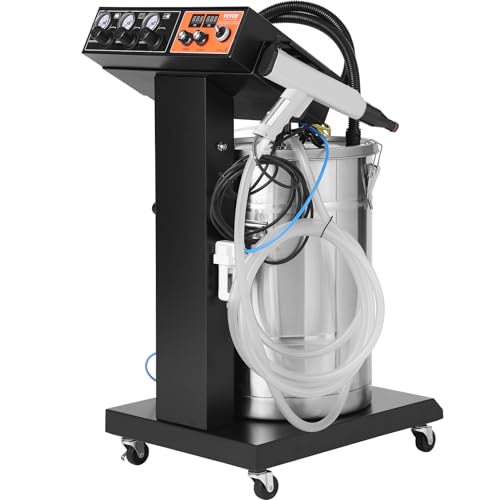
- Brand: VEVOR
- Key features: 100KV high-power output; 50L powder hopper; 450 g/min spray rate; indoor/outdoor capable
Best for: Small-scale production lines or projects requiring fast, heavy-duty coatings. Why selected: The high voltage and high-output spray enable rapid, uniform finishes on larger items. Caution: Higher power requires attention to ventilation and operator safety.
Buying Guide: Key Considerations for Electric Powder Coating Guns
What voltage do I need?
Lower voltages (15–25KV) are suitable for delicate substrates and thin coatings. Higher voltages (30–100KV) provide stronger adhesion and faster coating on thicker or harder materials. Choose based on substrate type and desired coating thickness.
How important is throughput and capacity?
Higher-capacity hoppers and faster spray rates benefit production or larger parts. If you work on small items at home, a compact hopper with adjustable voltage can be more practical.
What about ease of use and ergonomics?
Look for an ergonomic gun handle, a clear powder bottle, and intuitive switches (foot pedal or button) to minimize fatigue during extended sessions. Dual switches can streamline operation without frequent bending.
What accessories matter?
Consider included nozzles, powder bottles, and a curing setup if you need an all-in-one kit. Some Eastwood kits pair a gun with a benchtop oven or spray booth for a complete workflow.
What safety and maintenance considerations exist?
Ensure proper grounding to prevent static buildup, use protective gear, and maintain clean, dry powder storage. Regularly inspect hoses and connections to avoid leaks or arcing at higher voltages.
Which setup fits a beginner best?
For beginners, consider a kit with built-in curing options, clear powder reservoirs, and clearly labeled voltage settings. Eastwood PCS-250 kits are commonly referenced as beginner-friendly due to their integrated workflow.
What is the best approach for a small shop?
For small shops, a dual-voltage system with reliable adhesion at multiple voltages, combined with a modest curing method, provides the most flexibility for varying projects and materials.
FAQ
- What is powder coating? A finishing process that uses electrostatically charged powder to form a durable coating when cured.
- Do I need a dedicated booth to use these systems? A spray booth or well-ventilated area helps control overspray and fumes, especially in higher-voltage systems.
- Can I coat wood or plastic with these systems? Yes, most systems are designed for multiple materials, but check compatibility and substrate suitability for best results.
- Is dual voltage always better? Dual voltage offers versatility for different substrates; choose based on the materials you routinely coat.
- What maintenance is required? Regularly clean the bottle and nozzle, inspect seals and hoses, and ensure the grounding clamp remains secure.