For artists seeking durable, flexible fabric results, a quality fabric medium is essential when working with acrylic paints on textiles. These products convert acrylics into fabric paints, improve flow and adhesion, and create wash-fast, bendable designs. This guide highlights five well-suited fabric mediums that work well with fabric-based art applications, including clothing, bags, and accessories. It explains who each product is best for, why it was selected, and practical considerations for use.
Buyer profile summary table:
| Product | Best For | Notes |
|---|---|---|
| Nicpro 8.45oz Fabric Medium | DIY hobbyists and small projects | Great balance of price and performance; 1:1 mix; water-resistant finish |
| Nicpro 33.8oz Fabric Medium with Pump | Classrooms, workshops, bulk projects | Large volume with pump; suitable for frequent use |
| Artecho Fabric Medium 8oz | Home crafters and occasional makers | Water-based, non-toxic; heat-set recommended |
| Shuttle Art Fabric Medium 4oz | Beginner projects and quick DIYs | 1:1 mixing; no heat setting required; non-toxic |
| Liquitex Professional Fabric Medium 118ml | Artists seeking established brand reliability | Reputable brand; enhances flexibility and adhesion |
Nicpro 8.45oz Fabric Medium For Textiles

Best for: Hobbyists working on small projects like DIY clothing, T-shirts, or bags. This medium turns acrylic paint into fabric paint, improving flow, flexibility, and adhesion. It helps prevent cracking and flaking while preserving color vibrancy. No heat setting required.
Why selected: It provides a straightforward 1:1 mix with acrylics and supports water resistance after drying. Ideal for beginners who want predictable results with minimal steps.
Caution: Performance may vary with very thick acrylics; adjust the ratio to maintain desirable texture and coverage.
Nicpro 33.8oz Fabric Medium With Pump

Best for: Bulk projects in classrooms, studios, or group workshops. Large volume with a built-in pump facilitates controlled dispensing, reducing spills and making large-scale painting more efficient.
Why selected: The 1,000 ml bottle supports sustained use, helping artists maintain consistency across big projects while preserving the fabric’s natural feel and color vibrancy.
Limitation: The large size may be less convenient for occasional crafters or those with limited storage space.
Artecho Fabric Medium 8oz / 236ml
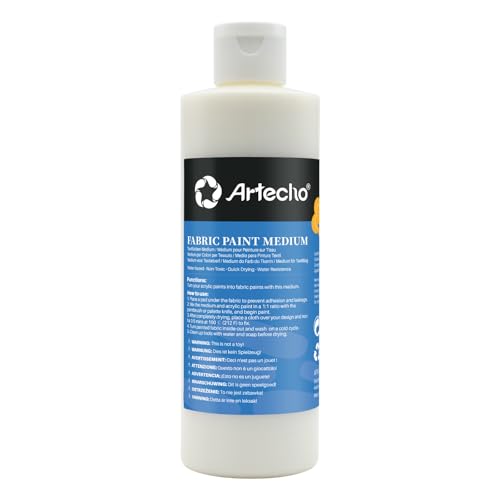
Best for: Home crafters seeking a safe, non-toxic option with easy use. Artecho’s medium is water-based and designed to convert acrylic paints to fabric paints with a 1:1 ratio.
Why selected: It’s marketed as safe, non-toxic, and durable after heat setting, making it suitable for projects that will be washed or exposed to regular wear.
Limitation: Requires heat-setting for peak durability; without heat setting, longevity may be reduced compared to heat-set results.
BLUEBIRD Fabric Medium

Best for: Mixed-media fabric projects and pigment printing where adhesion and wash-fastness are important. This medium improves flow, flexibility, and color durability.
Why selected: It’s positioned as a versatile binder that supports pigment printing and longer-lasting results on textiles.
Limitation: While it enhances adhesion, it may be less optimized for very large-scale murals on fabrics compared to larger-volume options.
Smallbudi 10 oz Fabric Medium With Pump

Best for: DIY clothing, shoes, and bags with consistent, flexible results. The 1:1 mix converts acrylics to fabric paints and reduces cracking while maintaining vibrancy.
Why selected: The pump bottle streamlines bulk painting tasks, minimizes waste, and supports even application for beginners and pros alike.
Limitation: As with other mediums, very thick paints may require ratio adjustments to prevent overly stiff results.
Falling In Art 8 Oz Fabric Medium

Best for: Artists seeking durable, washable fabric designs that can endure multiple washes without cracking.
Why selected: It claims a permanent effect without the need for heat setting, delivering durable fabric paint results that resist fading.
Limitation: Some users may require heat setting for optimum longevity on certain fabrics or color combinations.
Shuttle Art Fabric Medium 4oz

Best for: Beginners and quick projects where a dependable 1:1 mix is desired to convert acrylics to fabric paints with ease.
Why selected: It emphasizes ease of use, softens stiffness, and reduces color bleeding, making it suitable for beginners learning fabric painting basics.
Limitation: May require additional sealing or finishing for long-term durability on high-wear items.
Liquitex Professional Fabric Medium

Best for: Artists seeking a trusted, professional-grade option with strong adhesion and flexibility on fabrics.
Why selected: Liquitex is a long-standing brand in art materials, and this medium is designed to enhance workability and color control on textiles.
Limitation: As a professional line, it may come at a higher price point than some beginner-oriented options.
Buying Guide: Fabric Mediums For Fabric Painting On Textiles
What should you consider when choosing a fabric medium?
- Mix ratio and workability: Most products suggest a 1:1 mix with acrylics. Consider whether you need a thicker or thinner finish and adjust accordingly.
- Hold and durability: If your project will be washed or exposed to the elements, prioritize medium with wash-fast and durable results, ideally with heat setting when recommended.
- Volume and storage: For occasional projects, smaller bottles are convenient. For classrooms or studios, larger volumes save time and reduce refills.
- Safety and ease of use: Non-toxic formulas and user-friendly packaging (like pumps) reduce spills and make projects safer for all ages.
- Brand reputation and compatibility: Reputable brands often provide consistent results and better color retention over time.
How to Use Fabric Medium On Fabrics
Prepare your fabric by laying a protective surface. Mix acrylic paint with the chosen fabric medium at the recommended ratio. Apply in smooth, even strokes. Allow to dry thoroughly. For added durability, heat-set as directed by the product instructions when required. Wash fabrics on a gentle cycle after curing.
Practical Tips For Best Results
- Avoid thick coats that can stiffen fabrics; build up layers gradually.
- Test a small swatch before full-scale projects to gauge flexibility and wash-fastness.
- If colors bleed, reduce the paint thickness or adjust the ratio to improve control.
FAQ
- Q: Do I need to heat-set fabric paint medium?
- A: Some brands require heat-setting for maximum durability; follow the product instructions for best results.
- Q: Can I use fabric medium with any acrylic paint?
- A: Most acrylic paints mix well with fabric mediums, but always test compatibility on a small fabric swatch first.
- Q: Is fabric medium necessary for all fabric painting projects?
- A: It’s not always required, but it improves adhesion, flexibility, and wash-fastness, especially on natural fabrics.
- Q: Will the finished fabric stay flexible after drying?
- A: Yes, most fabric mediums are designed to keep fabrics flexible and not overly stiff when properly mixed and cured.
- Q: Are these products safe for kids?
- A: Many options are non-toxic and suitable for kids, but check the safety data for each product before use.
- Q: Which fabric medium is best for bulk projects?
- A: For bulk work, consider Nicpro 33.8oz with Pump or similar large-volume options to minimize refills and spills.