When choosing finger joint trim boards, look for primed, high-grade finger-joint pine that delivers a smooth, paint-ready surface and reliable stability. These boards are ideal for clean baseboard transitions, decorative niches, and easy room upgrades. This guide highlights five top picks, explains who they’re best for, and shows how to compare key features like width, depth, and finish. The top contenders include premium Americraft mouldings for professional-looking trim, plus a router bit and flexible trim for specialized projects.
Buyer summary table (quick reference):
- WM711- Americraft Baseboard Moulding – Primed finger-joint pine, 3 1/2″ wide, classic baseboard look
- WM163E – Americraft Baseboard Moulding – Wider at 5 1/4″, versatile transition piece
- WM618 – Americraft Ogee Baseboard Moulding – Ogee profile for elegant finish
- Joyzan Shank Finger Joint Router Bit – Tools-based option for precise finger joints in custom pieces
- Flexible Quarter Round Molding (Conwang) – Bendable, easy fit around curves and corners
WM711- Americraft Baseboard Moulding

Product type: Baseboard moulding, primed finger-joint pine. Dimensions are 3-1/2″ wide, 3/8″ deep, 96″ long. This is a high-grade, primed option suitable for seamless wall-to-floor transitions. Best for contractors and DIYers seeking a classic baseboard with a ready-to-paint surface.
Best for: Rooms requiring a traditional baseboard with a smooth, primed finish. Ideal for newer homes or renovations where a crisp, uniform edge is desired.
Why selected: The highest-grade wood available in finger-joint pine; consistent priming ensures minimal prep work before paint.
Limitations: Narrower width may require additional profiles for large rooms or bold styling; ensure compatibility with existing trim heights.
WM163E – Americraft Baseboard Moulding
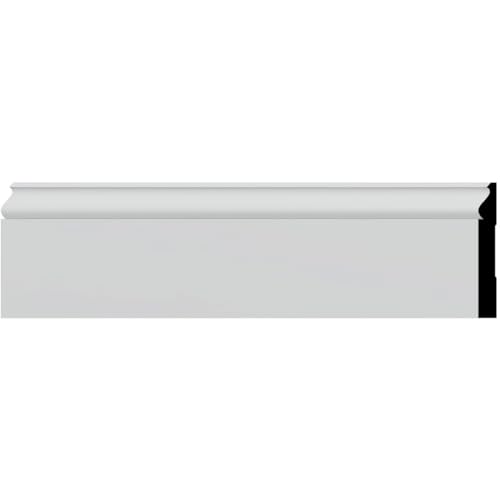
Product type: Baseboard moulding, primed finger-joint pine. Dimensions: 5-1/4″ width, 9/16″ depth, 96″ length. This wider profile provides a more pronounced transition and is well-suited for larger rooms or where a statement baseboard is desired.
Best for: Larger spaces or design schemes that benefit from a broader baseboard presence. Good for upgrading from standard trim with a simple, elegant look.
Why selected: Wide profile adds architectural interest while still offering a prime, finger-joint pine construction for easy finishing.
Limitations: Slightly heavier and more noticeable; may require a longer cutting setup or planning for corner transitions.
WM618 – Americraft Ogee Baseboard Moulding

Product type: Ogee baseboard moulding with finger-joint pine. Dimensions: 5-1/4″ width, 9/16″ depth, 96″ length. The ogee profile adds a curved, decorative edge for a refined interior finish.
Best for: Rooms with traditional or transitional styling where a decorative edge is desired without ornate detailing.
Why selected: Combines high-grade finger-joint pine with a classic ogee profile for an elevated look that remains easy to install and finish.
Limitations: Profile complexity may require careful cutting at corners; non-flat walls can impact joint alignment if walls aren’t perfectly square.
Joyzan Shank Finger Joint Router Bit

Product type: Router bit set with 8mm shank, designed for finger joint joints and flush trims. Features include carbide tips and industrial-grade hardened steel for smoother cuts and durable use. This tool supports precise joints when fabricating custom trim pieces or inlay work.
Best for: Woodworkers building custom finger-jointed mouldings or repairing mouldings where precise joints are critical.
Why selected: High-quality carbide, balanced design, and compatibility with standard routers make it a versatile choice for professional-grade joints.
Limitations: Requires appropriate router setup and safety precautions; not a stand-alone product for trim installation without additional components or boards.
Conwang Flexible Quarter Round Molding

Product type: Flexible, peel-and-stick quarter round trim. Dimensions: 118″ length, 0.6″ width and height. This bendable molding is designed to fit around curves, stairs, columns, and walls with a soft, self-adhesive surface.
Best for: Projects involving curved edges, stairs, or irregular layouts where rigid trim would be difficult to fit.
Why selected: Provides an adaptable solution for curved or non-straight installations, reducing complexity and labor time.
Limitations: Flexible trim may not provide the same hard edge as traditional MDF or wood moulding; ensure adhesion on chosen surfaces for long-term durability.
Buying Guide: Finger Joint Trim Board Considerations
What size is right for your project? Measure wall-to-floor clearance and target baseboard height. Wider profiles (like 5-1/4″) create a stronger architectural statement, while narrower ones (3-1/2″) suit smaller rooms or modern styles.
What finish do you need? Primed finger-joint pine offers a ready-to-paint surface, reducing prep time. FAS-grade wood ensures higher quality with fewer defects for visible trim areas.
What profile matches your style? An ogee edge adds elegance, while a flat edge emphasizes a contemporary look. Consider how corners and transitions will be joined with adjacent walls and floors.
Are tools required? For custom joints, a router bit like the Joyzan option can improve precision on finger joints. For curved applications, a flexible quarter round can simplify installation.
What installation considerations matter? Ensure walls are plumb and floors level to avoid gaps. Pre-paint or prime before final installation if possible to reduce touch-up work after trimming.
Which product best fits a DIY vs. professional workflow? Primed baseboards (WM711, WM163E) are straightforward for DIYers; router bits and flexible trims serve more advanced or specialized projects.
FAQ
- What is finger joint pine? A strong, affordable wood type created by interlocking wood pieces at the ends, producing longer lengths with good stability and a smooth surface for finishing.
- Do I need primed trim for painting? Yes. Primed trim speeds finish work by eliminating the priming step, reducing prep time and ensuring even paint adhesion.
- Which baseboard profile is best for a traditional look? Ogee profiles (like WM618) provide a classic, decorative edge ideal for traditional interiors.
- Can flexible quarter rounds hold up to everyday use? They are convenient for curved surfaces but may show wear differently than rigid moulding; ensure proper adhesion and material compatibility with your surface.
- Is a router bit necessary for finger joints? A router bit can greatly improve consistency for custom projects; it’s not required if you’re working with already finished moulding, but it helps with joins in DIY fabrication.
- Which product is best for a quick upgrade? The WM711 or WM163E primed baseboards deliver immediate, paint-ready results with minimal prep and installation effort.