Answering the common buyer question: which grit additives best improve traction without altering color or appearance? This guide highlights five top options that work with acrylic, epoxy, polyurethane, and similar coatings. Best for outdoor patios, indoor floors, workshops, or docks, these products provide clear textures, chemical resistance, and durable grip. Each pick is explained with who it’s best for, what it does, and practical limitations to consider before purchase.
| Product | Best For | Texture Type | Notes |
|---|---|---|---|
| MasonryDefender Fine Grit | Residential patios and walkways | Clear, subtle grit | Low gloss, color-preserving |
| Zinsser Roll-A-Tex | General surface texturing | Grainy texture | Simple mix, US-made |
| MasonryDefender Coarse Grit | Outdoor floors, heavy traffic | Coarse grit | Higher traction, color-neutral |
| Westcoat CA-33 Aluminum Oxide | High-traffic interiors/exteriors | Medium to coarse | Professional-grade |
| Fasco Epoxies Coarse | Boat decks, ramps, docks | Large particle grit | Max traction for wet surfaces |
MasonryDefender Paint Additive Fine Grit 300595
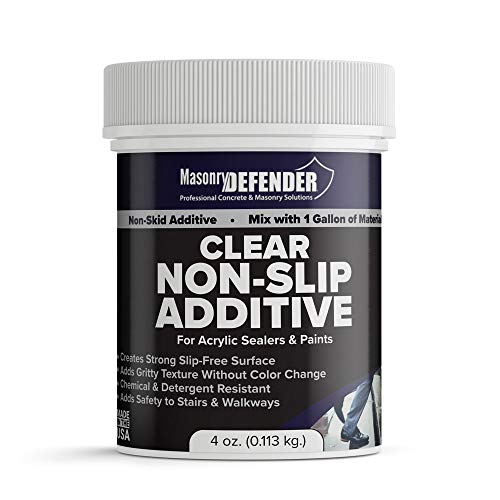
Best for: residential patios and walkways that require subtle slip resistance without changing color. Fine grit blends into acrylic, epoxy, or oil-based paints and sealers to create a low-gloss, gritty texture while preserving the original surface appearance. It offers chemical resistance for high-traffic areas and durable grip over time. Choose this if you want a barely perceptible texture that improves traction without a distinct exposed-grit look. Caution: too much additive can slightly alter texture, so follow mixing guidelines carefully.
Zinsser Roll-A-Tex Sand Texture Additive

Best for: DIY texture projects where a textured finish is needed with minimal effort. This additive delivers a sand-texture effect that helps hide surface imperfections while remaining user-friendly. It is easy to mix and is manufactured in the United States, appealing to buyers seeking straightforward, value-driven texture solutions. Limitation: texture strength depends on the overall coating system and application method; excessive application can increase roughness beyond desired levels.
Non-Skid Paint Additive Quart for 5 Gallons – Fas-Grip (Fine)
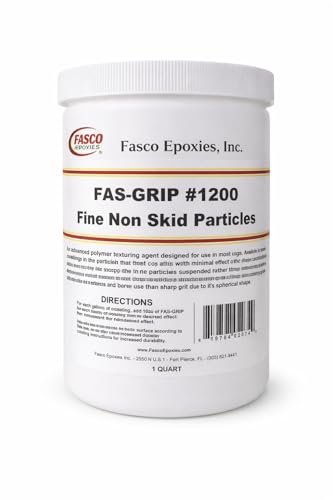
Best for: coatings requiring subtle, uniform traction with a non-aggressive feel underfoot. The fine anti-skid particles blend smoothly into gelcoat, epoxy, polyurethane, and marine paints for controlled slip resistance. It’s well-suited for boat decks, steps, walkways, and similar surfaces. Caution: fine particles still alter texture; verify that the surface finish matches your safety requirements and wait times before recoating.
MasonryDefender Anti Slip Additive Coarse Grit
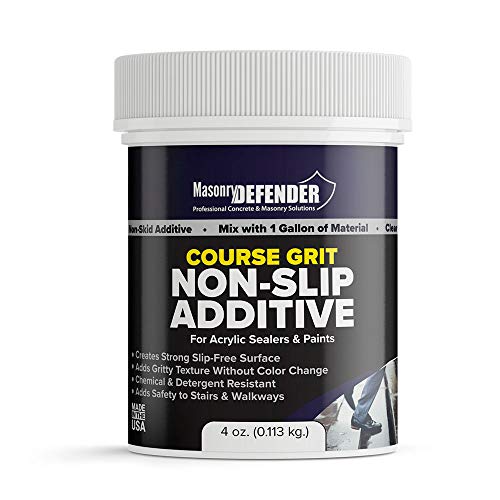
Best for: outdoor floors and walkways requiring higher traction levels. The coarse grit creates a more pronounced texture that stands up to chemical exposure and repeated cleaning. It preserves the underlying paint color while delivering robust grip. Limitation: heavier grit can be more noticeable; apply in controlled layers to avoid overly rough surfaces.
Stone Coat Countertops Epoxy Non-Skid Additive (Medium Grit)

Best for: living areas and garages where durable, non-slip epoxy finishes are desired. The medium grit is designed to enhance grip while integrating with epoxy-based countertops or floors. It supports high-traffic areas and offers customizable skid resistance through application thickness. Caution: the description mentions unique “geko” and “restorer” features; follow product guidelines to achieve consistent results and texture balance.
Westcoat CA-33 Aluminum Oxide Non-Skid Additive

Best for: professional-grade applications requiring very durable skid resistance. CA-33 is a hard 60-grit aluminum oxide additive ideal for broadcast into epoxy, polyaspartics, or polyurethane coatings. It provides excellent abrasion resistance and is suitable for high-traffic interiors or exteriors. Caution: this is a robust additive; improper broadcasting can create uneven textures, so follow best practices for even distribution.
Buying Guide: Key Considerations for Grit Additives
- Texture vs. appearance: Decide if you want a barely visible texture or a pronounced grip. Fine grits preserve surface color, while coarse grits increase traction noticeably.
- Coating compatibility: Ensure the additive is compatible with your base paint or sealer (acrylic, epoxy, polyurethane, gelcoat, etc.).
- Application method: Some products require mixing ratios, backrolling, or broadcasting into a freshly laid coat. Follow manufacturer instructions for uniformity.
- Durability: For high-traffic or outdoor uses, select a grit and resin system designed for chemical resistance and wear.
- Safety and surface feel: While grit improves traction, consider how it feels underfoot and whether a subtler texture is preferable for barefoot areas or furniture traffic.
- Maintenance: Textured coatings may require more frequent cleaning to prevent buildup; verify cleaning guidance from the coating system.
FAQ
- What is a grit additive for paint?
It is a particulate material mixed into paint or sealer to create a textured, slip-resistant surface without altering the color much.
- What grit level should I choose for outdoor floors?
For outdoor, medium to coarse grits offer higher traction and durability; start with a controlled amount to avoid over-texturing.
- Can I mix multiple additives?
Combining additives is generally not recommended; use the additive specified for your coating system to maintain consistency and performance.
- Will grit additives affect coating longevity?
Properly selected and applied additives can enhance slip resistance without significantly compromising durability, provided the coating system is compatible.
- Are there safety concerns mixing grit into coatings?
Follow product safety data sheets; use protective equipment and ensure good ventilation during mixing and application.