When choosing a hook-and-loop backing plate, the best option aligns with your tool, disc size, and the work you plan to tackle. This guide focuses on 5 reliable choices that cover common dual-action sanders and grinders, offering good balance, heat resistance, and secure disc attachment. The top picks suit DIYers, automotive detailers, woodworkers, and hobbyists who want consistent finishes and easy disc changes. Each product is evaluated for compatibility, durability, and user-friendliness, with notes on ideal buyers and any notable limitations. A quick summary table follows to help you compare at a glance.
Summary Table of Selected Backing Plates
| Product | Size | Thread | Best For | Key Benefit |
|---|---|---|---|---|
| Neiko 30267A Flexible-Edge | 6 in | 24 | Woodworking and polishing | Flexible edge for contour sanding |
| Pro-Graad 7″ Hook & Loop | 7 in | 5/8″-11 | Heavy-duty grinding and polishing | High RPM, minimal heat transfer |
| UPWOOD 6″ | 6 in | 24 | Pro and DIY sanding | Value pack with two plates |
| CASOMAN 5-Inch | 5 in | 5/16″-24 | Small projects and detail work | Compact, versatile for tight spaces |
| SPTA 6″ | 6 in | 5/16″-24 | General sanding and finishing | Durable polyurethane, easy disc changes |
Neiko 30267A Flexible-Edge Backing Pad

The Neiko 30267A is a 6-inch, 24-thread hook-and-loop backing pad designed for orbital sanders, polishers, and buffers. It features a flexible edge to conform to curves, which helps create uniform finishes on contoured surfaces. Best for woodworkers and hobbyists who want a forgiving pad that reduces heat buildup during longer sessions. A potential limitation is that it operates up to 10,000 rpm, so users should match discs and tasks to this speed. Choose this for versatile compatibility and easy disc changes.
Pro-Graad 7″ Hook and Loop Backing Plate
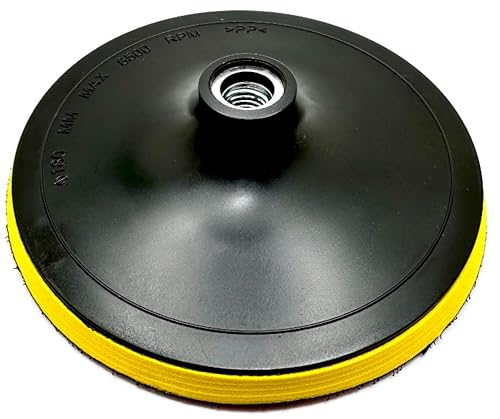
The Pro-Graad 7” backing plate features a 5/8″-11 internal thread and a durable construction with phenolic plastic, premium molded urethane, and nylon hooks. It is designed for high-speed use (up to 12,000 RPM) and minimizes heat transfer while maintaining a stable and balanced operation. Best for heavy-duty sanding and polishing on larger surfaces or where consistent pad security matters. A note: the higher max RPM requires compatible discs and proper tool settings to prevent overheating.
5 Inch Hook and Loop Backing Pad By HilbertBrook
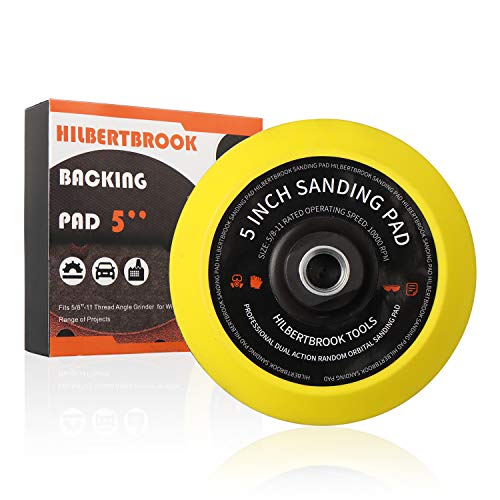
The HilbertBrook 5″ backing pad is a standard 5/8-11 threaded pad designed for 5-inch discs. It emphasizes ease of installation and consistent disc grip. Best for DIYers who want a straightforward, affordable option for general sanding and polishing. Limitation: some users report that extreme contoured surfaces may benefit from slightly more flexible backs to avoid edge skipping. Suitable for everyday sanding needs.
UPWOOD 2 Pack 6″ Hook & Loop Backing Plates

The UPWOOD 2-pack includes two 6″ backing plates with a 5/16″-24 thread. This value pack is ideal for professionals who need back-up plates ready for extended project sessions, reducing downtime between disc changes. Best for shops and serious hobbyists. A limitation is that universal fit relies on standard threads; unusual tools may require adapters or different thread sizes.
CASOMAN 5-Inch DA Polisher & Sander Pad (2-Pack)
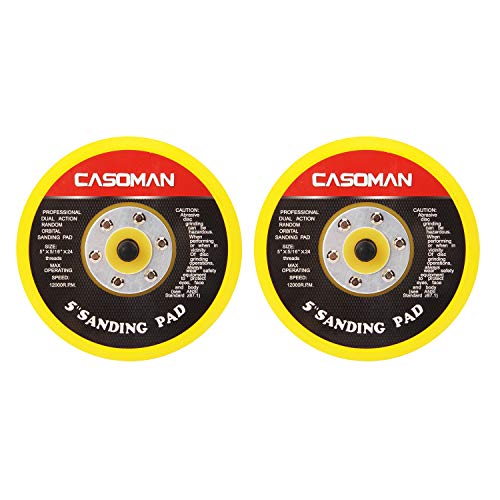
CASOMAN offers a 2-pack of 5″ DA polishing/ sanding pads with 5/16″-24 threads. This pairing is suited for smaller projects, tight spaces, or detail work where a compact backing plate improves control. Pros include compatibility with common 5″ discs and balanced performance at moderate RPMs. Best for occasional users or those who work on dashboards, trim, or small furniture pieces. Limitation: smaller diameter may require more passes for large surfaces.
SPTA 6″ Backing Pad with 5/16″-24 Thread

The SPTA 6″ backing pad is built from polyurethane, designed for durability and balance. It supports up to 12,000 RPM and uses a hook-and-loop attachment for fast disc changes. Best for general purpose sanding, finishing, and buffing on dual-action polishers. Choose this if you want robust performance with quick disc swaps. Limitation: performance depends on quality of attached discs; lower quality discs may wear faster.
Buying Guide
- Size and thread compatibility: Match the backing plate diameter to your sander or polisher and ensure the thread (5/16″-24 or 5/8″-11) matches your tool arbor. Larger plates cover more area but may require more power.
- Material and durability: Look for polyurethane construction with balanced weight to minimize vibration. Phenolic cores and engineered urethane improve heat resistance and longevity.
- RPM rating: Verify the maximum operating speed (RPM) aligns with your tool. Using a plate beyond its RPM limit can degrade performance or pose safety risks.
- Edge design and flexibility: Flexible or beveled edges help conform to contours and reduce gouging on curved surfaces. Rigid plates are fine for flat surfaces but less forgiving on curves.
- Disc compatibility: Ensure discs you plan to use are hook-and-loop compatible and sized for the plate. Quick-release and secure grip reduce slippage during operation.
- Quantity and value: For frequent projects, consider multi-pack options to minimize downtime between disc changes and maximize workflow efficiency.
Frequently Asked Questions
- What is a hook-and-loop backing plate used for? It provides a stable base for attaching sanding or polishing discs using a Velcro-like system, allowing quick changes and consistent finishes.
- Can I use these plates on a random orbital sander? Yes, most backing plates shown are designed for dual-action/random orbit sanders or grinders with compatible threads.
- What’s the difference between 5/16″ and 5/8″-11 threads? They refer to different mounting standards; ensure you choose the plate that matches your tool’s arbor for proper fit and performance.
- Is a larger backing plate always better? Not necessarily. Larger plates cover more surface area but require more torque and can be harder to control on tight corners.
- How do I know if a plate is too flexible or too rigid? Flexible edges help contours, while rigid plates are better for flat surfaces. Consider your project geometry.
- Are there any safety considerations? Always use appropriate PPE, and ensure discs are compatible with the backing plate and tool to prevent kickback or heat buildup.