Answering the needs of drywall pros and serious DIYers, this guide highlights the best inside corner rollers for achieving sharp, bubble-free joints in 90° corners. The top picks below are best for different scenarios: quick, professional-grade corners; lightweight tools for frequent use; and versatile options that fit common brands. The summarized table lists key traits to compare at a glance.
| Product | Best For | Key Benefit |
|---|---|---|
| LEVEL5 Drywall Corner Roller Pro-Grade (4-707) | Pro finishing, time-saving | Precision corner with flat tape flanges, smooth operation |
| LEVEL5 Corner Roller + Standard Handle (4-507) | Speed and ease for pros | Easy to master, reduces tape drag |
| Drywall Corner Roller Head (AUTOVIC) | Universal compatibility | Lightweight aluminum, handles standard shafts |
| MARSHALLTOWN Corner Roller (CR3) | Flexible hand or pole use | Two sizes, convertible to pole mounting |
| ToolPro Professional Grade Corner Roller | All-in-one performance | Combined mud application and tape creasing |
Note: Each product is selected for relevance to “inside corner rollers” and for the typical buyer’s needs—speed, precision, durability, and compatibility with common handle systems.
LEVEL5 Drywall Corner Roller Pro-Grade

The LEVEL5 Pro-Grade corner roller is built to speed up inside-corner finishing by removing air pockets and excess mud while forming a sharp, flat-taped crease. It’s designed to bed corners faster than hand tools, delivering a smoother edge and less rework. Best for professional drywall finishers who want to improve efficiency without sacrificing quality. Consider this if you frequently work with gypsum board, plasterboard, or sheetrock in tight interior corners. A potential limitation is the emphasis on performance features over basic compatibility for non-standard setups.
LEVEL5 Corner Roller + Standard Handle
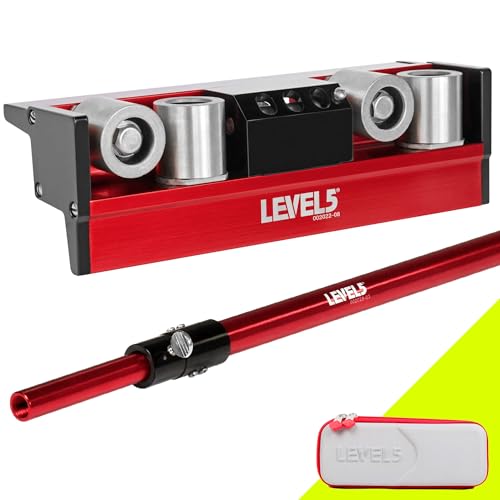
This LEVEL5 model pairs a dedicated corner roller with a standard handle for a complete finishing tool. It is highlighted for its ease of use and quick learning curve, making it suitable for less experienced crews or shop-based finishing teams. It reduces tape drag and helps maintain consistent edge alignment, which is essential when completing multiple rooms. Choose this if you want a ready-to-use setup that can be taught to helpers. A caveat is that some users may still require additional long-reach tools for larger projects.
MARSHALLTOWN Corner Roller (CR3)

The MARSHALLTOWN CR3 corner roller offers a 3-inch roller head and a 12-inch handle, with versatility for either hand use or pole mounting when paired with a compatible extension. This tool suits those who want a reliable, two-size option for tight inside corners and smaller joints. It’s best for crews that alternate between handheld finishing and pole-based approaches. A possible limitation is the smaller roller head, which may require more passes on broader corners or heavily textured surfaces.
ToolPro Professional Grade 3 Inch Corner Roller

ToolPro’s professional-grade 3-inch corner roller emphasizes an all-in-one performance approach. The tool is designed to streamline drywall finishing by combining mud application and tape creasing in a single motion. It features a heavy-duty steel frame and a universal threaded handle, enabling compatibility with standard extension poles. Best for experienced finishers seeking efficiency gains and fewer tool changes. A limitation to note is that the all-in-one design can be less flexible if you need separate mud application and tape creasing actions in different sequences.
Buying Guide: Key Considerations For Inside Corner Rollers
- Corner size and compatibility: Choose a roller that matches typical 90° corners in your projects. Some tools offer multiple head sizes or interchangeable components for different room dimensions.
- Material and durability: Look for stainless steel or aluminum components, reinforced bearings, and corrosion-resistant frames for long service life in daily use.
- Ease of use and learning curve: If you work with apprentices or new crew members, select tools noted for quick mastering and clear instructions or how-to resources.
- Grip and handle versatility: Tools that work with standard handles or extendable poles provide flexibility for ceiling and high-wall work.
- Finish quality indicators: Prioritize tools that reduce air pockets, drag, and mud buildup to achieve consistent, bubble-free seams with minimal touch-up.
- Maintenance and cleanup: Consider tools with smooth wheel surfaces and easy-clean metal components to simplify post-job cleanup.
FAQ
- What is the best tool for finishing inside drywall corners quickly?
Pro-grade rollers like the LEVEL5 Pro-Grade are designed to bed corners faster and minimize rework compared to hand finishing. - Should I choose a 3-inch or 2-inch roller for corners?
Smaller heads are better for tight 90° corners; larger heads cover more area but may require more control in very tight spaces. - Are universal-handled rollers compatible with all extension poles?
Most models use standard threaded handles; verify compatibility with your existing poles before purchase. - Is a combined mud-application roller better than separate tools?
All-in-one designs save time by reducing tool changes, but some users prefer separating mud application and creasing for precision in complex joints. - What materials provide the best durability for corner rollers?
Aluminum bodies and stainless steel components offer strength and long wear life in demanding job sites. - Can these tools be used for both residential and commercial drywall projects?
Yes, most are suitable for both, with options adaptable to frequent, high-volume use.