Answering the question “what lacquer primer for wood should I choose?” this guide highlights five reliable options that work well on wood and related surfaces. Each product is selected for simple application, strong adhesion, and a professional-looking finish. This helpfully targets buyers who want a quick spray-on or brush-on solution for furniture, cabinets, and trim, whether indoors or outdoors. The featured primers cover oil- and water-based formulas, gray and white bases, and user-friendly spray options. A quick product table follows to compare core details at a glance.
| Product | Base | Best For | Notes |
|---|---|---|---|
| Rust-Oleum Lacquer Clear Spray Paint | Acrylic | Clear top-coat for wood furniture and décor | Fast-drying, ultra-hard, high-luster finish |
| Rust-Oleum Painter’s Touch 2X Spray Primer, Flat Gray | Oil-based | Priming bare or painted wood, plastic, metal | Low odor, quick-dry, good coverage |
| Zinsser Bulls Eye 1-2-3 Water-Base Primer & Sealer | Water-based | Interior/exterior blocking and adhesion | Sticks to glossy surfaces, low-temp use |
| Solo Guitars Oxford Aerosol Nitrocellulose Lacquer – White Primer | Nitrocellulose Lacquer | Sealing and priming wood for color coats | High build, sandable surface |
| Rust-Oleum Painter’s Touch 2X Ultra Cover Spray Primer, Flat White | Oil-based | Priming wood, metal, plastic for indoor/outdoor | Low odor, fast dry, wide coverage |
Rust-Oleum Lacquer Clear Spray Paint for Wood and Decor

Best for achieving a high-gloss, durable topcoat on wood furniture and décor projects. This lacquer clear spray creates an ultra-hard, high-luster finish when layered over stained or painted wood. It’s suited for interior and exterior surfaces like plaster or unglazed ceramic as a final coat. Material dries to the touch in about 20 minutes and covers roughly 7 square feet per can. Choose this if your goal is a fast-drying, glass-like finish that resists chipping on smooth wood surfaces.
Who it’s best for: hobbyists and professionals seeking a clear, hard-wearing topcoat over wood pieces such as cabinets, tables, and decorative items. Use on clean, dry surfaces for best results. Caution: avoid applying in high humidity or very cold conditions; multiple light coats yield the best gloss without runs.
Rust-Oleum Painter’s Touch 2X Spray Primer, Flat Gray

This gray primer provides a solid base for interior and exterior wood projects, as well as plastic, metal, plaster, and masonry. The oil-based formula is low odor and designed to resist chips, offering long-lasting protection. It dries to the touch in about 20 minutes and covers up to 12 square feet per can. Best for: projects needing a barrier that improves adhesion on glossy or challenging surfaces and wants faster recoat times. Better for: light to medium color changes before applying topcoats. Caution: oil-based products require adequate ventilation and clean-up with mineral spirits.
Zinsser Bulls Eye 1-2-3 Water-Base Primer & Sealer (White)
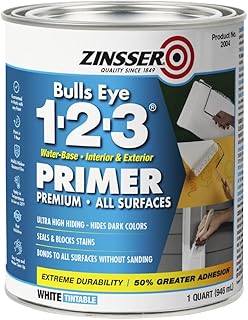
This water-based primer-sealer is designed for interior and exterior use, offering stain-blocking properties and all-surface adhesion. It bonds to glossy surfaces without scuff sanding and can be applied at surprisingly low temperatures (as low as 35°F). Best for: projects that require reliable adhesion across varied substrates without strong solvent odors. Better for: quick priming of bare wood or previously painted surfaces before color coats. Caution: water-based formulations may raise grain on some woods if not properly conditioned with sanding and moisture control.
Solo Guitars Oxford Aerosol Nitrocellulose Lacquer Primer (White)
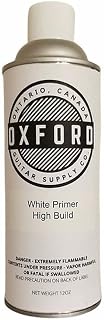
This high-build primer is designed to seal and prime wood prior to color coats. It sprays directly onto closed-grain woods sanded to 220 or 320 grit and can handle open-grain woods that have been grain-filled. Once dry, sand to 220–320 grit to ensure a flat surface for color coats. Best for: preparation work on wood, especially when aiming for a uniform surface before applying lacquer or paint. Caution: ensure proper ventilation when using aerosol lacquers and avoid over-application to prevent runs.
Rust-Oleum Painter’s Touch 2X Ultra Cover Spray Primer, Flat White

This flat white primer is designed for indoor and outdoor wood, metal, plastic, and other surfaces. The oil-based formula is low odor and provides long-lasting protection while drying to the touch in about 20 minutes. It covers up to 12 square feet per can. Best for: preparing diverse surfaces for topcoats, enabling bold or light color changes with predictable coverage. Choose this if you need broad compatibility and quick recoat times. Limitation: oil-based products may require dedicated cleanup and ventilation considerations.
Buying Guide: Key Purchase Considerations
- What surface will you prime? Consider wood types (soft vs. hardwood), existing finishes, and whether the surface is interior or exterior. Water-based primers are often easier to clean and low odor; oil-based primers may offer stronger adhesion on difficult substrates.
- Are you planning a color change or a clear topcoat? If you want a clear, protective top layer, a lacquer clear spray is appropriate. For pale or neutral undertones, choose a white or gray primer depending on the final color.
- What finish and topcoat will you apply? Match your primer to the intended topcoat (lacquer, enamel, or acrylic). Some primers are specifically designed to work with lacquer finishes, while others are general-purpose.
- What surface texture matters? For open-grain woods or grain-filled surfaces, consider high-build primers that provide a smooth base for color coats, as seen with some nitrocellulose or high-build spray primers.
- Application method and environment. Aerosol primers are convenient for small projects or detailed work, while spray cans and brushes suit larger areas. Ventilation and drying times influence project scheduling.
- Compatibility with existing finishes and color goals. When priming over glossy surfaces, look for primers that claim excellent adhesion on slick surfaces or that offer stain-blocking properties for interior and exterior use.
Frequently Asked Questions
- Do I need a primer for wood furniture before lacquer? Yes, primers improve adhesion, fill pores, and provide a uniform base for color coats or clear lacquers.
- Is water-based primer suitable for outdoor wood? Water-based primers can be used outdoors but may require additional UV protection or longer cure times in variable climates.
- Can I sand between primer coats? Yes. Lightly sand between coats to remove imperfections and improve topcoat adhesion.
- Should I use an oil-based primer on hardwoods? Oil-based primers often perform well on dense or oily woods, offering strong adhesion and blocking stains when necessary.
- What is the advantage of a high-build primer? High-build primers create a smoother base by filling grain and minor imperfections, resulting in a more uniform finish for color coats.
- Are spray primers easier to apply than brush-on? Sprays provide even coverage and faster application for flat surfaces, but require careful masking to avoid overspray and more ventilation.