Answering the question, choosing a light walnut stain for pine is about finding a product that enhances the wood grain without overpowering the pale pine. The top options below are suited for different projects, from indoor furniture to doors and trim. This guide highlights stain types, application notes, and who each product is best for. It helps homeowners, DIY enthusiasts, and professionals pick the right walnut tone for pine surfaces.
| Product | Best For |
|---|---|
| Varathane Total Control Gel Stain (Half Pint) Dark Walnut | Indoor furniture and trim where vertical or horizontal surfaces require minimal dripping |
| Varathane Premium Fast Dry Wood Stain Spray (Dark Walnut) | Intricate items and hard-to-reach areas needing fast, even coverage |
| Rust-Oleum Varathane 211719H Premium Wood Stain (Light Walnut) | Interior wood projects seeking deeper yet natural color |
| Varathane Total Control Gel Stain (Quart) American Walnut | Projects that need a consistent gel stain with low odor |
| COATEZ Wood Stain Brown Walnut (6.35 Fl Oz) | All-purpose indoor/outdoor use with combined stain and sealer |
Varathane Total Control Gel Stain Dark Walnut – Half Pint

Format: Thick, no-drip gel designed for both horizontal and vertical surfaces. Best for indoor wood projects like furniture, doors, and trim where a smooth, controlled application is desired. The low-odor, water-based formula reduces indoor scent exposure and eases cleanup. Dry time is approximately 1 hour on wood, allowing faster project completion.
Who it’s best for: DIYers refinishing pine furniture or cabinets who want strong color control and less mess on vertical surfaces. The gel consistency helps prevent runs on edges and corners. A caution is that gel stains can require multiple coats for very even dark saturation on highly light or figure-rich pine.
Varathane Premium Fast Dry Wood Stain Spray – Dark Walnut
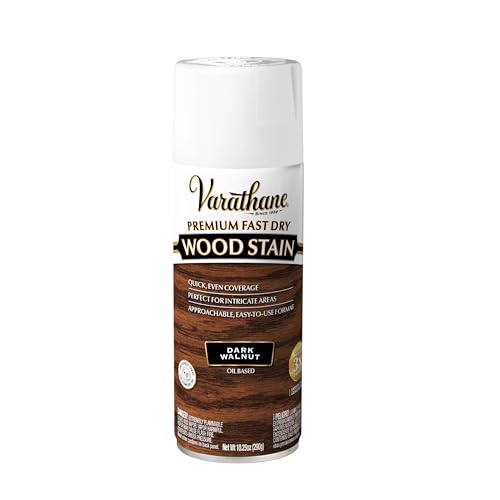
This product is a premium spray stain that dries quickly and covers interior wood surfaces evenly. It’s ideal for furniture, cabinets, doors, and trim where speed and access to tight corners matter. It’s oil-based and designed for intricate projects, allowing detailed work and a faster overall finish compared to brush-on stains. Coverage per can can be substantial for small to mid-size projects.
Who it’s best for: Professionals or serious DIYers who need fast, even coverage on Pine with minimal brush marks. Choose this if you’re staining curved or carved pieces where a brush would be challenging. Limitation: Sprays can require ventilation and careful masking of surrounding areas to avoid overspray.
Rust-Oleum Varathane 211719H Premium Wood Stain – Light Walnut (Quart)

This premium, soya oil-based stain delivers deeper color penetration and natural-looking results. It’s suited for interior wood furniture, cabinets, doors, trim, floors, and paneling. It dries to the touch in about 1-2 hours and can cover large pine surfaces effectively, producing a richer hue while preserving the grain.
Who it’s best for: Projects that require a more natural pine look with rich warmth and visibility of grain. Better for larger areas where thorough penetration matters. Caution: Oil-based formulas have longer cleanup and odor considerations indoors.
COATEZ Wood Stain – Brown Walnut (6.35 Fl Oz)

Wood stain and sealer in one, this product deeply penetrates to nourish wood while forming a protective surface seal. The built-in brush enables simple, controlled application, reducing drips and mess. It is a water-based formula with ultra-low VOCs and is marketed as safe for indoor use and outdoor projects. Coverage varies by layer depth, but it’s designed for versatility on furniture and trim.
Who it’s best for: Homeowners who want a simplified, all-in-one stain-and-sealer option for pine. Choose this if you prefer a single-step product with an integrated brush. Limitation: The coverage per bottle is moderate, so larger pine projects may require additional canisters or reapplication.
Buying Guide
What to consider when selecting a light walnut stain for pine:
- Indoor vs outdoor use: Water-based gels are often preferred indoors for low odor; oil-based stains provide deeper color on pine but may have stronger fumes.
- Sheen and finish: Decide between matte, satin, or semi-gloss based on room lighting and wear. Gel stains reduce runs on vertical surfaces, while sprays offer quick coverage on detailed pieces.
- Penetration vs surface seal: Some products are stains only, others include sealant or a built-in sealer. For pine, deeper color is easier with more penetrative formulas.
- Application method: Gel stains are forgiving on irregular surfaces; sprays are best for intricate shapes; brushes are versatile but require careful tool control.
- Drying time: Fast-drying formulas enable quicker project completion but may require multiple coats for uniform tone on pine.
- One-step vs multi-step: One-step stain/sealers save time but may limit finish options; multi-step approaches offer more control over color and protection.
Frequently Asked Questions
- Can pine accept dark walnut finishes without blotching? Yes, especially with gel or pre-stain wood conditioners that promote even absorption.
- Is water-based stain suitable for high-traffic pine furniture? Yes, particularly gel-based water stains that dry quickly and reduce blotching, followed by a compatible topcoat.
- Do I need a separate sealer after staining pine? It depends on the product. Some stains include sealers; others require a separate topcoat for protection.
- Which finish lasts longest on pine in indoor settings? Oil-based stains typically offer longer color retention and penetration, but modern water-based formulas are improved for durability and low odor.
- What’s the best method for staining detailed pine furniture? Sprays or gels can help minimize brush marks on carvings; use long, even strokes for uniform color.
- How should I prepare pine before staining? Light sanding, cleaning dust, and a pre-stain conditioner can help achieve even color on pine.