If you’re repairing ceiling cracks or reinforcing drywall seams, the right fiberglass mesh tape makes a big difference. This guide highlights five top mesh tapes designed for durable, lint-free repairs on ceilings and walls. It’s ideal for DIYers, contractors, and property owners seeking strong adhesion, easy application, and long-lasting results. Below is a quick summary table of the chosen products to help you compare at a glance.
| Product | Mesh Type | Size | Best For |
|---|---|---|---|
| LYLTECH Drywall Joint Tape-13 MESH | Fiberglass Mesh | 1.88 in x 180 ft | Heavy-duty cracks and seams on ceilings |
| QILIMA Self-Adhesive Fiberglass Tape | Fiberglass Mesh | 2 in x 148 ft | Long seams and crack repairs |
| NEZUIBAN Drywall Joint Tape | Fiberglass Mesh | 1.97 in x 150 ft | Professional-grade seam reinforcement |
| LIOUXUE Drywall Joint Tape | Fiberglass Mesh | 1.97 in x 180 ft | Crack repair for walls and ceilings |
| Creztail Drywall Joint Tape | Fiberglass Mesh | 4 in x 100 ft | Large-area patching and outdoor use |
LYLTECH Drywall Joint Tape-13 MESH

Product Type: 100% fiberglass mesh, 0.8mm thick. This tape is designed for high-density fiberglass mesh with strong alkali resistance and high tensile strength. It is self-adhesive and repositionable, reducing the need for pre-painting joint compounds. Best for tough ceilings and stubborn cracks, especially where a durable, long-lasting bond is needed.
- Best for heavy-duty crack and seam repairs on ceilings and walls.
- Self-adhesive backing allows easy placement without pre-apply of joint compound.
- Caution: Open edges or uneven surfaces may require extra smoothing with joint compound for a flawless finish.
QILIMA Self-Adhesive Fiberglass Drywall Joint Tape
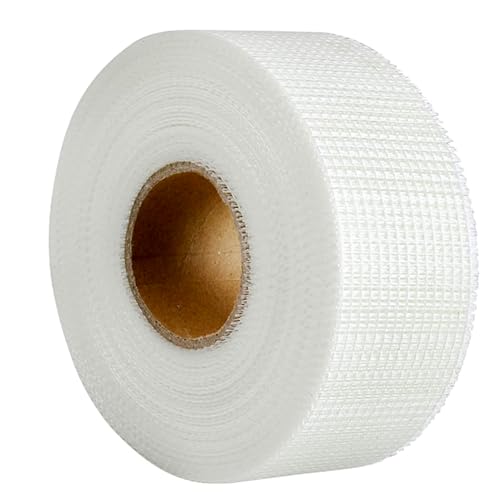
Product Type: 50 mm wide, 45 m long fiberglass tape with 2.36 mm mesh holes. It offers long service life with high tensile strength and deformation resistance, and it adheres well to drywall without pre-application of joint compound. This tape is well-suited for quick repairs of cracks and seams on ceilings and walls.
- Best for long-run seam repairs and quick fixes.
- Open mesh design enables even compound penetration for a smoother finish.
- Caution: Ensure clean surfaces; dust and oil can reduce initial adhesion.
NEZUIBAN Drywall Joint Tape

Product Type: Heavy-duty 13-mesh fiberglass tape with self-adhesive backing. Designed to reinforce drywall seams and prevent future cracking, it sticks securely without pre-priming and can be cut to size for precise applications on ceilings and walls.
- Best for professional-grade drywall repairs and crack prevention.
- Open mesh design supports even compound flow for stronger bonds.
- Caution: Some surfaces may require slight spackle touch-ups after drying for a perfect finish.
LIOUXUE Drywall Joint Tape

Product Type: 1.97-inch by 180 ft heavy-duty fiberglass mesh tape. Highly tensile and resistant to alkali and high temperatures, this tape is designed for durable repairs on walls, ceilings, and other surfaces. It’s self-adhesive and repositionable for easy installation.
- Best for mixed indoor environments and ceilings with potential temperature changes.
- Advantages: Strong adhesion with repositioning capability.
- Caution: For very wide or irregular cracks, consider additional reinforcement with joint compound.
Creztail Drywall Joint Tape

Product Type: 4-inch by 100 ft fiberglass mesh tape, designed for long-lasting repairs. High-density mesh resists tearing and shrinking, with anti-corrosion features for indoor and outdoor use. Self-adhesive backing eliminates the need to pre-apply joint compound and supports easy placement.
- Best for larger repairs and outdoor or humid environments.
- Advantages: Durable under stress; compatible with various substrates.
- Caution: Larger width may require more careful alignment to avoid wrinkles on ceilings.
Buying Guide: Mesh Tape For Ceiling And Drywall Repairs
What to consider when choosing mesh tape
Material strength, mesh density, adhesive quality, and size are key factors. A tape with high tensile strength and alkali resistance is ideal for drywall seams and ceiling cracks. Self-adhesive options simplify application and reduce the need for pre-applied joint compound.
When to choose heavy-duty over standard tapes
Choose heavy-duty fiberglass tapes for large or high-traffic ceilings, exterior installations, or areas with temperature fluctuations. Lighter tapes are suitable for small cracks and cosmetic repairs where moisture exposure is minimal.
Do you need pre-application of joint compound?
Many self-adhesive tapes eliminate the need for a pre-applied joint compound, speeding up repairs. For a flawless finish, apply joint compound over the patched area after initial adhesion and sanding as needed.
Surface preparation tips
- Clean the surface to remove dust, oil, and loose debris.
- Dry with a towel before applying the tape.
- Apply at a steady pressure to avoid wrinkles and ensure full contact with the substrate.
Installation tips for ceilings vs. walls
Ceiling work may require more careful alignment to avoid sagging. Start at the center of the seam and press outward to ensure flat adhesion. For walls, keep the tape taut to limit air pockets and ensure a smooth finish.
Long-term maintenance considerations
Inspect repaired ceilings periodically, especially in high-humidity spaces like bathrooms or kitchens. Re-apply or touch up joint compound if new cracks emerge near repaired seams.
FAQ
- Q: Can mesh tape be used on concrete or plaster? A: Yes, many fiberglass tapes work on plaster or concrete surfaces when properly prepared and finished with joint compound.
- Q: Is self-adhesive tape enough for outdoor use? A: It can work indoors and under sheltered outdoor conditions; for exposed outdoor use, consider tapes designed for moisture resistance and additional sealing.
- Q: Do I need to prime the surface before applying tape? A: Generally no, if using self-adhesive tapes, but ensure the surface is clean and dry for best adhesion.
- Q: How wide should I choose? A: Wider tapes (around 4 inches) are better for large patches; narrower tapes are suitable for small cracks and seams.
- Q: Can I reuse tape after repositioning? A: Repositionable tapes allow some adjustment, but prolonged repositioning can reduce adhesion; apply once in the final position.
- Q: How many coats of joint compound are typically needed? A: Usually two to three coats, with sanding between coats for a smooth finish.