When you’re repairing or renovating drywall, a metal-reinforced flex corner tape delivers stronger corners and crisper lines. This guide highlights five top options, each suited to different project sizes and user needs. Ideal buyers include DIY homeowners tackling home renovations, pros finishing large repair jobs, and renovators working in older homes with crooked or uneven corners.
| Product | Length | Width | Material/Notes | Why It Stands Out |
|---|---|---|---|---|
| UNRUNFO Reinforced Drywall Corner Tape (2in × 100ft) | 100 ft | 2 in | Metal strips on paper base; No adhesive side | Great for protecting inside and outside corners with crisp lines; solid for general residential use. |
| Peohud Drywall Corner Tape (2in × 100ft) | 100 ft | 2 in | 2 rust-proof galvanized steel strips on paper base; No adhesive side | Value-packed length with durable metal reinforcement; suitable for repairs and crack mitigation. |
| UNRUNFO Drywall Corner Tape (2in × 150ft) | 150 ft | 2 in | Metal strips; No adhesive side | Extra length for larger projects; helps align crooked lines and maintain 90-degree corners. |
| ROLLINGDOG Reinforced Drywall Corner Tape (2in × 98.4ft) | ~98 ft | 2 in | Aluminum steel strips; No adhesive side | Beige finish with flexible bend to 90°, strong edge reinforcement for durable corners. |
| HolyMaji Drywall Corner Tape with Metal (2in × 100ft) | 100 ft | 2 in | Kraft paper composite with two galvanized steel strips; No adhesive side | Balanced durability and appearance; robust corner bead for crack repair in repairs and renovations. |
UNRUNFO Reinforced Drywall Corner Tape

Features include protection of interior and exterior corners against abrasion and damage, crisp line definition, and improved corner strength for a firm 90-degree angle. Best for: general home renovations and projects requiring dependable edge reinforcement. Limitation: No adhesive side means it relies on putty and tape application to secure in place.
Peohud Drywall Corner Tape

Value-packed with 100 feet of 2-inch tape and two galvanized steel strips on a paper base. Best for: repairs and cracks in walls where durable metal reinforcement is desirable. Limitation: Non-adhesive surface requires a separate coat of putty for stability and finish.
UNRUNFO Drywall Corner Tape (150 Ft)

Corner protection excels for both interior and exterior corners, maintaining a clean 90-degree angle and adding rigidity to cover large gaps. Best for: older homes or renovations with irregular walls and uneven junctions. Limitation: Longer rolls require careful handling to avoid kinks during installation.
ROLLINGDOG Reinforced Drywall Corner Tape

Length around 100 feet with a beige finish and two aluminum steel strips for corrosion resistance. Best for: DIYers needing a flexible 90° bend without edge cracking. Limitation: Aluminum strips resist rust but may require careful alignment for best results.
SmaringWing Aluminum Foil Duct Tape (Optional Context)

Note: This listing is included for comparison of metal-based repair options. It is a duct tape product with high-temperature and water resistance, suitable for HVAC joints and patches. Best for: non-structural edge sealing and temporary fixes on metal ducts. Limitation: Not a drywall corner tape; use only where appropriate for duct or surface sealing.
Strait Flex Drywall Tape – Perfect-90°

Fast corner tape designed for inside angles and off-angle corners with a hinge that aids clean repair without extra center mud. Best for: quick finishing of interior corners and tight finishing of 90° angles. Limitation: Not explicitly metal-reinforced in the listing; rely on its finished edge design for strength.
HolyMaji Drywall Corner Tape with Metal (40 Ft)

Two galvanized steel strips reinforce a kraft composite base; no adhesive side. Best for: targeted corner repairs in tight spaces where extra rigidity is helpful. Limitation: Shorter roll length means more frequent replacements on larger projects.
HolyMaji Drywall Corner Tape with Metal (100 Ft)
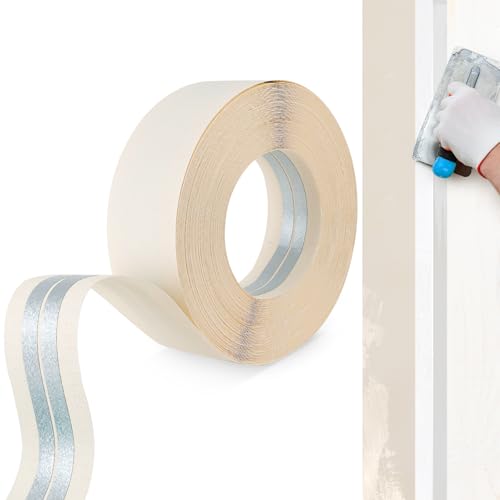
Longer 100-foot roll with two galvanised steel strips for improved corner stability. Best for: larger repair jobs or renovations requiring extended corner coverage. Limitation: As with other non-adhesive tapes, surface prep and putty application are essential for best results.
Buying Guide: Metal Flex Corner Tape Essentials
- What is metal-reinforced corner tape? A corner repair tape that includes metal strips (commonly galvanized steel or aluminum) to strengthen corners and resist cracking at 90-degree joints.
- Which length should I choose? Longer rolls reduce reloading but require planning for straight cuts. For small fixes, 40–100 ft works well; for larger renovations, 150 ft offers continuity.
- Adhesive vs. non-adhesive options: Non-adhesive tapes rely on putty or joint compound to secure the wall and provide a smooth finish. Adhesive-backed variants are less common in metal-reinforced tapes and may require different prep.
- Best use cases: Inside corners requiring sharp, clean lines; exterior corners needing abrasion resistance; older homes with crooked walls needing alignment stability.
- Surface prep: Clean and level the joint, remove loose material, and smooth the corner with putty before applying the tape. Sanding after drying yields the best finish.
Frequently Asked Questions
- What is the benefit of metal-reinforced corner tape? It provides rigidity to corners, helps maintain a true 90-degree angle, and resists cracking in high-stress areas.
- Do these tapes require adhesive? Most listed options have no adhesive on the tape surface; they rely on putty and proper edge alignment for stability.
- Can I use metal corner tape on every wall? Yes, for corners that experience abrasion or cracking, especially in high-traffic areas or older homes with uneven framing.
- How long does a finish take? After applying putty and sanding, you typically seal and paint as you would with standard drywall repairs; drying times depend on the compound used.
- Is longer tape better for large projects? Longer tapes reduce seams and repeated starts, but require careful handling to avoid creases and misalignment.
- Should I choose aluminum or steel strips? Aluminum resists corrosion and is lighter; galvanized steel strips offer strong rigidity, depending on project conditions.