Selecting the right mitre saw blade depends on material, desired finish, and cutting speed. The five blades below represent common 10-inch and 12-inch carbide-tipped options designed for fine finishes, durability, and clean crosscuts. Each blade is suited for woodworking tasks from cabinetry to trim, with varying tooth counts and kerf widths to match different project needs. This guide highlights the strengths, ideal uses, and buying considerations to help you pick the best blade for your saw and workload.
| Product | Brand | Size | Teeth | Specialty |
|---|---|---|---|---|
| WEN BL1080 80-Tooth Ultra-Fine Finish | WEN | 10″ | 80 | Ultra-fine finish, clean crosscuts |
| DEWALT 12-Inch 100-Tooth Fine Finish | DEWALT | 12″ | 100 | Low vibration, smooth finish |
| Diablo 12-Inch 80-Tooth Finish Blade | Diablo | 12″ | 80 | Hi-density carbide for durable finishes |
| DEWALT 10-Inch 80-Tooth Finish | DEWALT | 10″ | 80 | Fine finish, low vibration |
| TOMAX 12-Inch 100-Tooth | TOMAX | 12″ | 100 | Carbide for long life on non-ferrous metals |
WEN BL1080 10-Inch 80-Tooth Blade
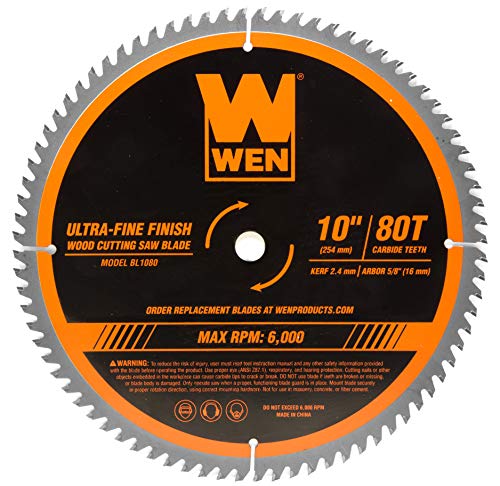
The WEN BL1080 is a carbide-tipped blade designed for ultra-fine finishing on wood. Its 10-inch diameter and 5/8-inch arbor are built to run at high speeds (up to 6000 RPM), making it suitable for precise crosscuts, miters, and trim work. The blade’s ultra-thin kerf, at approximately 0.10 inches, minimizes waste and reduces chatter, helping achieve clean, film-free edges in both hard and soft woods. While optimized for finish work, it also maintains stability across typical miter and table saw applications.
- Diameter: 10 inches; Tooth count: 80; Carbide-tipped
- Ultra-thin kerf for minimal waste and smooth cuts
- RPM rating up to 6000, suitable for hardwoods and softwoods
- Intended for use with miter saws and table saws
DEWALT 12-Inch 100-Tooth Fine Finish Blade

This DEWALT 12-inch blade is engineered for long life and highly refined finishes. The 100-tooth configuration provides smooth, near-zero tear-out crosscuts, ideal for cabinetmaking and other fine woodworking tasks. Its patented body slot design reduces vibration, contributing to steadier cuts and less blade wandering. The tooth geometry is optimized to enhance accuracy and cut quality, ensuring clean profiles on both hardwoods and softwoods. This blade is a solid choice when a finish-ready surface is required without post-cut sanding.
- Size: 12 inches; Teeth: 100; Finish-oriented
- Low-vibration body slot design for steadier cuts
- Optimized tooth geometry for accuracy
- Suitable for cabinetmaking and fine joinery
Diablo 12-Inch 80-Tooth Fine Finish Blade
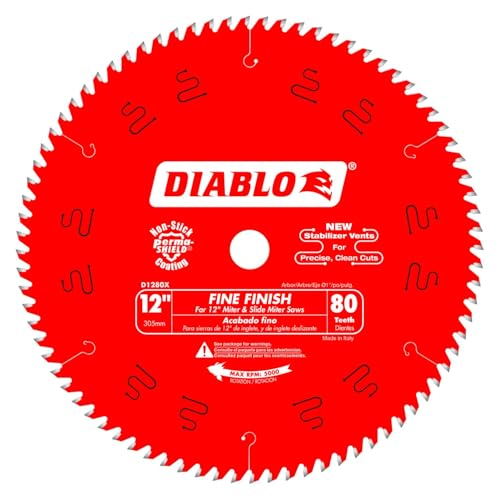
Diablo’s D1280X blade targets clean crosscuts with high-density carbide (TiCo) for durable performance. The 12-inch blade features 80 teeth and an alternate top bevel geometry designed to reduce tear-out on both hardwoods and softwoods. This combination supports a refined finish with minimal sanding, making it well-suited for cabinetry, trim work, and detailed joinery. The blade’s design emphasizes stability and accuracy during high-precision cuts.
- 12 inches; 80 teeth; fine finish emphasis
- Hi-Density TiCo carbide for durability
- Alternate top bevel geometry reduces tear-out
- Ideal for hardwood and softwood crosscuts
DEWALT 10-Inch 80-Tooth Fine Finish Blade

The DEWALT 10-inch 80-tooth blade is designed for finish quality with reduced vibration and enhanced accuracy. Its optimized tooth geometry helps minimize chipping on delicate grains and ensures smooth edge quality on a variety of softwoods and hardwoods. The blade is built to hold a consistent cut at standard miter saw speeds, making it a reliable choice for finish carpentry, crown molding, and cabinet components where precise, well-finished edges are critical.
- 10 inches; 80 teeth; fine finish
- Low-vibration design enhances accuracy
- Optimized teeth for clean crosscuts
- Suitable for cabinetmaking and trim work
TOMAX 12-Inch 100-Tooth Blade
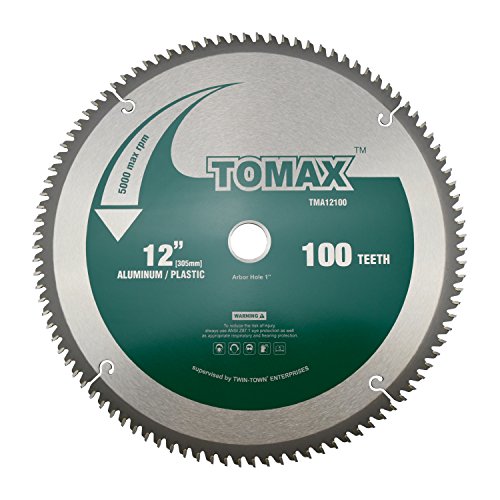
The TOMAX 12-inch blade features 100 carbide-tipped teeth and a robust construction aimed at long life. Its design is suited for precise, fine-crosscuts in non-ferrous metals and plastics as well as wood, broadening its versatility for projects requiring clean edge finishes on mixed materials. An electrophoretic coating helps resist rust and corrosion in challenging shop environments, contributing to blade longevity and consistent performance across tasks.
- 12 inches; Teeth: 100; Carbide-tipped
- Suitable for wood, plastic, aluminum, and non-ferrous metals
- Electrophoretic coating reduces rust and corrosion
- Long-lasting crosscut performance
Buying Guide
When selecting a mitre saw blade, consider how you will use it, material type, and desired finish quality. Blade size (10″ vs 12″) directly affects cut capacity and the saw’s balance; larger blades cut deeper but require a compatible saw, and often offer more teeth for finer finishes. The number of teeth is a quick proxy for finish quality: 80–100T blades excel at clean crosscuts in wood, while 40T blades cut faster with more aggressive feed but rougher edges. Ultra-thin kerfs reduce waste and vibration but may be less forgiving on extremely hard materials or heavy-duty tasks. Carbide-tipped teeth provide durability and a longer life under typical woodworking loads.
- Material compatibility: Most wood-focused blades are best for cabinetry, trim, and fine woodworking; metal or composite blades excel in non-wood applications.
- Tooth geometry: Fine finishes benefit from higher tooth counts (80–100T) with alternate bevel or anti-tear-out designs; rough cuts use lower tooth counts (40T) for speed.
- Kerf width: Ultra-thin kerf (roughly 0.10″) saves material and reduces vibration, but durability can vary under heavy load.
- Arbor size and compatibility: Confirm saw arbor (commonly 5/8″ or 1″) to ensure proper fit and performance.
- Vibration control: Features like body slot design and grade carbide contribute to smoother cuts and better finish quality.
- Material focus: For hardwoods and softwoods, choose a blade designed for finish quality; for plastics or non-ferrous metals, select blades rated for those materials.
- Maintenance and replacement: Inspect blades for chipped teeth or dull edges; replace when finish quality degrades or vibration increases noticeably.
- Cost vs performance: Higher tooth counts and quality carbide typically deliver better finishes and longer life, justifying a higher upfront cost for many users.
In summary, for fine woodworking and cabinetry, blades with 80–100 teeth and precise bevel design typically deliver the best finishes, while 40T blades suit rough-cut tasks more efficiently. Match blade size to your saw and the material you work with, and prioritize carbide-tipped teeth and vibration-reducing features to achieve consistent, professional results.