Direct answer: The most effective paint strippers for DIY use balance strong cleaning power with user-friendly formulas and safer ingredients. This guide highlights popular options that work on latex, acrylic, oil-based paints, varnishes, and coatings across wood, metal, masonry, and more. Ideal buyers include homeowners tackling furniture refinishing, cabinet restoration, deck or floor stripping, and hobbyists needing reliable strip-and-go solutions. Below is a quick buying table, followed by detailed product insights and a practical buying guide.
| Product | Best For | Key Benefit |
|---|---|---|
| Smart ‘n Easy Paint & Varnish Remover Gel | DIY furniture, cabinets, and wood surfaces | Tested compatibility; citrus scent; no caustic chemicals |
| Sunnyside 63432 2-Minute Remover Gel | Vertical surfaces; multi-layer stripping | Methylene chloride-free; fast-acting and safe on wood and masonry |
| Max Strip Paint & Varnish Stripper 32oz | Wood, metal, masonry, and plaster projects | No caustic chemicals; check every 15 minutes for best timing |
| Paint & Varnish Remover Klean Strip Premium Stripper | Epoxy, polyurethane, and tough coatings | Includes protective gloves; residue-free finish |
| Motsenbocker’s Lift Off 41301 Latex Paint Remover Spray | Latex paints and multiple surfaces; cleanup | Water-based; versatile on tools and fabrics |
Smart ‘n Easy Paint & Varnish Remover Gel

Best for DIY furniture projects and woodwork where a citrus-scented, water-based remover is preferred. This gel claims to remove acrylic, latex, oil, and water-based paints and varnishes largely in a single application. It is designed for a broad range of surfaces including furniture, cabinets, decks, brick, plaster, and more. The formula emphasizes safety by avoiding caustic chemicals and aims to reduce skin irritation. A key consideration is to always test for coating compatibility before full application to avoid unintended damage. Suitable for DIYers who want a user-friendly option with straightforward cleanup.
Caution: Test first on a hidden area to ensure finish compatibility. Allow sufficient dwell time and follow instructions for scraping after the reagent softens coatings.
Sunnyside 63432 2-Minute Remover Gel
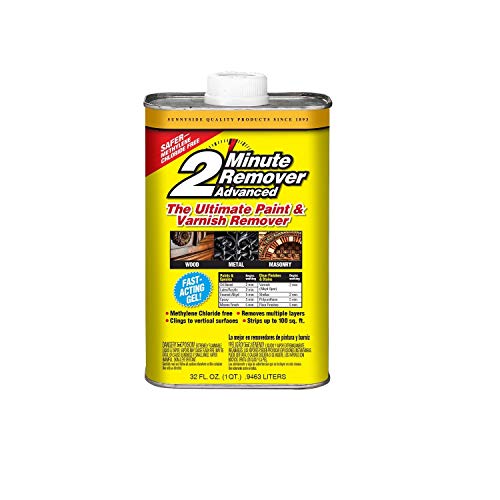
Best for safety-conscious users needing a methylene chloride-free option that works on multiple layers in one pass. The non-chlorinated formula is positioned as safe to use on both vertical and horizontal surfaces without damaging wood, metal, or masonry. This makes it a strong pick for projects like wall treatment, trim stripping, or furniture refinishing where speed matters but surface care cannot be compromised. Choose this if you want a faster, safer stripping experience without strong solvent odors.
Caution: Performance can depend on coating thickness and dwell time. Always follow surface-specific guidance and test beforehand on a small area.
Max Strip Paint & Varnish Stripper 32oz
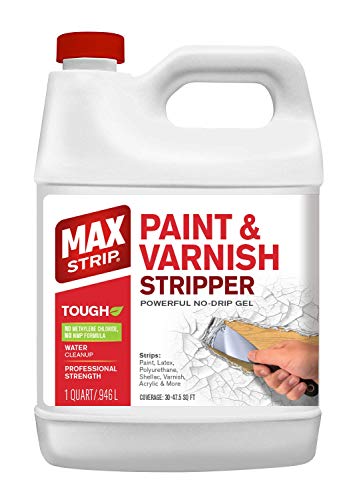
Best for versatile, multi-surface projects such as wood, metal, masonry, plaster, and molding. It promises a single-application approach for removing latex, polyurethane, shellac, varnish, and various oil-based coatings, with a user-friendly, non-caustic formula. It’s well-suited for DIYers who need a robust solution that remains manageable for larger jobs. The main limitation is to monitor times closely and scrape when the coating softens to avoid over-wetting sensitive substrates.
Paint & Varnish Remover Klean Strip Premium Stripper
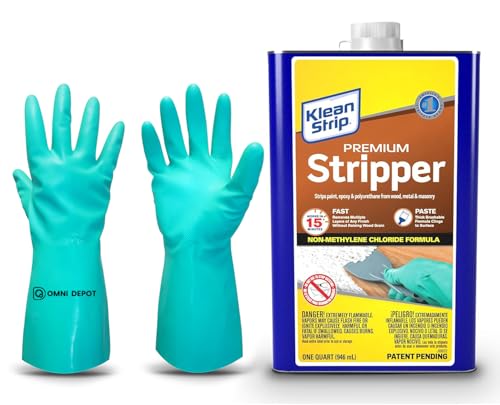
Best for tougher coatings like epoxy and polyurethane on wood, metal, and masonry. This premium stripper includes protective gloves and emphasizes a clean, residue-free surface ready for refinishing. It’s a practical choice for restorers and serious DIYers addressing durable finishes. A potential limitation is handling safety equipment and ensuring proper ventilation during use, as with most strong-stripping formulations.
Motsenbocker’s Lift Off 41301 Latex Paint Remover Spray

Best for latex paints and light coatings across multiple surfaces, including fiberglass, brick, upholstery, and tools. Its water-based formula is designed for easy cleanup and minimal residue, making it ideal for projects that require quick, multi-purpose cleanup after paint removal. It’s particularly effective for cleanup tasks and for loosening latex paints before scraping. Limitation: may require repeated applications for stubborn layers on tough substrates.
Buying Guide
What to consider when choosing a paint stripper
- Coating compatibility: Check if the product is formulated for latex, acrylic, oil-based, shellac, or epoxy coatings.
- Surface type: Consider whether you are stripping wood, metal, masonry, or a delicate substrate to avoid damage.
- Safety and odor: Decide between methylene chloride-free formulas and stronger solvents based on ventilation and sensitivity.
- Application method: Gel forms can limit run-off on vertical surfaces; liquid gels or sprays may be better for broad applications.
- Dwelling and timing: Some products require checking every 10-15 minutes; others work faster but need careful monitoring.
- Cleanup and residues: A residue-free finish saves time on sanding and prep for refinishing.
Frequently Asked Questions
- What type of paint stripper is safest for beginners?
– Water-based, non-caustic gel formulas are typically easier to handle, emit less odor, and reduce skin irritation, though they may require longer dwell times on tough coatings. - Can I strip painted brick or masonry?
– Yes, several products are designed for masonry surfaces; verify the label for compatibility with brick or stone. - Is methylene chloride-free always less effective?
– Not necessarily; methylene chloride-free formulas can be safer but may require longer dwell times or multiple applications on heavy coatings. - Should I use a stripper on vertical surfaces?
– Gel-based formulations are often better for vertical surfaces to minimize running, though some advanced gels are designed for vertical use. - What is the best way to test compatibility?
– Apply a small amount on a hidden area, wait the recommended dwell time, then scrape softly to assess coating removal and surface integrity. - How do I dispose of removed paint and chemical waste?
– Follow local regulations for paint disposal; set removed coating aside with appropriate containers and avoid mixing with ordinary trash.