If you’re renovating or refreshing brick pavers, the right paint can transform texture and color while protecting surfaces from the elements. This guide targets common buyers: DIY homeowners seeking an affordable upgrade, renters needing a non-permanent option, and outdoor enthusiasts wanting weather-resistant finishes. Below are five top choices that balance coverage, adhesion, and ease of use. A quick summary table follows to help you compare at a glance.
| Product | Best For | Key Benefit |
|---|---|---|
| KILZ Self-Priming Masonry, Stucco and Brick Paint (Gray) | All-purpose interior/exterior brick surfaces | Self-priming with strong hiding power and soap-and-water cleanup |
| Giani Brick Transformations Whitewash Paint (16 oz) | Creative whitewash look on brick and fireplaces | Water-based, low odor, covers up to 100 sq ft per coat |
| KILZ Self-Priming Masonry, Stucco and Brick Paint (Tan) | Earth-toned brick surfaces with durable finish | Same self-priming, alkali-resistant formula |
| Giani Brick Transformations Whitewash Paint for Walls | Brick walls and fireplaces with a whitewash effect | Covers up to 200 sq ft, low odor |
| GLAINTE Brick Transformation Paint Kit (White) | Direct-to-brick, indoor/outdoor versatility | Water-based, adjustable opacity with mix ratios |
KILZ Self-Priming Masonry, Stucco and Brick Paint (Gray)

This high-quality acrylic latex water-based paint offers excellent hiding and adhesion on textured brick, masonry, drywall, stucco, and related surfaces. It is self-priming, alkali-resistant up to pH 12.0, and cleanups are soap-and-water friendly. It can be rolled, brushed, or sprayed. Best for: DIY exterior brick facades and interior brick accents where strong coverage is needed without a separate primer.
Selection note: Choose this if you want a straightforward, all-in-one solution with good water repellency and a breathable film. Caution: For very porous or severely degraded brick, a test patch is advised to confirm even coverage.
KILZ Self-Priming Masonry, Stucco and Brick Paint (Tan)

This tan-tinted version shares the same core benefits: high hiding power, excellent adhesion, and water repellency for both interior and exterior brick and masonry surfaces. It’s self-priming and alkali-resistant up to pH 12.0, with easy cleanup. Best for: Brick surfaces where a warmer, earth-toned finish is desired for exterior facades or interior accents. Caution: May require multiple coats on highly textured brick for uniform color.
Giani Brick Transformations Whitewash Paint for Brick and Fireplaces (16 oz)

This water-based acrylic paint is designed for whitewashing brick and fireplace surfaces. It must be diluted at least 1:2 with water to achieve full coverage. It has low odor and VOCs and covers about 100 sq ft per coat, depending on porosity. Best for: Creating a light, rustic brick look without heavy coating. Caveat: Dilution requirements mean preparation and testing are essential for spacing and depth control.
Selected for: Those pursuing a bright, fresh, or historic whitewashed brick appearance with easier removal or modification later.
Giani Brick Transformations Whitewash Paint for Walls

Designed for brick walls and fireplaces, this whitewash option covers up to 200 sq ft and emphasizes a low odor and VOC profile. It must be diluted to reach full coverage, so follow included instructions or kit videos carefully. Best for: Brick wall renovations seeking a clean whitewash aesthetic with a lighter touch. Limitation: Higher coverage requires precise dilution and technique to avoid patchiness.
GLAINTE Brick Transformation Paint Kit (White)
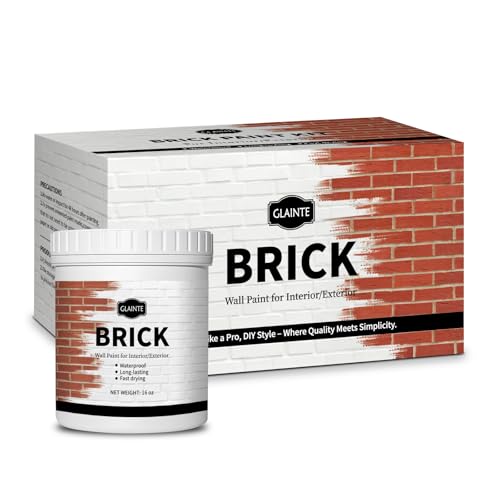
GLAINTE offers a white brick transformation kit that works on brick, concrete, wood, and more, indoors or outdoors. The formula is water-based with low odor and VOCs, and you can adjust opacity with water ratios (1:1 for light veiling, 1:2 for bolder, textured finishes). Best for: Users seeking versatile, direct-to-brick application with customizable finishes. Caution: Outdoor use should avoid rain during application until fully dry to prevent wash-off.
Buying Guide
What finish should I expect from brick paint?
Finishes range from flat and matte to a slight sheen, depending on the base and whether a protective topcoat is used. Self-priming systems simplify application, but you may still want to seal highly exposed surfaces for extra durability.
How do I choose between whitewash versus solid brick paint?
Whitewash provides a translucent, rustic look that preserves texture, while solid paints offer more opaque color and hiding power. Whitewash typically requires dilution guidance and regular maintenance, whereas solid paints may need priming on porous surfaces.
Is odor or VOC content a concern?
Water-based products in this list generally have lower odors and VOCs. If you’re painting indoors or in enclosed spaces, opt for low-odor options and ensure adequate ventilation during application and curing.
How much area will each product cover?
Coverage varies by product and surface porosity. For example, some whitewash options specify coverage around 100–200 sq ft per coat with dilution. Always test a small area to gauge coat thickness and necessary coats before committing to a full project.
What maintenance is needed after painting brick pavers?
Most brick paints resist moisture and weathering but may require periodic cleaning and reapplication over time in high-traffic outdoor areas. Use a gentle cleaner that won’t strip the finish and follow manufacturer guidelines for re-coating intervals.
Application tips for best results
- Prepare surfaces: clean, remove loose material, and dry thoroughly before painting.
- For porous brick, consider a primer or a self-priming product with multiple coats for uniform color.
- Test color and finish on a small area first to confirm texture and coverage.
- Apply in moderate temperatures and avoid painting in direct sunlight on very hot days.
FAQ
- Q: Can brick paint be used indoors and outdoors?
- A: Yes. The listed products are designed for interior and exterior brick and masonry surfaces, with some formulations emphasizing exterior durability.
- Q: Do I need a separate primer?
- A: Most self-priming products provide adequate adhesion, but highly porous or damaged surfaces may benefit from a primer.
- Q: How long does it take for brick paint to cure?
- A: Cure times vary by product and climate; follow label instructions for recoat windows and full cure.
- Q: Is whitewash reversible?
- A: Whitewashed finishes are generally more forgiving to alter or refresh than solid, opaque paints.
- Q: Can I use these on brick veneers or decorative panels?
- A: Most paints are suitable for brick-like surfaces, but always verify compatibility with your specific substrate.