For cement block walls, choose paints and coatings that offer solid adhesion, moisture resistance, and long-lasting finishes. This guide highlights top options for interior and exterior block surfaces, with quick picks for different types of buyers—from DIY homeowners to professional renovators. Below you’ll find five suitable products, each explained with who it’s best for, plus a concise buying guide and FAQs to help you decide.
| Product | Best For |
|---|---|
| KILZ Self-Priming Masonry, Stucco and Brick Paint | Interior/exterior blocks needing good hiding power and simple cleanup |
| KILZ Basement and Masonry Waterproofing Paint | Moist basement or exterior walls requiring water protection |
| INSL-X WaterBlock Acrylic Masonry Paint | Vertical masonry walls needing fast-drying, alkali resistance |
| Hensire White Exterior Wall Paint for Concrete & Masonry | Outdoor concrete or brick with strong adhesion and weather resistance |
| 1 Quart Bulls Eye 1-2-3 Primer Sealer Stain Killer | Primer/sealer for multi-surface blocks and glossy finishes |
KILZ Self-Priming Masonry Paint

The KILZ Self-Priming Masonry Paint is an acrylic latex water-based option with strong adhesion and water repellency on textured masonry surfaces. It can be rolled, brushed, or sprayed, and is suitable for interior and exterior walls, including brick, stucco, and drywall. It’s alkali-resistant up to pH 12, making it a practical choice for concrete blocks exposed to moisture. This product is best for homeowners seeking a simple, one-coat or few-coat application that requires minimal priming effort.
Who it’s best for: DIYers and small projects where a self-priming, easy-cleanup coating is desired. Choose this if you want straightforward application and a finish that hides texture well while resisting moisture.
Limitations: It may not be ideal for areas with active water leaks or below-grade moisture without addressing drainage beforehand. Not a guaranteed long-term solution for severe water intrusion.
KILZ Basement and Masonry Waterproofing Paint
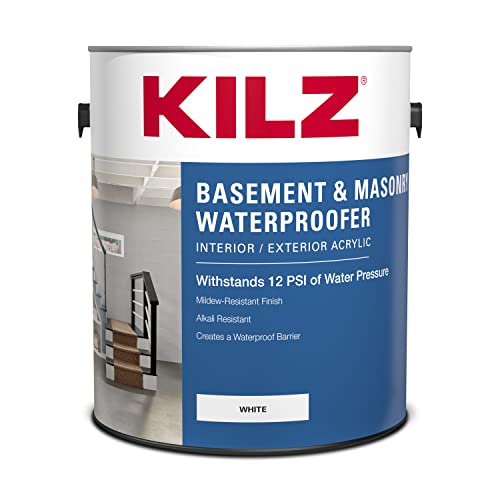
This waterproofing paint uses nanotechnology to create a water barrier that can block up to 12 PSI of water pressure. It’s designed for interior and exterior concrete, brick, cinder block walls, and retaining walls. It’s best for basements or outdoor masonry surfaces where moisture exposure is a primary concern. Note that for below-grade use, you should fill holes and cracks with hydraulic cement prior to painting, and it’s not recommended for floors or actively leaking walls.
Who it’s best for: Homeowners and renovators addressing moisture problems in basements or exterior masonry. Choose this if water infiltration is a primary concern and you want a dedicated waterproofing coating.
Limitations: Not suitable for areas with active leaks or floor applications. Preparation steps (crack filling) are essential for best performance.
INSL-X WaterBlock Acrylic Masonry Paint
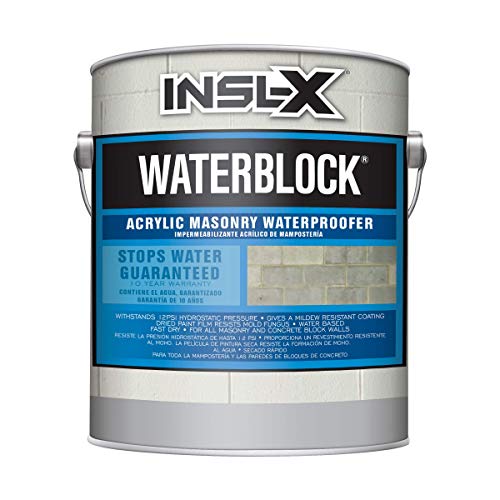
INSL-X WaterBlock is a water-based coating designed to seal vertical interior and exterior concrete walls, including basements, foundations, and retaining walls. It dries quickly and offers high alkali resistance up to pH 13. This makes it a strong candidate for blocks that face moisture and alkalinity from masonry materials. It’s a good pick when you need a fast-drying finish with robust moisture protection.
Who it’s best for: Property owners seeking a fast-drying, alkali-resistant coating for concrete and masonry walls. Choose this if you want reliable performance in damp environments and quick recoat times.
Limitations: May require multiple coats for very porous surfaces; ensure surface preparation is thorough for best adhesion.
Hensire White Exterior Wall Paint for Concrete & Masonry

This exterior wall paint is designed for concrete and masonry surfaces, emphasizing strong adhesion and weather resistance. It’s marketed as a top-selling option for outdoor use on brick and concrete textures, helping to refresh brick facades and rough blocks. Best for long-lasting color and exterior protection, particularly where exposure to sun and rain is ongoing.
Who it’s best for: Exterior renovators and homeowners looking for a durable brick/concrete finish with sustained color. Choose this for outdoor block walls that require an enduring protective coating.
Limitations: Exterior paints can take longer to cure in cold or humid climates; ensure proper surface cleaning and priming if needed.
1 Quart Bulls Eye 1-2-3 Primer Sealer Stain Killer

Zinsser Bulls Eye 1-2-3 Primer Sealer Stain Killer is a universal primer suitable for interior and exterior surfaces, including glossy surfaces. It bonds to difficult surfaces without scuff sanding and tolerates low application temperatures down to 35°F. This product is useful when you need a versatile primer to improve paint adhesion on cement blocks and to seal stains before topcoating.
Who it’s best for: Projects requiring a reliable primer that works across multiple surfaces, including masonry and glossy finishes. Choose this if you want a single primer that prepares blocks for paint and helps ensure even topcoats.
Limitations: Some surfaces may require more than one coat of primer for optimal sealing and adhesion; follow label guidance for recoat windows.
Buying Guide: Key Considerations For Cement Block Painting
- Surface condition: Clean, dry, and free of efflorescence. For masonry with cracks, fill gaps before painting.
- Moisture control: If moisture is an issue, prioritize waterproofing or water-blocking products designed for masonry.
- Prep and priming: Some paints are self-priming, but most blocks benefit from a dedicated primer for better adhesion and durability.
- Finish selection: Flat or eggshell finishes hide texture well; satin or semi-gloss offer better washability on exterior walls.
- Alkali resistance: Masonry often has high alkalinity; choose paints with alkali resistance or use a compatible primer.
- Application method: Brushes, rollers, or sprayers—consider the surface texture (block, brick, stucco) when selecting a product.
- Outdoor vs. indoor: Exterior paints must withstand sun, rain, and temperature swings; interior coatings prioritize odor, cure time, and spill resistance.
- Maintenance: Select coatings that are easy to clean and resistant to fading or peeling in your climate.
Frequently Asked Questions
- What paint is best for cement blocks indoors?
– For indoor blocks, a high-adhesion acrylic latex paint (or a self-priming masonry paint) is commonly recommended, paired with a masonry primer if you’re covering problematic surfaces. - Do I need a primer for cement blocks?
– Primers improve adhesion and sealing, especially on porous or previously painted blocks. Some paints are self-priming, but priming may still be beneficial for darker colors or textured surfaces. - Is waterproofing paint necessary for basements?
– In moisture-prone basements, waterproofing or moisture-blocking coatings help reduce water infiltration and dampness when combined with proper drainage and sealing measures. - How many coats are typically needed?
– Most masonry paints require two coats for even color and durability, though some self-priming formulas may reduce the number of coats required. - Can exterior brick paint be used on interior walls?
– Yes, many exterior paints can be used indoors, but interior spaces usually benefit from low-odor, low-VOC formulations. - What preparation steps are essential for cement blocks?
– Clean surfaces, remove loose material, repair cracks if present, and ensure the area is dry before painting.