Answering the common buyer question, you can refresh and protect a composite deck with coatings designed for durability, slip resistance, and UV protection. This guide highlights five products that meet different needs: quick stain refresh, gray-toned aging, stain removal, anti-slip coating, and opaque or clear sealers. Best for DIY remodelers, homeowners replacing worn finishes, and those seeking low-maintenance solutions. Below, you’ll find a quick product matrix, detailed comparisons, and practical buying tips to help you choose confidently.
| Product | Best For | Why It Stands Out |
|---|---|---|
| Rust-Oleum 350060 Brown RockSolid Deck Refresh Stain | Decks needing a warm brown refresh | Brightens color while reviving wear on composite surfaces |
| Rust-OLEUM Toner Exterior CMPST Gray 350007 | Gray-toned refresh for older composites | Neutralizes weathered gray while protecting surface |
| DEFY Extreme Composite Deck Sealer | Clear protection against water and UV | Zinc nano-technology helps preserve natural deck look |
| RTG Deck, Porch, & Patio Anti-Slip Paint (Quart, Sand) | High-traffic, slippery outdoor areas | Textured finish improves traction without being abrasive |
| Ames Safe-T-Deck Granulated Exterior Paint | Slip-resistant, textured coating for old decks | Granulated formula strengthens surface and bridges old splinters |
Rust-Oleum 350060 Brown RockSolid Deck Refresh Stain

Best for a warm, natural brown update on composite decks that have faded or weathered. This Rust-Oleum formula is designed to restore color while offering protective build that resists peeling and mildew in typical outdoor conditions. It suits homeowners who want a single-step refresh without heavy prep. The product name indicates a toner-style finish, aimed at reviving the deck’s appearance rather than a heavy opaque coat. Use when the deck color needs a browner, richer hue to blend with outdoor furniture and surroundings.
Who it’s best for: DIYers seeking a straightforward color refresh that preserves the composite’s character. Why selected: blends well with wood tones, easy recoat layer, and practical for aging decks.
Limitations: This is a color-refresh stain, not a full sealant; for maximum longevity, consider pairing with a water-repellent sealer after cure time. Ensure proper surface cleaning before application to avoid uneven appearance.
Rust-OLEUM Toner Exterior CMPST Gray 350007

This product targets aging composite decks by delivering a gray-toned refresh. It’s best for decks that have shifted toward a weathered gray and need a more uniform, cooler hue. The toner approach helps minimize color inconsistency from sun exposure and use, providing a cohesive look across surfaces. It’s a solid choice for those who prefer a modern, neutral finish without a stark solid coat.
Who it’s best for: homeowners who want a subtle gray refresh to conceal prior fading. Why selected: focuses on even tone and protection in one step. Limitation: color matching can vary with existing deck tones; test on a small area first.
Rust-Oleum 350551 RockSolid Deck Stain Remover

Best for removing tough stains before refinishing. This deck stain remover is designed to tackle stains from food, grease, oil, and other outdoor residues. It’s a practical first step when decks show heavy staining that simple cleaning can’t fix. The product is multi-surface friendly, making it useful for adjacent concrete or stone areas that share the same outdoor space.
Who it’s best for: homeowners facing stubborn stains on composite decks and adjacent surfaces. Why selected: quick-acting formula to prepare for coating. Limitation: requires thorough rinsing and follow-up protection; avoid using on freshly stained or sealer-coated areas without compatibility checks.
RTG Deck, Porch, & Patio Anti-Slip Paint
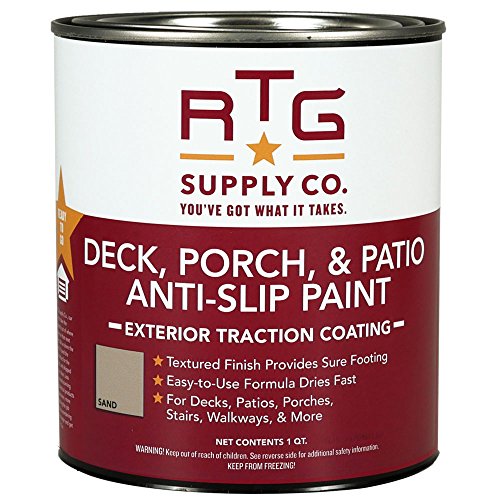
Selected for its slip-resistant, textured finish, this RTG product is ideal where traction is a priority, such as crowded decks or entryways. It fast-dries and provides a durable coat that resists weathering and heavy foot traffic. The formula is easier to apply with brushes or rollers, and it suits porches, stairs, ramps, and other exterior surfaces.
Who it’s best for: households with kids, pets, or frequently wet outdoor spaces. Why selected: the textured finish improves footing without becoming abrasive. Limitation: traction may reduce slightly over time in extreme conditions; reapplication may be needed to maintain grip.
Ames Safe-T-Deck Granulated Exterior Paint

Best for revitalizing old wooden decks and porches with a rugged, slip-resistant finish. Safe-T-Deck uses granulated acrylic technology to improve adhesion and fill minor splinters, helping extend deck life. It provides a durable, barefoot-friendly matte texture that resists wear and helps protect against the elements.
Who it’s best for: owners of older wooden and composite decks seeking a tougher, slip-resistant surface that hides minor imperfections. Why selected: adds both traction and aesthetic renewal. Limitation: this product is granulated—surface preparation and even application are essential for a uniform look.
Buying Guide
What should you consider when choosing a deck coating for composite surfaces? Start with the deck’s exposure, foot traffic, and maintenance goals. If color disguise and refresh are priorities, a toner or brown/gray stain may be best. For ongoing protection, a clear sealer with UV inhibitors helps prevent graying. Tackling safety? An anti-slip or textured finish provides traction. For stubborn stains, a dedicated remover can simplify prep before refinishing. Always follow surface preparation instructions and test a small area first to confirm color and texture results.
Key purchase considerations
- Surface compatibility: ensure the product is suitable for composite decks and any adjacent materials.
- Finish type: choose between color-refresh stains, clear sealers, or textured anti-slip coatings based on your goals.
- Maintenance: consider recoat intervals and whether the product supports easy reapplication.
- Protection scope: UV resistance, water repellency, and mildew resistance affect long-term performance.
- Application method: some coatings are easier with spray, roller, or brush; select what fits your DIY setup.
Practical questions
- Is a stain or a sealer better for a composite deck? If you want color and protection, a stain or toner is good; for clear protection, choose a sealer with UV blockers.
- How long does coverage typically last? Most coatings require reapplication ranges depending on climate and wear; follow product guidelines.
- Can I use anti-slip paint on a painted or sealed deck? Check compatibility; some coatings require specific surface conditions for adhesion.
- Do I need to remove old coatings? Heavily weathered or peeling finishes usually require cleaning or removal before refinishing.
- What about color matching? Test on a small, inconspicuous area to ensure the tone matches the rest of the deck.
- Are there safety considerations? Use appropriate ventilation, wear protective gear, and follow label directions for outdoor use.
Frequently asked questions
- Q: Can I paint directly over existing finishes on a composite deck? A: Preparation is essential; clean thoroughly and ensure compatibility before applying any new finish.
- Q: How soon can I walk on a newly coated deck? A: Allow recommended cure times; walking too soon can mar the finish.
- Q: Which product offers the best slip resistance? A: Anti-slip textures generally provide the most traction, especially in wet conditions.
- Q: Do these products come in multiple colors? A: Color options vary by product; tonal toners and grays are common, with some clear sealers available.
- Q: How can I maintain the deck after refinishing? A: Regular cleaning, prompt stain removal of spills, and periodic resealing help preserve appearance and durability.