If you’re searching for pine finger joint board options, you’ll want products that offer clean edges, consistent grain, and durable primed finishes. This guide highlights five top picks suited for trim, molding, and decorative installations, ranging from baseboard mouldings to flat trim. The best choices are ideal for DIYers, carpenters, and finish carpenters aiming for a seamless, ready-to-install look. Below is a quick comparison to help you decide which boards fit your project, followed by detailed product sections and a practical buying guide.
| Product | Best For | Key Benefit |
|---|---|---|
| WM711- Americraft Baseboard Moulding | Wall-to-floor transitions | Lowest-depth baseboard with primed finger-joint pine |
| WM134 – Americraft Flat Astragal Moulding | Door or cabinet edging | Even profile with high-grade finger-joint pine |
| Ekena WM163E Americraft Baseboard Moulding | Elegant wall transitions | Wider profile for a bold base look |
| Americraft S4S Flat Trim Moulding | Fine trim detailing | High-grade primed finger-joint pine |
| WM618 Americraft Ogee Baseboard Moulding | Classic moulding profile | Ogee edge for traditional interiors |
WM711- Americraft Baseboard Moulding

Product Type: Primed Finger-Joint Pine baseboard.
- Dimensions: 3-1/2 in. width x 0.38 in. depth x 96 in. length.
- Grade: FAS Primed Fingerjoint Pine—high-grade wood with a smooth prime finish.
- Best For: Finishing touches where a shallow baseboard is needed, such as modest rooms or tight stair landings.
Why selected: This moulding provides a clean, ready-to-paint surface with the durability of finger-joint pine, making it a practical choice for projects requiring a consistent, unobtrusive baseboard. It is best for buyers seeking a straightforward installation with a polished primer.
Caution: The depth is shallow, so it may not cover preexisting irregularities or large gaps as effectively as deeper profiles.
WM134 – Americraft Flat Astragal Moulding

Product Type: Primed finger-joint pine astragal, used as a decorative spacer between panels or doors.
- Dimensions: 1.38 in. width x 0.69 in. depth x 96 in. length.
- Grade: FAS Primed Fingerjoint Pine—high-grade wood with consistent thickness.
- Best For: Separating elements in cabinetry, door casing, or panel transitions where a flat, refined edge is desired.
Why selected: The narrower flat profile provides subtle delineation without overpowering adjacent surfaces, making it suitable for light architectural detailing.
Caution: Slightly deeper than typical scribe mouldings may require careful planning for flush alignment with adjacent surfaces.
Ekena WM163E – Americraft Baseboard Moulding
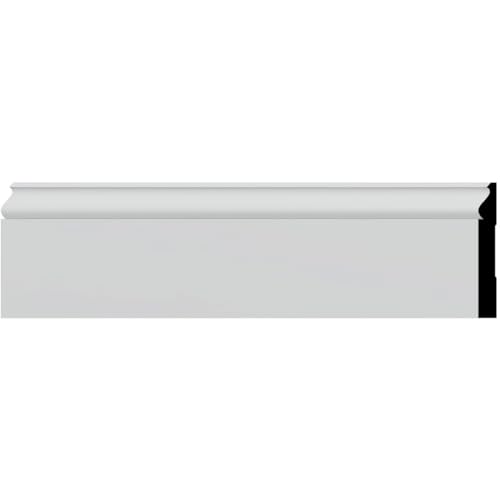
Product Type: Primed finger-joint pine baseboard with a wider profile.
- Dimensions: 5-1/4 in. width x 0.026 in. depth x 96 in. length.
- Grade: FAS Primed Fingerjoint Pine—premium wood with a refined finish.
- Best For: Larger wall areas or rooms where a bold base line helps anchor furniture layouts.
Why selected: The wider width offers a more pronounced look while keeping a clean, primed surface for painting. It’s better for establishing a strong interior frame without added complexity in installation.
Caution: Very wide boards may require more careful handling to prevent edge damage during transport or cutting.
Americraft S4S Flat Trim Moulding

Product Type: Primed finger-joint pine flat trim for edge finishing.
- Dimensions: 11-1/4 in. height x 3/4 in. projection x 96 in. length.
- Grade: FAS Grade Wood—highest-grade finger-joint pine.
- Best For: Finishing trims on doors, windows, and wall details where a clean, crisp edge is preferred.
Why selected: This trim provides a strong, uniform edge profile with a ready-to-finish surface, making it suitable for high-visibility trim work and precise alignment with other mouldings.
Caution: The tall height profile requires accurate measuring to match existing patterns in multi‑piece installations.
Ekena Millwork WM618 – Americraft Ogee Baseboard Moulding

Product Type: Primed finger-joint pine ogee baseboard for traditional interiors.
- Dimensions: 5-1/4 in. width x 0.026 in. depth x 96 in. length.
- Grade: FAS Primed Fingerjoint Pine—premium timber with a refined finish.
- Best For: Classic wall-to-floor transitions where an ornamental curve enhances architecture.
Why selected: The ogee profile adds a timeless flourish to spaces that benefit from architectural detail while preserving ease of painting with a primed surface.
Caution: The decorative curve requires careful cutting at corners to maintain consistent linework around rooms.
Shaka Minis Finger Skimboard – Finger Surfboard
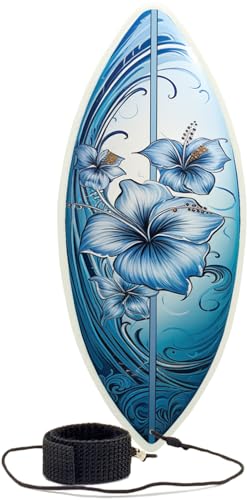
Product Type: Finger surfboard made from high-quality recyclable plastic; designed for mobile indoor fun.
- Best For: Easy entertainment and finger board practice, suitable for travel or quick sessions.
- Key Feature: Curved underside for better maneuverability on varied surfaces; grip pads included.
Why selected: This is a compact, versatile option for users who want a playful, ready-to-use fingertip board with a clean finish. It complements craft projects that involve miniature architectural detailing or display pieces.
Caution: Not a traditional carpentry board; limited use for structural or finishing purposes.
Generic LC Boards Fingerboard Quarter Pipe V2 Wood RAMP

Product Type: Wooden fingerboard ramp for practice and display use.
- Best For: Giftable item for skateboard enthusiasts or indoor fingerboard setups.
- Key Feature: Durable wooden construction; designed for frequent use with fingerboard tricks.
Why selected: This option offers a tangible, sturdy platform for creative fingerboard setups and can serve as a small display piece in an interior space or office. It is better for those who want a wooden build with a tactile profile rather than plastic alternatives.
Caution: May require assembly or stabilization depending on the setup area.
Buying Guide
What to consider when choosing pine finger joint boards:
- Profile and depth: Choose baseboard or trim profiles that suit your room height and transition needs. Deeper profiles create a stronger visual anchor, while shallow profiles stay discreet.
- Finish and grade: Primed finger-joint pine saves finishing time. FAS grade ensures consistent lumber quality, helping with cleaner edges and fewer defects.
- Width and length: Match board width to wall length and furniture layouts. Longer lengths reduce seams but require careful transport and handling.
- Intended use: For visible trim, select profiles with ornate edges or ogee shapes. For subtle borders, flat profiles or astragals work well.
- Installation considerations: Ensure proper cutting angles, consistent edge alignment, and secure fastening to avoid gaps after finishing.
- Compatibility with other mouldings: If completing a room with multiple profiles, pick pieces that harmonize in height, width, and style to avoid visual clutter.
Frequently Asked Questions
- What is finger-joint pine used for in moulding?
– It provides a stable, affordable base wood with a uniform surface ideal for priming and painting in interior trim work. - Are primed boards ready for painting?
– Yes. Primed surfaces are designed to accept paint readily and reduce prep time. - Which profile is best for a traditional look?
– Ogee baseboard mouldings and astragal trims are classic choices for traditional interiors. - Can these boards be cut to custom lengths?
– Yes. Standard practice is to cut to length at the job site; ensure clean edges and square cuts. - Is wider always better for baseboards?
– Not always. Wider profiles create a stronger visual line but may overwhelm small rooms; choose based on room proportion. - What is the difference between baseboard moulding and flat trim?
– Baseboard runs along the floor and covers the joint between wall and floor; flat trim is a narrower, edge-finishing moulding used for transitions and accents.