Yes, choosing the right primer is essential before applying elastomeric paint or liquid rubber coatings. The best primers improve adhesion to concrete, metal, wood, EPDM roofs, and other substrates, while preventing blistering and peeling. This guide highlights five top primers that work well with elastomeric coatings, including roof coatings and bonding primers. It’s ideal for homeowners, builders, and DIY enthusiasts who want durable, long-lasting surfaces. Below is a quick buying table to compare the five selected products.
| Product | Best For | Key Benefit | Notes |
|---|---|---|---|
| BEEST Multi-Purpose Primer | Concrete, wood, decks, RV roofs | Extreme adhesion and low odor | Water-based; safe for pets and humans; ready for BEEST coatings |
| 1 Gallon RV Roof Primer Sealant (Tenee) | EPDM & TPO roofs, outdoor substrates | High adhesion across varied surfaces | Eco-friendly, odorless; 250 sq ft coverage per gallon |
| Perfect Primer Encapsulant | Floors with old mastics or contaminants | Encapsulates and primes in one coat | Safe renovation solution; bonds to epoxy, tile, vinyl, etc. |
| Rust-Oleum Farm & Implement Enamel Primer | Industrial equipment and outdoor metal surfaces | Excellent coverage with rust protection | Dries in 2–4 hours; up to 520 sq ft per gallon |
| Rust-Oleum Painter’s Touch Latex Primer | Wood, metal, plaster, masonry | Low odor, fast-drying; versatile for indoor/outdoor | Covers up to 120 sq ft; dries in 30 minutes |
BEEST Multi-Purpose Primer – Gray
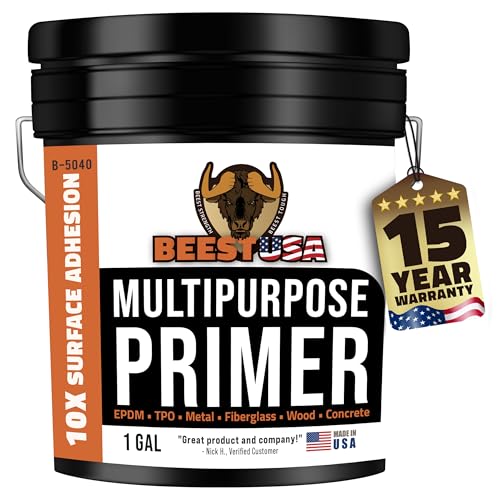
Best for: Surfaces ranging from concrete and wood to metal and EPDM roofs. Why selected: BEEST’s primer claims ultra-strong adhesive bonding to many substrates, which helps elastomeric coatings adhere more reliably and resist blistering or peeling. It’s marketed as environmentally friendly with ultra-low odor, making it suitable for indoor use in occupied spaces. Caution: The product is a bonding primer; for very porous surfaces, consider a second coat or additional PR prep to ensure uniform coverage, especially before applying a thick elastomeric layer.
1 Gallon RV Roof Primer Sealant – Tenee

Best for: Roof surfaces, especially EPDM and TPO, and other exterior substrates. Why selected: This primer is designed for RV roofs and offers high adhesion across a variety of materials, supporting long-lasting elastomeric roof coatings. Caution: It describes eco-friendly and odorless properties, but surface preparation (cleaning and drying) remains essential for optimal adhesion; uneven porosity may require multiple coats for uniform coverage.
Perfect Primer Encapsulant

Best for: Surfaces with old mastics or contamination and projects requiring minimal prep work. Why selected: This encapsulant primer seals problematic surfaces while preparing for new coatings such as epoxy or tile. It’s positioned as a safer renovation option, encapsulating while priming, which can simplify projects involving legacy materials. Caution: It may not replace a dedicated bonding primer on very porous substrates; verify compatibility with your elastomeric system before application.
Rust-Oleum Farm & Implement Enamel Primer

Best for: Industrial equipment and outdoor metal surfaces needing rust protection. Why selected: The primer emphasizes corrosion resistance and broad coverage, which is useful before applying elastomeric coatings on farm or heavy equipment. Caution: For indoor projects with limited ventilation, ensure proper airflow due to solvent or odor considerations; check the specific product data sheets for cleanliness of old finishes.
Rust-Oleum Painter’s Touch Latex Primer

Best for: A broad range of indoor and outdoor substrates, including wood, metal, plaster, and masonry. Why selected: This primer is versatile and fast-drying, making it a practical step before elastomeric coatings on diverse surfaces. Caution: This product is a latex-based primer; on very porous or non-porous surfaces, ensure even absorption by applying multiple thin coats rather than a single thick layer.
Buying Guide: How To Choose The Right Primer For Elastomeric Paint
What substrates will you coat? Elastomeric paints and liquid rubber coatings bond best to clean, dry surfaces. Concrete, wood, metal, EPDM roofs, and aged mastics all have unique prep needs. A bonding primer with high adhesion is typically preferred for new surfaces, while encapsulants help seal over problematic substrates.
Is odor or VOC exposure a concern? If you’re working indoors or in occupied spaces, choose low-odor or water-based primers. Many elastomeric products specify compatible primers; when in doubt, select eco-friendly, low-VOC options.
Do you need extra protection against moisture or rust? Primers labeled for moisture resistance or rust prevention can extend the life of elastomeric coatings on metal or outdoor surfaces. For roof applications, ensure the primer adheres well to EPDM or TPO if those are your substrates.
What is the coverage expectation? Primer efficiency affects overall material use. Some primers cover up to 250 sq ft per gallon, others exceed 500 sq ft. Calculate your project area and plan for extra coats if needed.
What about compatibility with your elastomeric system? Always confirm that the primer is compatible with the specific elastomeric or liquid rubber coating you plan to apply. A mismatch can reduce adhesion and shorten coating life.
Surface preparation matters. Even the best primer can fail if the surface is dirty, dusty, or oily. Thorough cleaning, drying, and a uniform surface texture are essential steps before priming and coating.
Frequently Asked Questions
- Can I use any primer for elastomeric coatings? Not all primers are created equal. Choose a primer that explicitly states compatibility with elastomeric or liquid rubber coatings to ensure adhesion and durability.
- Is a bonding primer better than an encapsulant primer for old flooring? Bonding primers improve adhesion on new or stable surfaces, while encapsulants seal over hazardous or old mastics. For legacy flooring with contaminants, encapsulants can simplify preparation.
- How many coats of primer should I apply? Typically one coat suffices, but very porous or highly textured substrates may require a second coat for uniform coverage.
- How long should primer dry before applying elastomeric coating? Drying times vary; follow the product label. Most water-based primers dry quickly, within 1–4 hours under normal conditions.
- Can I use indoor primers for outdoor elastomeric coatings? If the primer is labeled for outdoor use or for exterior substrates, it is suitable. For indoor projects, choose low-odor options.
- What is the best primer for EPDM or TPO roofs? Primers designed for rubber roofing substrates tend to offer superior adhesion on EPDM and TPO. Look for reviews that mention roof applications.