Direct answer: resilient channels and clips are designed to decouple drywall from framing to reduce sound transmission. They’re ideal for homeowners, renters, studio builders, and office spaces seeking better acoustics without major structural changes. This guide highlights five reputable options that balance cost, ease of installation, and performance. Each product targets specific needs—from full channel kits for extensive soundproofing to flexible clips for quick decoupling in small projects. Use the comparison table to identify the best fit for your walls or ceilings and your soundproofing goals.
Summary table of selected products
| Product | Best For | Why It Stands Out | Notes |
|---|---|---|---|
| Channel And Clips Combo – 20 Hat Channels | Whole-room soundproofing projects | Bundle with clips and screws, covers 210 sq ft | Good value for larger rooms |
| Resilient Metal Hat Channel – Pack of 20 | Multi-room drywall isolation | 102″ length, compatible with standard clips | Solid base channel option |
| 10 Pack Plaster-in LED Aluminum Channel | Integrated wall decor with lighting | Slim aluminum profile for embedded channels | Different primary use (lighting) but compatible with drywall work |
| Nuanchu 40 Pcs Hat Channel + 100 Clips | Apartment or studio soundproofing | High clip count to accelerate installation | Black finish, versatile |
| Mindoub 100-Pack Soundproofing Clips | DO-IT-YOURSELF decoupling projects | High clip quantity with versatile fit | Great for quick decoupling upgrades |
Channel And Clips Combo — 20 Hat Channels Kit

The Channel And Clips Combo offers a complete package: 20 resilient hat channels, 50 full rubber clips, 50 mounting screws, and an installation guide. This kit is best for larger rooms or rebuilds where you want a straightforward, all-in-one solution. The 50 clips cover about 210 square feet, providing an effective pathway to gain up to 20 STC points in sound reduction. It’s suitable for wood, steel, CMU, and concrete constructions, whether on walls or ceilings. Best for contractors or DIYers tackling full-wall decoupling projects. Caution: installation accuracy matters for performance gains, so follow the included guide closely.
Trademark Soundproofing Resilient Hat Channel Pack

This pack contains 20 resilient hat channels, each at 8.6 feet long (102 inches) and 2.5 inches wide. The 25-gauge channel has a hemmed leg for stable mounting on walls and ceilings. It works with standard resilient sound isolation clips, making it a solid core component for retrofit projects. Choose this option if you prefer a modular approach with dependable channel stock and compatibility with existing clip systems. Caution: ensure clip compatibility with your exact channel width for optimal decoupling.
Nuanchu 40 Pcs Hat Channel With 100 Clips

Nuanchu’s kit provides 40 hat channels and 100 clips designed for apartment and studio applications. Each 4.3-foot long channel is robust for double-layer drywall assemblies, and the included clips are designed to hold multiple layers while damping vibrations. Best for small-to-medium rooms and retrofit soundproofing where a higher clip-to-channel ratio improves decoupling. Limitation: the set is tailored to standard drywall thickness and may require field adjustments for unusual wall compositions.
Mindoub 100-Pack Soundproofing Clips
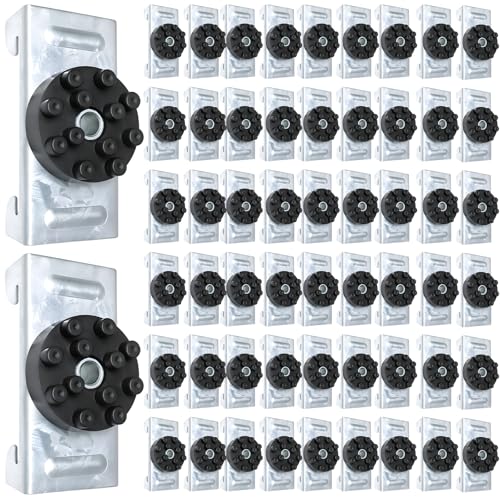
Mindoub offers a high-quantity pack of 100 clips designed for 7/8-inch hat channels. The clips are engineered for decoupling and noise reduction in walls and ceilings, suitable for home offices, studios, and apartments. Best for DIY enthusiasts who want a quick-start decoupling upgrade with ample clips for multiple walls. Caution: check channel compatibility—these clips are sized for standard 7/8-inch hat channels and may not fit oversized designs.
Sound Isolation Clips — 50 Pack

This 50-pack of sound isolation clips reduces noise from neighbors and is designed for drywall walls and ceilings. Easy to install; simply screw to studs or joists, then install the furring channel between drywall layers. It’s a versatile option for homes, studios, offices, and other spaces needing effective decoupling. Best for quick projects or when you want a straightforward, screw-to-structure approach. Caution: always confirm clip-to-channel compatibility before purchase.
GWNF 100-Pack Clips For 7/8″ Hat Channel

This set features 1.4-inch wide support bases and red EPDM resilient cores for decoupling. It’s designed for professional drywall projects using standard 7/8-inch hat channels, ideal for studios, media rooms, and offices. Best for projects requiring robust decoupling with strong load distribution. Limitation: ensure the red EPDM core suits the project’s humidity and temperature conditions, as extreme environments can affect performance over time.
Buying Guide: Key Considerations For Selecting Resilient Channels
- Channel vs. Clip: Decide whether you need full hat channels with clips or clips only. Full kits simplify planning but may be more costly for small jobs.
- Room Type: Studios and home offices benefit from higher STC/IIC improvements; bedrooms and living rooms may prioritize comfort and dialogue clarity.
- Material Compatibility: Confirm whether your framing is wood, steel, or masonry, and choose clips (EPDM, rubber) compatible with your channels.
- Channel Length and Width: Longer channels can reduce joints; wider bases distribute weight and reduce flex in larger assemblies.
- Installation Skill: Some kits include installation guides—useful for DIYers; others may require professional mounting for optimal alignment.
Frequently Asked Questions
What is the purpose of resilient channels in drywall?
They decouple drywall from framing to reduce sound transmission and improve sound isolation.
Can I install resilient channels on existing walls?
Yes, with proper planning and careful fastening, they can be retrofitted in many spaces.
Do channels improve bass or high-frequency sounds equally?
Channels generally improve overall tonal balance by reducing structure-borne noise; results vary by construction.
Are rubber clips necessary for effective decoupling?
Rubber or EPDM clips enhance vibration damping and can improve performance in decoupled assemblies.
Is this a DIY-friendly upgrade?
Many kits are designed for DIY installation with guides; complex joist layouts may require professional help.