Looking for an easy way to add a sandy, textured finish to walls, ceilings, or exterior surfaces? The best roll-on sand texture products combine a compatible resin or paint base with fine or coarse aggregate to create durable, visually appealing textures in fewer steps. This guide highlights five top options tailored for DIY renovators, contractors, and craft painters. Each product is evaluated for ease of use, texture quality, and suitability for common surfaces.
| Product | Best For | Texture Type | Application |
|---|---|---|---|
| Homax Roll On Paint Additive, Sand Texture, 6 oz (Pack of 2) | Small patches and touch-ups | Fine sand texture | One-step texture and paint |
| Homax Roll On Paint Additive, Sand Texture, 6 oz | Drywall repairs and quick retextures | Fine sand texture | One-step texture and paint |
| Zinsser 22233 Roll-A-Tex Medium Texture Additive, 1 Pound | Medium texture on walls | Medium texture | Pre-batched texture additive |
| Homax Roll On Paint Texture Additives Sand and Stone | Varied texture for feature walls | Sand and stone blend | One-step texture and paint |
| Durabak-18 Truck Bed Liner & Polyurethane Protective Coating (Sand) | Outdoor surfaces and high-traffic areas | Textured non-slip | Roll-on, durable coating |
Homax Roll On Paint Additive, Sand Texture, 6 oz (Pack of 2)

Best for quick DIY repairs where texture and color must be applied in a single step. The per-pack design combines texture particles with the paint, producing a subtle, uniform finish. Ideal for small patches, touch-ups, and drywall repairs where you want to minimize steps and tool cleanup.
Best for: DIYers seeking a fast solution for blemish concealment and minor wall texture repairs. Limitations: May require multiple coats for larger areas to achieve uniform coverage.
Homax Roll On Paint Additive, Sand Texture, 6 oz
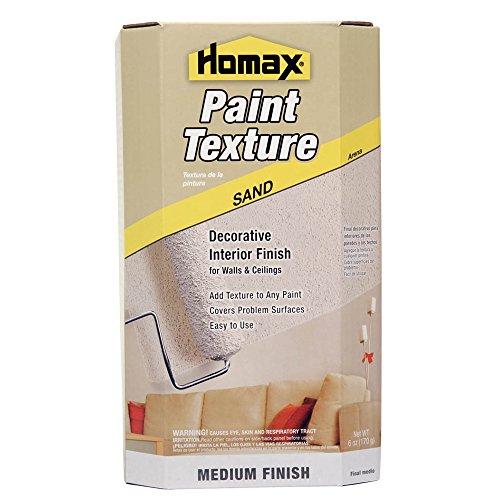
This single-can option continues the same one-step texture-and-paint approach, with a fine aggregate that helps hide small wall imperfections. Use on drywall, plaster, or cement surfaces where a light-to-medium texture is desired and ease of application matters most.
Best for: Professionals and DIYers aiming for rapid texture application without complicated mixing. Limitation: Best results when applied evenly; thicker spots may require extra care to avoid an uneven finish.
Zinsser 22233 Roll-A-Tex Medium Texture Additive, 1 Pound

Best for achieving a moderate texture with durable film integrity. This medium-texture additive is designed to blend with base coatings to create a balanced, professional finish on walls and ceilings. It’s a solid choice when a reliable texture with enhanced durability is required.
Best for: Contractors or serious DIYers that want a predictable, mid-range texture for long-lasting projects. Limitation: Requires proper mixing and adherence to application guidelines to avoid over-texturing.
Homax Roll On Paint Texture Additives Sand and Stone

Best for feature walls or surfaces where a more pronounced texture is desired without heavy manual texturing. The sand-and-stone blend provides a tactile, decorative finish while keeping application straightforward. Suitable for indoor walls and some exterior applications with the right base.
Best for: Users who want a noticeable texture with minimal steps. Caution: Texture density may vary by surface porosity; test a small area first to ensure even coverage.
Durabak-18 Truck Bed Liner & Polyurethane Protective Coating – Sand

This textured coating delivers a rugged, non-slip surface ideal for outdoor decks, ramps, walkways, and concrete where weather resistance and durability are priorities. Roll-on application simplifies installation, and the embedded texture provides a durable grip in wet or dry conditions.
Best for: Exterior projects and high-traffic areas requiring a long-lasting, skid-resistant finish. Limitation: It is a heavy-duty coating; proper surface prep and ventilation are essential for best results.
Buying Guide: Key Considerations for Roll-On Sand Texture Products
- Surface compatibility: Determine whether the product is designed for drywall, concrete, wood, metal, or a combination. For interior walls, water-based textures are typically preferred; for outdoor use, check UV resistance and weather durability.
- Texture level: Decide between fine, medium, or coarse textures. Fine textures conceal small imperfections; medium textures offer more visual interest; coarse textures create a pronounced look.
- One-step vs. multi-step: Some products combine texture and paint in one step, reducing labor. Others require a base coat or separate topcoat for protection and longevity.
- Durability and maintenance: Consider if the finish needs to withstand moisture, abrasion, or outdoor exposure. Durable polyurethane or epoxy-based textures generally last longer in challenging environments.
- Application method: Roll-on textures are convenient for large areas; spray or brush methods may be better for detailed or irregular surfaces. Look for products that specify your preferred tool (roller, brush, spray).
- Drying time and recoat window: Shorter drying times speed up projects but may limit working time. Ensure you have sufficient space and ventilation for curing.
- Color options: Some texture additives tint easily with standard paints; others come with pre-mixed colors. Test color and texture together on a sample area.
Frequently Asked Questions
- What is a roll-on sand texture additive best used for?
It is best for quickly adding texture to walls or surfaces while painting, reducing the number of steps and tools needed.
- Can these products be used outdoors?
Some textures are suitable for exterior use, but verify UV resistance and weather durability on the product page before applying to exterior surfaces.
- Do I need a primer before applying texture additives?
Many texture products work with existing paint or primers, but always follow the manufacturer’s guidance for surface preparation to ensure adhesion and finish quality.
- How can I test texture quality before fully applying it?
Apply a small amount to a hidden area or scrap surface to evaluate texture depth, color, and adhesion before scaling up the project.
- Is a roller the best tool for application?
Rollers are convenient for large areas, while brushes or trowels may be better for complex shapes or edges. Follow the product’s recommended tools for best results.