Sanding is a critical step in woodworking, shaping surfaces, and preparing them for staining or sealing. The right sander saves time, reduces fatigue, and delivers consistent finishes across panels, edges, and intricate details. This guide highlights five trusted sanders that balance power, versatility, and dust control, helping you pick the best tool for your projects—from delicate trimming to large surface leveling. Below you’ll find concise product snapshots, a quick comparison table, and a practical buying guide to navigate features, efficiency, and durability.
| Product | Brand | Best For | Notable Feature |
|---|---|---|---|
| Skil Corded Detail Sander | Skil | Detail work and corners | Micro-Filter Dust Box; 4-in-1 with 3 attachments |
| HYCHIKA 5-Inch Sander | HYCHIKA | General woodworking and finishing | 6 speeds; 12 sanding pads; 80% dust collection |
| DEWALT Orbital Sander Kit | DEWALT | Durable, all-around use | 3.0A motor; 12,000 OPM; vibration-reducing design |
| WEN Belt Sander | WEN | Heavy stock removal on flats | 7A motor; belt speed over 13 ft/s; detachable dust bag |
| DEKOPRO Orbital Sander | DEKOPRO | Value, versatile orbital sanding | 14,000 RPM; 6 speeds; 16 sanding discs; dust box |
Introduction to five well-rounded sanders shows a spectrum of use cases—from precise detail work to bulk material removal. Each option emphasizes dust management, user comfort, and compatibility with common sanding sheets. The following product sections offer deeper looks at performance, design, and practical considerations to guide your next purchase.
Skil Corded Detail Sander
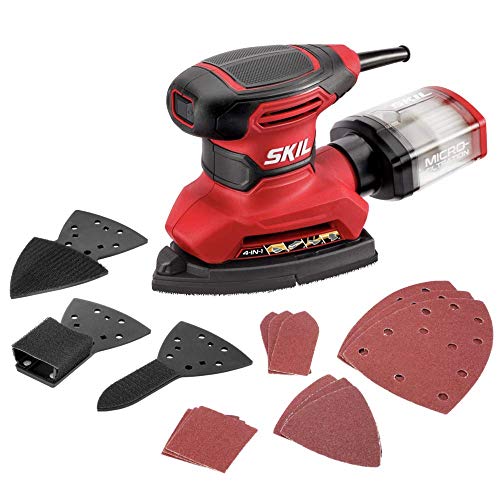
The Skil Corded Detail Sander delivers precise control for fine finishing tasks. Its 1.2-amp motor operates up to 13,500 OPM, making it capable of smoothing edges, corners, and intricate contours with minimal vibration. A standout feature is the 4-in-1 design, which includes three additional detail attachments for different contours and larger surface areas, all of which can be swapped quickly without tools. The integrated micro-filter dust box helps keep the work area cleaner, and the 1-1/4″ dust port allows easy vacuum attachment for enhanced dust control. This model balances compact form with practical versatility, ideal for trim work, cabinetry edges, and detailed woodworking projects.
HYCHIKA 5-Inch Random Orbital Sander

The HYCHIKA sander is a versatile choice for general woodworking and finishing tasks. It features six variable speeds, ranging from 6000 to 13000 RPM, enabling smooth transitions from rough stock removal to fine finishing. The hook-and-loop design supports quick changes of sanding pads, and the package includes twelve pads, spanning from coarse to fine grits. Efficient dust collection is built into the tool with eight vacuum holes at the base and a detachable dust bag, targeting an estimated 80% dust capture to keep your workspace cleaner. The ergonomic grip and balanced weight support comfortable use over larger surfaces and detailed work alike.
DEWALT Orbital Sander Kit
The DEWALT Orbital Sander Kit is built for durability and consistent performance. It houses a 3.0-amp motor to drive the pad at 12,000 OPM for efficient material removal and finishing work. A key ergonomic benefit is the shorter footprint, which helps users get closer to the workpiece in tight spots. The sander incorporates a separate counterweight design to reduce vibration, enhancing comfort during extended sessions. This model suits cabinetry, furniture refinishing, and workshop tasks where steady performance and reliability are essential.
WEN 6321 Belt Sander
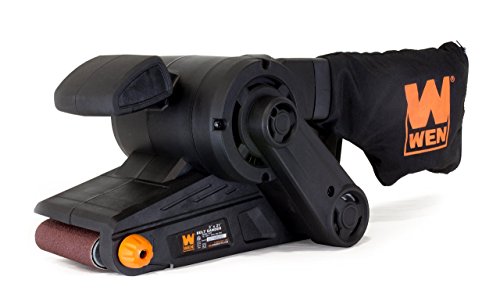
The WEN 6321 is a corded belt sander designed for aggressive stock removal on large flat surfaces. Its 7-amp motor powers a belt that travels at over 13 feet per second, enabling rapid material removal on rough boards or stubborn coatings. The compact design, weighing about six pounds, reduces user fatigue during extended sessions. A detachable dust bag minimizes cleanup after sanding, while the belt design favors leveling and flattening tasks. This sander is well-suited for preparing tabletops, doors, and other broad, flat components before finishing.
DEKOPRO Orbital Sander

The DEKOPRO orbital sander focuses on value and flexibility. It delivers up to 14,000 RPM from a 2.5-amp motor and offers six variable speeds to adapt from heavy stock removal to fine polishing. The package typically includes sixteen sanding discs and a dust box, supporting extended work without frequent bit changes. The hook-and-loop sanding pad system allows quick disc swaps, and the included dust box aids in keeping the workspace cleaner. This option is a practical choice for hobbyists and hobbyist-grade workshops seeking a reliable entry into orbital sanding without breaking the budget.
Buying Guide
Key purchase considerations help tailor a sander to your specific projects, whether you primarily work on furniture, cabinetry, or rough material prep. Understanding sander types, power, dust management, ergonomics, and accessory compatibility will streamline the selection process.
- Sander Type and Use Case
- Orbital sanders are versatile for general smoothing and finishing across flat surfaces, producing a relatively smooth finish with less swirl than belt sanders.
- Detail or pad sanders excel at edges, corners, and contours where precision matters, often with integrated dust control options.
- Belt sanders remove material quickly on large, flat surfaces but can leave swirl marks if not careful; they are best for stock reduction and flattening.
- Power and Speed
- Amperage (for belt and detail sanders) and RPM (for orbital and detail sanding) determine how aggressively a tool can work and how finely you can finish surfaces.
- Look for models with variable speeds to adapt to different materials and finishes.
- Dust Collection and Clean-Up
- Dust boxes and bags are common on detail sanders, while vacuum-ready ports or integrated filtration help maintain a cleaner workspace.
- Consider whether you prefer a dedicated vacuum attachment, a detachable bag, or a built-in micro-filtration system.
- Ergonomics and Weight
- Lightweight designs reduce fatigue during extended sessions, while soft grips and well-balanced bodies improve control on intricate work.
- Pad Size and Sandpaper Compatibility
- Orbital and detail sanders typically use 5-inch pads with hook-and-loop sanding discs; belt sanders use disposable belts of specific dimensions.
- Verify that your chosen sander includes or supports a broad range of grits and compatible attachments.
- Durability and Warranty
- Trusted brands often provide longer warranties and better customer support, which can be important for frequent users and professionals.
| Consideration | Practical Guidance |
|---|---|
| Sanding Type | Choose orbital for general work, detail for edges, belt for heavy stock removal. |
| Power and Speed | Higher amperage and variable speeds offer flexibility across materials and finishes. |
| Dust Management | Prefer models with efficient dust collection or vacuum compatibility to reduce cleanup and protect lungs. |
| Ergonomics | Balance weight with grip comfort to minimize fatigue during long sessions. |
| Accessory Ecosystem | Ensure compatibility with a wide range of sanding pads and attachments for future projects. |
In practice, your choice will hinge on the balance you seek between stock removal speed and surface finish quality. For hobbyists tackling furniture refinishing, a versatile orbital sander with good dust control and comfortable handling often suffices. For trim work and fine detail, a dedicated detail sander with a stable micro-filtration system can reduce dust exposure and increase precision. Professionals performing large-area prep may opt for a belt sander to accelerate material removal, then switch to a smaller orbital or detail sander for the final finish. Regardless of budget, prioritizing dust management, ergonomic design, and compatible accessories will enhance both efficiency and outcome.