Answering the common question, these sandpapers and sanding sponge kits are ideal for cabinet refinishing because they offer a range of grits, strong durability, and finish-control features. The best choice depends on your project stage: start with coarser grits for material removal, then move to finer grits for a silky finish. This guide highlights top options for DIYers and professionals working on kitchen cabinets, including wet/dry versatility, comfort, and grip. Below you’ll find a quick product snapshot followed by in-depth details to help you choose.
| Product | Best For | Grit Range | Key Benefit |
|---|---|---|---|
| Romeda 8-Pack Sanding Sponge | Multi-surface cabinet refinishing | 60–220 | Assorted grits in one pack for streamlined workflow |
| Pukamam 24 Pcs Sanding Sponge Set | Detailed shaping and finishing | 80–3000 | Wide grit range for rough to ultra-fine polishing |
| 3M Sandpaper, 220 Grit | General finishing on wood/painted surfaces | 220 | Reliable aluminum oxide for smooth, consistent results |
| Fandeli Multi-Purpose Sanding Paper | Versatile boards and furniture prep | 80–220 | Durable sheets with clog-resistant structure |
| S&F Stead & FAST Sanding Blocks | Detail work in tight cabinet corners | 60–220 | Premium foam blocks with varied grit set |
Romeda 8-Pack Sanding Sponge Set

The Romeda set includes eight sponge blocks offering four grit levels: 60, 80, 120, and 220. Two blocks per grit are color-coded for quick selection. Best for cabinet prep where you need both aggressive material removal and fine finishing in one kit. The high-density foam is designed to resist tearing and maintain shape during use. This kit is well-suited for DIY cabinet refinishing and metal glazing preparation thanks to its versatility.
Best for: Home DIYers tackling kitchen cabinet prep and finishing, or professionals who want a compact, all-in-one grit solution. Why selected: It combines grit variety, durability, and ease of use in a single affordable package. Caution: The color-coding and grits are straightforward, but arrange your workflow to avoid cross-contaminating grits between very different finishes.
Pukamam 24 Pcs Sanding Sponge Set

This assortment provides a broad grit spectrum from 80 to 3000, with two blocks per grit. It suits wood furniture refinishing, auto bodywork prep, and delicate surface work. The design emphasizes dampening and long-lasting use, enabling both wet and dry sanding. The kit is particularly useful for cabinets when you need to transition from removing old finish to achieving ultra-smooth surfaces for painting or staining.
Best for: Projects requiring a wide grit range and both wet/dry versatility. Choose this if you want a single kit that covers heavy removal through fine polishing. Caution: It contains many very fine grits (2000–3000) that may be overkill for initial material removal; use coarser grits first.
3M Sandpaper, 220 Grit

This 9×11 inch sheet sandpaper is a general-purpose option with aluminum oxide for a smooth finish on paint, wood, and metal. It’s a solid choice for cabinet refinishing when moving from stain removal to paint preparation. The larger sheet size supports both hand sanding and compatible sanding blocks. Best for: Cabinets in need of uniform surface prep before priming or painting. Caution: For tight profiles, you may prefer smaller sheets or a block in combination with finer grits.
Fandeli Multi-Purpose Sanding Paper
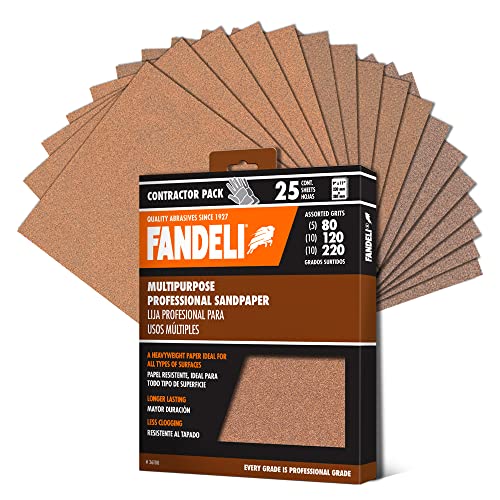
Fandeli offers 25 sheets across 80, 120, and 220 grit with a standard 9×11 inch size. The material is designed to resist clogging and works well for cabinet prep, metal, and wood finishing. It supports both hand and machine sanding. Best for: Settings where you want mid-range grits plus easy cutting to fit curved cabinet surfaces. Caution: The kit includes a limited higher-grit range, so plan additional finer grits if you’re aiming for a satin or gloss finish.
S&F Stead & FAST Sanding Blocks

These blocks pair premium foam with aluminum oxide abrasive layers in four grits: 60, 80, 120, and 220. They are designed for durable, grip-friendly hand sanding, especially in tight cabinet corners, edges, and recessed panels. Best for: Detail work on cabinet doors and frames where a steady hand and precise control matter. Caution: The included grits cover up to 220; for a final finish with stain or paint, add a finer-grit sheet or block as needed.
Buying Guide: Key Considerations For Cabinet Sanding
- Grit progression: Start coarse (60–80) for removing old finishes or shaping, then move through 120–180 for smoothing, and finish with 220–320 for paint prep or staining prep.
- Wet vs dry use: If you’re minimizing dust and extending sandpaper life, choose sets that support wet sanding. This is helpful on cabinet surfaces that are prone to dust or require a smoother finish.
- Tool compatibility: Match block size and shape to cabinet details. Larger sheets are good for flat panels; blocks with ergonomic grips help in corners and edges.
- Durability: Look for high-density foam or sturdy backing to resist tearing, especially on thicker finishes or hard woods.
- Versatility: Kits that include multiple grits reduce the need to buy separate products and support a sequential workflow from removal to finishing.
- Safety: Some kits include gloves or protective features; consider this for extended sanding sessions to protect hands and skin.
Frequently Asked Questions
- What grit should I start with for kitchen cabinet refinishing?
Start with 60–80 grit to remove finish and smooth rough areas, then move to 120–180 grit for leveling, and finish with 220–320 grit for paint prep or stain readiness. - Can I use sanding sponges for wet sanding on cabinets?
Yes, many sponges are designed for both wet and dry sanding, helping reduce dust and extend sponge life. - Is a sanding block necessary for cabinet work?
A sanding block provides even pressure, better control on flat surfaces, and reduces finger fatigue, especially on large panels. - Should I choose a kit with multiple grits or single-grit sheets?
A multi-grit kit is typically more versatile for cabinetry because it supports the full sanding progression in one purchase. - Are aluminum oxide papers better than other types for cabinets?
Aluminum oxide is durable and common for wood and metal prep, offering a smooth, consistent finish on cabinet surfaces. - What’s the best finish after sanding kitchen cabinets?
It depends on your project: paint requires a smooth, dust-free surface; clear stains benefit from very fine grits and dust removal before application.