Choosing the right saw blade for composite decking protects your project from heat buildup, rough edges, and premature wear. The five blades below are well-suited for Trex, cellular PVC, and other composites, offering long blade life, cool operation, and clean finishes. Each option combines carbide durability with specialized tooth geometry and heat-resistant coatings to deliver reliable performance on American decks and DIY projects.
| Product | Brand | Size / Teeth | Key Benefit |
|---|---|---|---|
| Diablo TrexBlade D1072CD | Diablo | 10″ / 72T | Melt-free, cool cuts with long blade life |
| Norske NCSBP226 | Norske | 7-1/4″ / 48T | Specialized for composite decking with long life |
| DEWALT DWA31740 | DEWALT | 7-1/4″ / 40T | Cool, metal-free cuts designed for decking |
| BOSCH DCB1072CD | BOSCH | 10″ / 72T | Durable carbide with triple chip grind for abrasive materials |
| BOSCH DCB1284CD | BOSCH | 12″ / 84T | Versatile for deck components and plastics on 12″ saws |
Diablo TrexBlade For Composites

The Diablo TrexBlade D1072CD is engineered to tackle composite decking and plastics with confidence. It uses TiCo Hi-Density Carbide to maximize cutting life and resistance to wear, making it well suited for Trex and similar decking materials. The Modified Triple Chip Grind (MTCG) keeps the blade cooler during cutting, promoting precise, melt-free results even in dense composites. A Perma-SHIELD Non-Stick coating further reduces drag, heat buildup, and gum buildup, extending blade life. Specifications include a 5/8″ arbor, a thin kerf for fast feed, and a maximum RPM rating suitable for standard 10″ saws.
- TiCo Hi-Density Carbide for extended life
- Modified Triple Chip Grind (MTCG) for cool cuts
- Perma-SHIELD Non-Stick coating reduces heat and gumming
- 10″ diameter, 72 teeth, 5/8″ arbor, .102″ kerf
Norske Trex Composite Decking Blade

The Norske NCSBP226 blade is designed specifically for composite decking and cellular PVC, with a 7-1/4″ diameter and 48 teeth. Its Modified Triple Chip Grind (MTCG) tooth profile produces clean, cool, melt-free cuts, helping to preserve decking boards and minimize scorching. Constructed from Japanese steel, it balances durability with affordability for frequent deck installation tasks. The 5/8″ arbor matches most standard circular saws, making it a practical option for homeowners replacing or upgrading blades on a DIY project.
- 7-1/4″ blade, 48T, 5/8″ arbor
- MTCG tooth profile for cool, clean cutting
- Japanese steel construction for durability
DEWALT Composite Decking Blade

DEWALT DWA31740 is a 7-1/4 inch blade with 40 teeth designed specifically for composite decking. It uses a modified triple chip grind tooth design to deliver precise, melt-free cuts, while the laser-cut plate promotes cool, metal-free operations. This combination is intended to improve finish quality on composite boards and reduce wear on the blade during long cuts, making it a reliable choice for frequent decking projects in American homes.
- 7-1/4″ blade with 40T
- Modified triple chip grind for clean cuts
- Laser-cut plate for cool, metal-free cuts
Bosch 10-Inch 72-Tooth Decking Blade
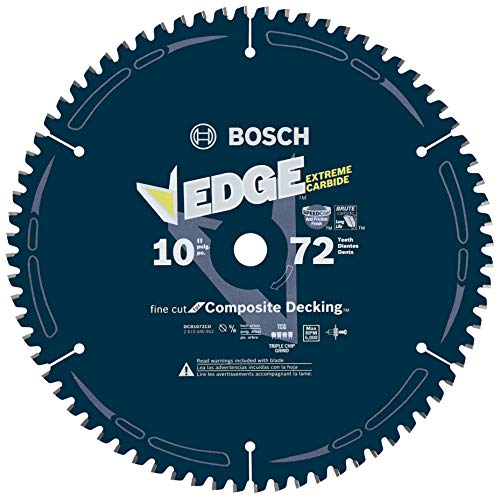
BOSCH DCB1072CD is built for tough composite decking tasks, featuring Brute Carbide with an upgraded C3/C4 micrograin formulation to resist impact damage and extend blade life. Its triple chip grind geometry is optimized for high-performance finishing in abrasive materials, while the extra-hard steel blade body maintains accuracy and resists bending. The 10″ diameter and 72 teeth balance aggressive material removal with a smooth finish, making it a versatile choice for many decking installations on American job sites.
- Brute Carbide with C3/C4 micrograin
- Triple chip grind for high-quality finishes
- Extra-hard steel body resists bending
Bosch 12-Inch 84-Tooth Decking Blade
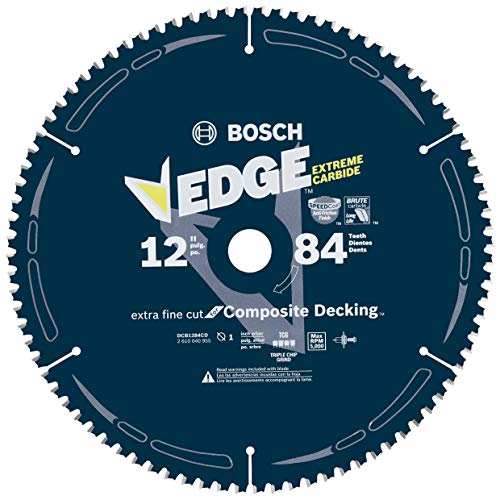
The Bosch DCB1284CD is a 12-inch, 84-tooth blade designed for composite decking and plastics. It is optimized for use with 12″ miter saws or slide miter saws, and its triple chip grind tooth geometry delivers maximum performance with high-quality finishes on abrasive materials. The blade’s versatile construction supports clean cuts through deck boards, trim, and related plastics, making it a robust option for large decking projects or professional use on bigger saws.
- 12″ blade for larger saws
- 84-tooth geometry for fine finishes
- Triple chip grind for efficient, quality cuts
Buying Guide
Key considerations
When selecting a blade for composite decking, consider tooth geometry, carbide quality, and coatings. Modified Triple Chip Grind (MTCG) teeth deliver clean, cool cuts that minimize heat buildup and melt-through on Trex and similar boards. TiCo Hi-Density Carbide options provide longer blade life in demanding decking materials, while coatings such as Perma-SHIELD reduce friction and gumming, extending tool life across many cuts.
Material compatibility and tooth count
Decking materials vary from cellular PVC to dense wood-plastic composites. Blades with higher tooth counts (for example, 72T or 84T) tend to produce smoother finishes on softer plastics, while lower tooth counts (40T) can cut faster through thicker boards. For long sections of decking with many joint cuts, a blade optimized for composites helps prevent chipping and scorching.
Size, arbor, and saw compatibility
Match blade diameter and arbor size to your saw. Common residential options include 7-1/4″ blades for circular saws and 10″ or 12″ blades for larger miter saws. The arbor size is typically 5/8″ but always verify your saw’s arbor before purchasing. A larger blade can deliver cleaner cuts on deck boards when paired with the appropriate saw, while kerf width impacts feed rate and material removal.
Coatings, heat management, and maintenance
Coatings like Perma-SHIELD reduce heat buildup and prevent gumming, which is crucial when cutting dense composite boards. Regular blade cleaning after cutting helps maintain performance and prolongs life. If you notice dull edges, slow cutting, or increased smoking, it may be time to replace the blade to maintain cut quality and safety on the job site.
Performance vs. price
Investing in a blade designed for composite decking often yields a lower total cost of ownership due to longer life and better finish quality. Compare carbide composition, coating quality, and tooth geometry when evaluating blades. While premium blades may cost more upfront, their durability and cooling benefits can be worthwhile for larger projects or frequent deck installations.
User perspective and project scope
For DIY projects around the home, blades with strong coatings and well-tested composite tooth profiles provide reliable results with less maintenance. For professional deck installations, prioritize blades offering the longest life under heavy use, optimized heat management, and consistency across many cuts. In each case, ensure the blade size and compatibility match your saw and deck material to achieve the best results.