Looking for a small mixing paddle for your drill that delivers fast, uniform blends in 1–5 gallon containers? This guide highlights compact, durable options built to handle paint, epoxy, resin, mud, and more. Each pick is optimized for tight spaces, steady flow, and easy cleanup. Ideal buyers: DIY homeowners working on small projects, hobbyists mixing paints or resins, and professionals needing efficient, space-saving tools for in-hand or bench-use tasks.
| Product | Best For | Key Benefit |
|---|---|---|
| Edward Tools Paint and Mud Mixer for Drill | Small- to mid-size projects | Long shaft with durable, rust-resistant steel |
| Edward Tools Paint Mixer Drill Attachment | Consistent color and texture | Even-Flow design for fast, uniform mixing |
| Youtex 2-Pack Paint Mixer for Drill | 1–5 gallon buckets | Large head for higher efficiency |
| LEVEL5 13″ Paint & Drywall Mud Mixer | Mud pans and small buckets | Patent-pending head reduces drag and splatter |
| Youtex Upgraded 4-Blade Paint Mixer | General coatings and resins | 4-blade helix head boosts efficiency |
Edward Tools Paint and Mud Mixer for Drill

Design: 15 3/4″ long shaft with a 2.5″ x 2.5″ head. Weight about 8.8 ounces. The 5/16″ hex shaft fits most standard drills. Zinc-plated steel offers rust resistance and easier cleaning than common alloys. Best for small batches of paint, mud, or lightweight coatings.
Who it’s for: Small shops, homeowners, or renters tackling quick paint or mud mixing tasks in 1–3 gallon volumes. The attachment excels when space is tight and a durable, straightforward mixer is needed.
Why chosen: The reinforced weld and non-slip hex head improve reliability during repeated mixing sessions. The simple design minimizes clogging and makes cleanup easy after project completion.
Caution: Not ideal for very thick or highly viscous resins in larger volumes, where a larger mixer head may be required.
Edward Tools Paint Mixer Drill Attachment
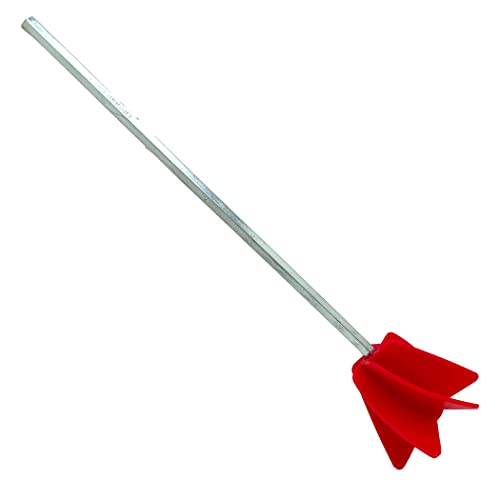
Design: Fast-mixing with the patented Even Flow design. Compatible with all 3/8″ hand drills and larger. Metal and plastic surfaces are easy to clean for reuse.
Who it’s for: DIYers who want rapid, predictable color and texture in 1–2 gallon batches. Great when you need repeated short sessions with minimal cleanup between uses.
Why chosen: The Even Flow design helps prevent clumps and streaks, delivering consistent results across multiple batches with minimal operator effort.
Caution: Best for liquid coatings and low- to medium-viscosity mixes; extremely thick materials may require a larger or more aggressive mixer.
Youtex 2-Pack Paint Mixer for Drill

Design: Upgraded 4-blade, 2.76″ diameter head designed for 1–5 gallon buckets. Rust-proof steel with zinc plating ensures lasting performance.
Who it’s for: Users who want higher efficiency with a larger head while still using standard drills. Suitable for paints, resins, epoxies, and slurries.
Why chosen: The larger head improves mixing speed by up to 50% in typical coatings, helping reduce fatigue during longer sessions.
Caution: Fast operation can cause splashing in shallow containers; ensure the bucket depth is adequate.
LEVEL5 13″ Paint & Drywall Mud Mixer

Design: 13″ shaft with a 2″ head. Pro-grade construction with a carbon steel shaft and corrosion-resistant plating. In-hand use for small containers and mud pans.
Who it’s for: Professionals and serious DIYers working in tight spaces where a longer, stiff shaft provides better leverage and reach for small jobs.
Why chosen: Patent-pending head reduces drag and wear on drills, with splatter-free operation achieved by pulling material toward the center.
Caution: Best for smaller containers; for large batches, a larger mixer may be more efficient.
Youtex Upgraded 4-Blade Paint Mixer

Design: 4-blade helix mixing head with a 2.76″ diameter. Rust-proof steel with zinc plating for durability. Compatible with standard drills.
Who it’s for: Beginners to experienced users mixing paints, resins, epoxy, mud, and slurry in 1–5 gallon buckets. Provides a balanced mix with fewer bubbles.
Why chosen: The design improves mixing consistency and reduces stirring fatigue, making it a versatile option for various coatings.
Caution: As with other larger paddles, ensure you use appropriate container depth to avoid splashes and spills.
Buying Guide: Key Considerations for Small Mixing Paddles
- Container size: Choose head diameter and shaft length that fit your typical bucket or mud pan sizes (1–5 gallons often ideal).
- Material and finish: Look for rust-resistant steel or reinforced plastics with easy-clean surfaces for repeated use.
- Drill compatibility: Verify shaft size (often 1/4″–5/16″ hex) and whether the design fits your drill model (3/8″ or larger is common).
- Mixing head design: Helix or multi-blade heads improve flow; larger heads speed up mixing but may be less effective in narrow containers.
- Viscosity tolerance: Some paddles excel with paints and epoxies; high-viscosity materials may call for stronger or larger heads.
- Durability and cleaning: Reinforced welds and corrosion-resistant coatings aid longevity; easy-clean surfaces save time between projects.
- Safety and control: Consider splash potential and ensure a sturdy grip on the drill to avoid kickback during high-speed mixing.
Usage Tips
- Work in short bursts to avoid overheating sensitive materials.
- Begin at a slow drill speed and gradually increase to avoid splashing.
- In small batches, tilt the container slightly to ensure the paddle moves material toward the center.
FAQ
- Q: What size bucket works best with these paddles? A: Most paddles are optimized for 1–5 gallon buckets or mud pans.
- Q: Can I use these paddles with all drill types? A: They fit most standard drills; check shaft hex size and compatibility with your model.
- Q: Are silicone paddles better than metal ones? A: Silicone paddles resist sticking and are easy to clean, but metal paddles typically offer higher stiffness for heavy-duty mixes.
- Q: Will these cause bubbles in epoxy? A: Proper mixing technique reduces bubbles; some designs help minimize air entrapment with center-pull flow.
- Q: How do I clean after use? A: Rinse with warm water and mild detergent; avoid harsh scrubbing that can wear coatings.
- Q: When should I replace a paddle? A: If the head shows deformation, rust, or compromised welds, replace to avoid failure during operation.