Choosing the right smart wall switch can simplify lighting control, improve security, and save energy. This guide highlights five top-performing models that balance easy installation, reliable connectivity, and broad smart-home compatibility. Whether you need a simple single-pole upgrade, a dimmer for ambiance, or a 2-gang solution for multiple rooms, these picks offer solid value and predictable performance. Read on for concise product overviews, a quick comparison table, and essential buying considerations to help you determine the best fit for your wiring, voice assistants, and daily routines.
| Product | Brand | Type | Notable Feature |
|---|---|---|---|
| Kasa HS200P3 3-Pack | Kasa Smart | Single Pole | 2.4 GHz Wi‑Fi, neutral required, works with Alexa/Google, UL Certified |
| Kasa HS200 | Kasa Smart | Single Pole | 2.4 GHz Wi‑Fi, neutral required, works with Google/Alexa |
| Kasa HS220 Dimmer | Kasa Smart | Single Pole Dimmer | Dimming control, 2.4 GHz Wi‑Fi, neutral required, works with Alexa/Google |
| Kasa HS200-2 | Kasa Smart | 2-Gang | Two switches in one device, neutral required, 2.4 GHz Wi‑Fi |
| Leviton D215S-1RW | Leviton | Single Pole, 2nd Gen | Matter support via firmware, requires neutral, works with Alexa/Google/Siri, 3‑way compatible |
Kasa HS200P3 3‑Pack Smart Light Switch

The Kasa HS200P3 3-pack provides three identical single-pole switches designed for seamless smart lighting upgrades. Each switch requires a neutral wire and a 2.4 GHz Wi‑Fi connection to operate. Setup is guided by the Kasa or Tapo app, which helps users complete wiring and configuration without guesswork. If you’re not comfortable with electrical wiring, consider professional assistance. Once installed, you can control each switch remotely from your smartphone, no hub needed, offering reliable access whether you’re at home, at work, or on vacation. Voice control is supported through Amazon Alexa and Google Assistant, enabling hands-free light management in entryways, living rooms, bedrooms, and more.
UL certification reinforces safety and quality, and the 3-pack format makes it practical to outfit multiple rooms with consistent hardware. The Kasa HS200P3 supports scheduling, routines, and scenes via the mobile app, helping automate lighting based on time of day or occupancy. As with most modern smart switches, there’s no need for a dedicated hub, simplifying integration with existing networks and reducing clutter in your electrical box.
Kasa HS200 Single Pole Switch

The Kasa HS200 is a reliable single-pole smart switch designed for quick upgrades where a neutral wire is available. The setup is guided by the Kasa or Tapo app, and a 2.4 GHz Wi‑Fi network is required for operation. After installation, you can control the light from anywhere using your smartphone, making it ideal for coordinating lighting across rooms or turning lights off remotely when you’re away. Voice control is supported via Amazon Alexa and Google Assistant, which adds hands-free convenience for entering rooms or adapting lighting to activity in real time.
With no hub required, the HS200 integrates cleanly into most smart-home ecosystems. Scheduling and Alexa routines enable automated lighting scenes, such as turning lights on at sunset or dimming to a cozy level for movie nights. The straightforward design of this model suits first-time smart-switch users who want a dependable, compact upgrade that preserves a traditional wall switch form factor.
Amazon Basics Smart Switch
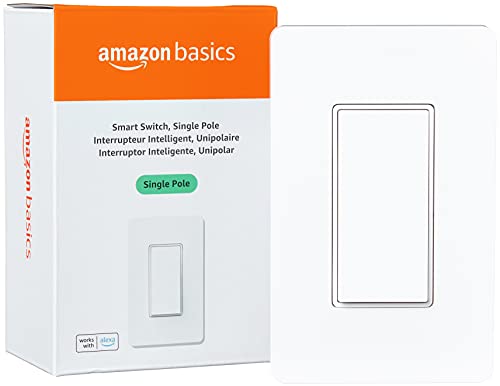
The Amazon Basics Smart Switch offers a straightforward upgrade path for Alexa users seeking a basic, hub-free smart switch. It operates on a 2.4 GHz Wi‑Fi network and integrates with Alexa for voice control and routines. The installation is supported by a guided process, and the unit is designed for single-pole configurations with neutral wire support. Scheduling enables simple automation—such as automatic on/off at set times—helping to streamline daily lighting routines. This model emphasizes ease of use and compatibility with Alexa-centric setups, making it a practical choice for beginners.
Leviton Decora Smart D215S-1RW

The Leviton D215S-1RW is a 2nd-generation smart switch that emphasizes compatibility with Matter and broader smart-home ecosystems. A neutral wire is required for operation, and the switch supports voice control with Amazon Alexa, Google Assistant, and Apple Siri (via HomeKit integration). It also offers flexible 3-way configurations, including wired or wireless options, making it suitable for stairs, hallways, or multi-switch setups. Leviton emphasizes future-proofing through Matter compatibility, which can be activated via firmware updates through the My Leviton app. This model balances advanced connectivity with familiar, reliable performance.
Buying Guide
Wiring And Neutral Requirements
Many smart switches require a neutral wire to complete the circuit and power the electronics inside the switch. If your electrical boxes lack a neutral, you may be limited to specific models that support so-called “no-neutral” installations, though these are less common in dimmers and multi-gang switches. Always verify the wiring in your wall box before purchasing, and consider consulting an electrician if you’re unsure. Neutral-requiring switches generally offer more reliable performance and longer lifespan for more demanding lighting setups.
Dimmer Versus Switch
Decide whether you want dimming capabilities, simply an on/off control, or both. Dimmer switches provide adjustable brightness levels, which can transform living spaces and reduce energy use. They often require neutral wiring and can be compatible with multiple voice assistants. If you don’t need brightness adjustment, a standard smart switch can be more economical and easier to install.
Hub Dependence And Ecosystem Compatibility
Most modern smart switches operate without a dedicated hub, connecting directly to your Wi‑Fi network. Others may offer better performance or advanced features when used with a compatible hub or ecosystem (such as Matter-enabled devices or SmartThings). Check compatibility with your preferred voice assistants—Amazon Alexa, Google Assistant, or Apple Siri—and whether the device supports future standards like Matter for broader interoperability.
One-Gang Versus Multi-Gang Solutions
If you’re updating more than one switch in the same box or in the same room, a 2‑gang or multi-gang model can reduce wiring complexity and maintain a cohesive appearance. Multi-gang designs can help minimize the number of wall boxes you need to replace and simplify wiring layouts. Assess the number of circuits you want to control and choose a configuration that minimizes clutter while meeting your automation goals.
Voice Control And Scheduling
Voice control enables hands-free operation and faster scene changes. Look for compatibility with your preferred assistants and features such as scheduling, geofencing, away modes, and routines. Scheduling helps create consistent lighting behavior—lights can switch on or off at set times, or adapt to sunset and sunrise automatically. Some models also support remote access for additional security and convenience when you’re away from home.
Safety, Certification, And Build Quality
Choose switches with established safety certifications (such as UL) and robust build quality. If the device is going to be used in high-traffic rooms or near moisture-prone areas, ensure it is rated for the intended environment. For advanced setups, consider devices that support future updates and interoperability standards, which can extend the life of your investment.
Practical Tips For A Smooth Upgrade
Turn off power at the breaker before removing or installing a new switch. Use the provided guide apps to assist with wiring diagrams and step-by-step setup. If you’re replacing a 2‑gang switch, verify that both circuits share a common neutral or have separate neutrals as required by the chosen model. Finally, test each switch after installation to confirm correct operation and integration with your smart-home routines.