Yes, you can refinish a fireplace surround with a durable, heat-resistant spray paint. This guide highlights options suited for metal and masonry surfaces encountered around fireplaces. The top picks are best for different buyers: DIY homeowners updating grills or stoves, automotive or metalwork hobbyists needing extreme heat protection, and builders sealing fireplaces or chimneys. Below, you’ll find a quick product snapshot and detailed sections to help you choose the right finish for the surrounding area, with cautions where applicable.
| Product | Best For | Key Benefit |
|---|---|---|
| Rust-Oleum High Heat Flat Bar-B-Que Black Enamel Spray Paint | Heavy-duty metal items | Heat protection up to 1000°F |
| Rust-Oleum Automotive High Heat Spray Paint, Flat Black | Automotive or extreme heat parts | Up to 2000°F; Stops Rust |
| NADAMOO High Heat Spray Paint for Metal | DIY metal projects | Up to 1200°F; Rust protection |
| 4 Pack High Temp Fireplace Sealant / Fire Caulk | Sealing gaps and joints | 2700°F fire-retardant sealant |
| Stove Bright Fireplace Satin Black Paint | Fireplace surfaces and stoves | Up to 1200°F; satin black finish |
Rust-Oleum High Heat Bar-B-Que Black Spray

Best for updating metal surfaces exposed to high heat, such as fireplace grates, radiators, or nearby metal surrounds. This oil-based enamel provides protection up to 1000°F and dries to the touch in about 30 minutes. It covers approximately 7–8 square feet. Choose this when the surrounding area includes metal components that regularly experience heat and need a durable, rust-resistant finish. Caution: verify compatibility with masonry if used on non-metal surfaces.
Rust-Oleum Automotive High Heat Flat Black

Best for automotive-like high-heat components or metal fireplace parts where maximum heat resistance is needed. This paint withstands up to 2000°F and includes a Stops Rust formula for corrosion protection. It dries to touch in 30 minutes and covers about 10 square feet. Choose this when the surrounding metal is subject to extreme heat and long-term exposure. Caution: ensure the spray is suitable for indoor use if ventilation is limited.
NADAMOO High Heat Spray Paint for Metal

Best for DIY metal repairs around the fireplace with easy application. This matte black coating resists up to 1200°F and delivers rust protection and durable film integrity. It’s a convenient aerosol spray requiring no brushes, ensuring a smooth, even finish. Choose this when you want a simple, clean look with reliable heat resistance. Caution: test in a small area first to confirm chip resistance on textured surfaces.
Threlaco 4 Pack High Temp Fireplace Sealant Fire Caulk
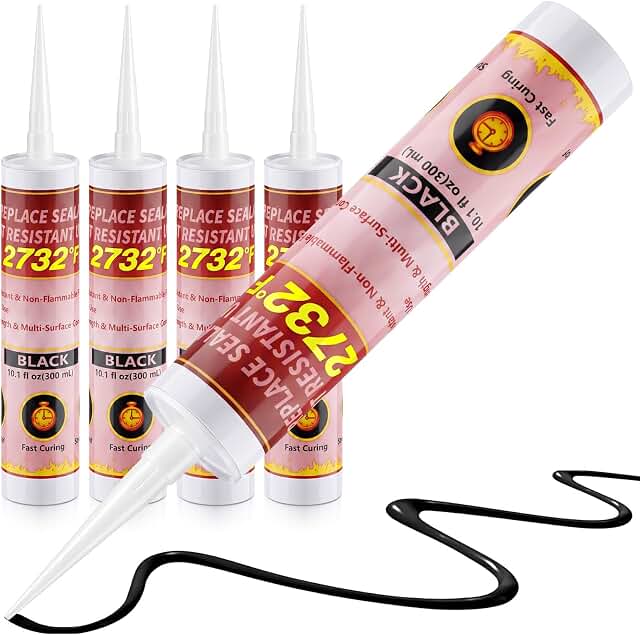
Best for sealing joints and gaps around the fireplace surround where heat transfer occurs. This inorganic formula withstands up to 2700°F and cures to a hard, rigid bond. It is not a flexible adhesive, so choose this for fixed installations rather than areas that require movement. Caution: not a general-purpose caulk; use where a rigid bond is appropriate.
Stove Bright Fireplace Satin Black Paint

Best for fireplace surfaces and stoves where a satin black finish is desired and temperatures reach up to 1200°F. This spray paint emphasizes quick drying and color retention under high heat. Choose this when you want a subtle, low-gloss look that remains durable in intense heat. Caution: surface prep is critical for best adhesion on masonry or non-metal substrates.
Buying Guide
What surfaces will you be painting? Metal components around a fireplace handle heat well with enamel sprays, while masonry or brick requires compatible primers or sealants. Is interior air quality a concern? Choose products labeled for interior use or ensure adequate ventilation. For extreme heat exposure, consider products rated well above 1200°F. Always test a small area first to confirm adhesion and finish. If gaps exist between materials, sealants designed for high temperatures can complement paints by protecting joints without compromising heat performance.
Key purchase considerations
- Maximum temperature rating: Match to the expected heat exposure of the area.
- Surface compatibility: Metal vs. masonry may need different products or primers.
- Finish type: Glossy vs. satin; consider how it fits with your fireplace aesthetic.
- Application method: Aerosol sprays for convenience; consider brushes only if required by surface texture.
- Sealant integration: Use high-temperature sealants to fill gaps around joints when needed.
Common buyer questions
- Q: Can I use regular spray paint on a fireplace surround? A: Regular paint won’t withstand high heat; use high-temperature enamel paints validated for the expected temperatures.
- Q: Do I need a primer for metal surfaces? A: Priming is often recommended to improve adhesion and corrosion resistance on bare metal.
- Q: Is it safe to use indoors? A: Ventilate well; choose products rated for interior use when painting indoor fireplace surrounds.
- Q: How long does curing take? A: Dry-to-touch times vary by product; allow full cure as per manufacturer guidelines before heating.
- Q: Can I spray over existing paint? A: If the existing coating is stable and clean, some high-temperature sprays can adhere well; otherwise, scuff and prep as needed.
- Q: Should I use a sealant in addition to paint? A: For joints and gaps near heat sources, a high-temperature sealant can provide additional protection.
FAQ
- How hot can these sprays get around a fireplace? – Most options handle between 1000°F and 2000°F depending on the product.
- Will these paints change the look of my surround? – Finishes range from flat to satin, so you can match the style you want.
- Are there risks with spraying near flames? – Work in a well-ventilated area and keep away from direct flames during application and curing.
- What surfaces are best for high-heat paints? – Metal around the fireplace, grates, or radiators typically perform best with high-heat enamels.
- Is a sealant necessary for fireboxes? – For gaps or joints, high-temp sealants provide additional heat resistance and bonding strength.
- Can I reuse leftover spray cans? – Store upright in a cool, dry place and follow manufacturer guidance for storage.