Terre Verte oil paints deliver muted greens with earthy warmth, ideal for underpaintings, landscapes, and layered glazes. This guide highlights five top options that balance pigment quality, history, and affordability. Best for students and hobby painters are Winsor & Newton Winton lines; better for professionals are Gamblin and Michael Harding. Choose this list to compare texture, opacity, and mixing behavior across classic earthy greens. The table below helps you compare basic specs at a glance.
| Product | Brand | Size | Notable Benefit |
|---|---|---|---|
| Terre Verte 37 ml | Gamblin | 37 ml | Bright, clean earthy green with smooth, buttery consistency |
| Terre Verte 37 ml | Winsor & Newton | 37 ml | Affordable, reliable permanent tone for glazing |
| Terre Verte 37 ml | Williamsburg | 37 ml | Handmade batches, strong lightfast options |
| Terre Verte 40 ml | Michael Harding | 40 ml | Vibrant color, buttery consistency; no fillers |
| Terre Verte 170 ml | PHOENIX | 170 ml | Large studio tube, high color saturation and permanence |
Gamblin Artist’s Oil Colors Terre Verte 37 ml
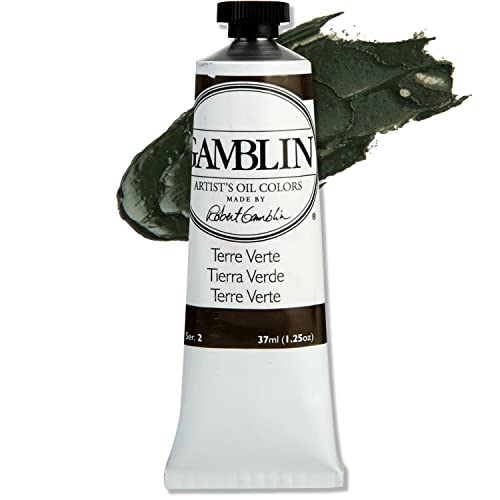
Product: Gamblin Artist’s Oil Colors Terre Verte, 37 ml. Best for artists seeking a buttery, creamy texture with reliable pigment integrity. This single-tube option suits painters building a detailed earthy palette or executing underpainting layers. The data notes a single 37 ml tube, making it a concise starter pick for studio practice. Caution: small tube size may require more frequent reordering for ongoing projects.
Winsor & Newton Winton Oil Color Terre Verte 37 ml

Product: Winsor & Newton Winton Oil Color, Terre Verte, 37 ml. Best for budget-conscious painters who still require dependable color performance. The description emphasizes affordability with consistent quality. Best for practice panels, study palettes, and glazing experiments. Limitation: color range emphasizes value over advanced pigment stability compared to higher-end lines.
Williamsburg Italian Terre Verte 37 ml

Product: Williamsburg Artist Oil Colors by GOLDEN, Italian Terre Verte, 37 ml. Best for artists seeking handmade quality with batch-to-batch consistency and reputed lightfastness. This option is well-suited for fine blending and nuanced tonal shifts in landscapes. Caution: some painters may prefer richer saturation; this line tends toward controlled, established tones.
Michael Harding Terre Verte 40 ml

Product: Michael Harding Artist Oil Colours, Terre Verte, 40 ml. Best for serious color lovers who value handmade oils and rich pigment load. This option highlights buttery coverage, vibrant color, and a commitment to traditional methods without fillers. Limitation: higher price point may be a consideration for beginners or casual painters.
PHOENIX Terre Verte Oil Paint 170 ml

Product: PHOENIX Terre Verte Oil Paint, Studio Oil Paint, 170 ml. Best for studio-scale work with high color saturation and strong permanence. This large tube supports extended sessions and larger underpaintings. Caution: heavier tube may affect handling if you’re filling small palettes daily.
Buying Guide: Terre Verte Oil Paints
- Texture and handling — If you want a smooth, creamy blend, consider brands noted for butter-like consistency (Gamblin, Michael Harding). For thin glazes, look for controlled flow and good leveling (Winsor & Newton Winton).
- Opacity and transparency — Terre Verte can range from semi-opaque to transparent. Determine whether you need the color to block underlayers or to glaze lightly.
- Lightfastness and permanence — Professional lines often emphasize lightfast pigments. If longevity matters, review pigment indexes and permanence ratings where available.
- Palette compatibility — Consistency with other greens and earth tones matters for seamless mixtures. A balanced set helps avoid muddy results.
- Tube size and budget — Start with 37 ml to sample, or choose larger tubes for landscapes and large studies. Budget-friendly options exist without sacrificing color integrity.
- Single-pigment versus multi-pigment — Single-pigment colors provide cleaner mixing and color truth, though some blends offer unique properties.
Frequently Asked Questions
- What is Terre Verte typically used for in painting? — It is commonly used as an underpainting color, for earth-toned greens, and for glazing to create natural foliage textures.
- Are more expensive Terre Verte paints worth it? — Higher-end lines often offer finer pigments, better lightfastness, and smoother handling, which can matter for professional work.
- Should I pick a single pigment Terre Verte or a mixed version? — Single-pigment versions provide cleaner color mixing; mixed formulations can offer unique blends but may behave differently across brands.
- How important is tube size for landscape painting? — Larger tubes reduce frequent reloading during long sessions; they’re practical for extensive underpainting and large canvases.
- Can Terre Verte be mixed with other greens? — Yes, it blends well with blues, yellows, and other earth tones to create realistic greens and tonal variety.
- What should I consider when building a Terre Verte palette? — Consider both underpainting needs and final glazes. Include whites, earth tones, and a few blues for versatile color control.