Find the right textured paint with sand to add depth, hide flaws, and create tactile finishes for walls, furniture, or crafts. This guide highlights five dependable options and explains who each product suits best. Whether you’re repairing drywall, refreshing a patio table, or pursuing decorative art, these picks balance ease of use, durability, and achievable texture. The top picks favor homeowners, hobbyists, and small-rinish projects seeking a ready-to-use texture finish or a simple additive to mix with paint.
| Product | ||
|---|---|---|
| Zinsser 22616 Roll-A-Tex Sand Texture Additive | ||
| Homax Roll On Paint Additive, Sand Texture | ||
| FolkArt Texture Medium, Sand | ||
| Rust-Oleum Stops Rust Multi-Color Textured Spray Paint, Caribbean Sand | ||
| Rust-Oleum Stops Rust Desert Bisque Spray Paint |
Zinsser Roll-A-Tex Sand Texture Additive

The Zinsser Roll-A-Tex Sand Texture Additive is designed to blend with paint to create a sand-like texture. It’s marketed as an easy-to-use kit that adds value through simple mixing and application. This option is best for DIYers who want adjustable texture without complex coatings. The product is manufactured in the United States, a point some buyers consider for sourcing and convenience. Use this additive to achieve a subtle to medium grain finish on walls, ceilings, or patch-up work where hiding flaws matters. A potential limitation is that texture results depend on your application technique and base paint.
Who it’s best for and why selected
Best for DIYers who want a straightforward texture additive with predictable mixing. Choose this if you prefer a clear, ready-to-mmix solution and prioritize domestic manufacturing.
Caution: Texture outcomes vary with thickness and application method; test a small area first to tune the finish.
Rust-Oleum 239121 Stops Rust Multi-Color Textured Spray Paint Caribbean Sand

This textured spray offers a ready-to-use color-and-texture solution. It’s designed to resist weather and corrosion, making it suitable for outdoor and indoor surfaces like wood, metal, concrete, and masonry. The oil-based formula promises solid coverage and rust prevention, with a dry-to-touch time around 15 minutes and coverage up to about 6 square feet per can. It’s a strong choice for projects where you want durable texture with less prep work. A limitation is that spray textures can be harder to control on large or irregular surfaces.
Who it’s best for and why selected
Best for exterior projects or high-traffic interior areas where a durable, textured finish is desired with minimal prepping. Choose this if you want fast results and weather resistance in a single can.
Caution: Sprays may yield uneven grains if sprayed too thickly; practice with a test panel before full application.
Rust-Oleum 223524 Stops Rust Caribbean Sand
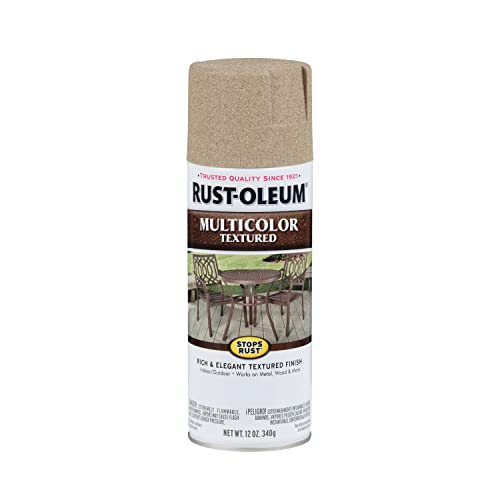
This Rust-Oleum product follows the brand’s Stops Rust line, emphasizing protection along with texture. It’s suitable for a range of surfaces and can be a quick solution for giving interior or exterior features a textured, colored look. The formulation favors consistent coverage and a relatively quick dry time (around 15 minutes). Best for projects requiring rust protection and a uniform textured appearance. A potential limitation is that multi-color finishes require alignment of color choices and spray technique to avoid blotchy results.
Who it’s best for and why selected
Best for small to medium projects where you want a durable texture with rust protection in one can. Choose this if you’re painting outdoor furniture or shutters that need weather resistance.
Caution: Avoid over-application in one pass; multiple light coats yield better texture control.
Rust-Oleum 239121-3PK Caribbean Sand Textured Spray Paint

This 3-pack provides multi-can coverage for larger projects or color consistency across multiple surfaces. It offers the same weather-resistant, textured finish described in the single-can variant, making it effective for uniform textures on outdoor furniture, railings, or decorative walls. Best for projects requiring repeated color and texture across a space while maintaining consistent look. Avoid over-application on tight corners where texture can form uneven patches.
Who it’s best for and why selected
Best for bulk projects or those needing consistent texture across multiple items. Choose this if you want a coordinated finish on a patio set, planters, or feature walls.
Caution: Store and handle with care, as multiple cans increase the risk of inconsistent texture if not shaken well before use.
FolkArt Texture Medium, Sand

The FolkArt Texture Medium is a modeling paste designed to mimic sand-like textures on a variety of surfaces. It’s ideal for interior crafts, wall art, and decorative projects where a pronounced grain and dimensional finish are desired. Great for hiding surface imperfections on wood, metal, terra cotta, or canvas. It can be applied with a palette knife for pronounced textures or brushed for subtler patterns. A caveat is that this product is more of a paste than a spray, which may affect cleanup and drying times versus spray alternatives.
Who it’s best for and why selected
Best for artists and crafters looking for tactile texture and dimensional designs. Choose this if you want to sculpt and build textured layers directly on your project surface.
Caution: It may require longer drying time and proper sealing for outdoor use, depending on the project.
Buying Guide: Key Considerations for Texture With Sand
- Texture type: Decide between powder additives (mixed with paint) and ready-to-spray or paste textures. Additives offer control over texture level; sprays provide speed and even coverage.
- Surface compatibility: Check whether the product is formulated for wood, metal, drywall, concrete, or canvas. Some textures adhere better to certain surfaces.
- Indoor vs outdoor use: Exterior surfaces demand weather resistance and durability; interior textures can prioritize appearance and ease of cleaning.
- Drying time and coverage: Consider how quickly you need a finish and how much area you must cover. Sprays typically dry faster; pastes may need longer curing.
- Finish and color: Some sprays are color-tinted, offering color and texture in one step. Additives usually require painting after texturing.
- Application technique: Additives require mixing; pastes require spatulas or knives. Sprays demand steady coats and distance from the surface for even texture.
- Durability and weather resistance: For outdoor applications, choose products designed to resist moisture, UV exposure, and temperature changes.
- Cleanup and disposal: Some textures are easier to clean up with soap and water, while others require mineral spirits or specific cleaners.
- Project scale: Large projects benefit from multi-pack offerings or bulk purchases to ensure color and texture consistency across items.
Frequently Asked Questions
- What is the easiest textured finish for beginners?
– Ready-to-use textured spray paints are often easiest for beginners due to minimal equipment and faster results. - Can I mix a texture additive with any paint?
– Most texture additives are designed for specific base paints. Always follow the manufacturer’s mixing instructions for best results. - Will texture paint hide wall imperfections?
– Yes, a properly applied texture can mask minor flaws, but severe damage may require preparatory repairs. - Is outdoor texture paint more durable than indoor options?
– Outdoor textures are typically formulated with weather resistance; indoor textures focus on appearance and ease of cleaning. - Do I need a primer before applying texture?
– It depends on the product and surface. Some textures bond well without primer, while others benefit from a base coat or bonding primer. - How should I test texture results?
– Apply a small test patch on a hidden area to evaluate texture, color, and adhesion before committing to the full project.