Choosing the right water-based primer for cabinets requires balancing adhesion, hide, odor, and ease of use. This guide highlights five top options suited for cabinet projects, whether you’re refinishing kitchen cabinetry or updating hidden storage. Each pick targets different needs—from strong tannin blocking to easy sanding. The buyer types most likely to benefit include DIY homeowners tackling a single cabinet refresh, contractors seeking quick-dry solutions, and woodworkers aiming for a glass-smooth final paint layer.
| Product | Best For | Key Benefit |
|---|---|---|
| Zinsser Smart Prime Water-Based Interior/Exterior Primer/Sealer | General cabinet refinishing | Stain-blocking on glossy surfaces |
| Stone Coat Cabinet and Furniture Primer | High-hiding, tannin-blocking projects | Strong adhesion to multiple substrates |
| Zinsser Bulls Eye 1-2-3 All Surface Spray Primer | Spray-on convenience for tough surfaces | Uniform seal, quick-dry |
| Aqua Coat Water-Based White Cabinet Wood Grain Filler Gel | Pre-finish prep on grain-filled woods | Deep penetration and pore sealing |
| Liquid Rubber Multipurpose Primer | Porous or challenging substrates | Improved adhesion and blister prevention |
Note: Each product listed is water-based and designed to improve adhesion and finish quality on cabinets, trim, or related wood surfaces. Availability and suitability can vary by project scope and substrate.
Zinsser Smart Prime Water-Based Primer
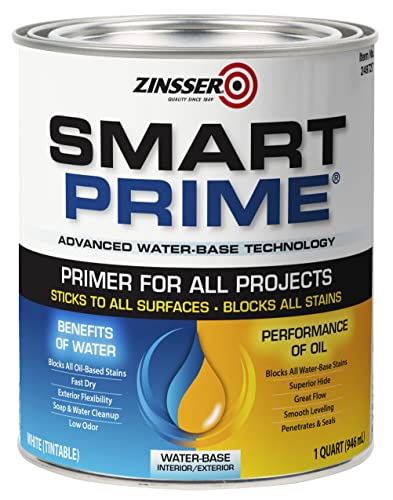
Features: Bonds to glossy surfaces without scuff sanding, Formulated with proprietary stain-blocking resins, Dried film is mold and mildew resistant.
Best for: Cabinets with smooth, glossy finishes or high-sheen surfaces where sanding is undesirable. It’s chosen for its stain-blocking and mold/mildew resistance properties.
Why selected: Provides a reliable base that adheres to difficult surfaces, reducing future blotching and ensuring a stable foundation for topcoats.
Caution: May require additional coats for very porous edges or deep grain. Sanding may be minimal but test on tricky areas first.
Stone Coat Cabinet And Furniture Primer

Features: High-hide acrylic formula blocks wood tannins and old paint colors, Strong adhesion to wood, laminate, melamine, and Thermofoil, Dries 1–3 hours per coat and self-levels.
Best for: Cabinets with tannin bleed or old paint underneath, or surfaces requiring robust adhesion across different substrates.
Why selected: Offers strong color blocking and fast drying with smooth finish potential, ideal for quick cabinet updates.
Caution: As a high-hide formula, it may require proper surface preparation to maximize leveling on very rough birch or oak grain.
Zinsser Bulls Eye 1-2-3 All Surface Spray Primer
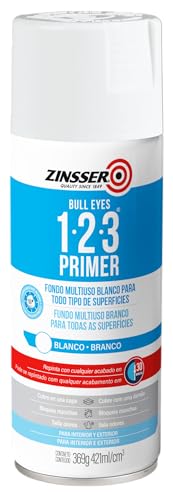
Features: Interior/exterior use on drywall, concrete, wood, masonry, metal and glossy surfaces, Water-based formula, Dries to the touch in 30 minutes.
Best for: Projects needing a fast, convenient spray primer for cabinets with multiple surface types.
Why selected: Quick-dry option that can streamline prep for complex cabinet installations or renovations.
Caution: Spraying requires ventilation and proper equipment; check can for spray pattern and recoat windows.
Liquid Rubber Multipurpose Primer

Features: Improves adhesion and prevents blistering on wood and concrete, Works on multiple surfaces including concrete, wood, HDPE, fast-drying and easy to apply.
Best for: Cabinets mounted on challenging substrates or prepped surfaces with potential blistering.
Why selected: Provides a strong bonding foundation where porosity or substrate variation is present.
Caution: May require additional coats on highly porous woods; follow tack-free timing for topcoat readiness.
Anirun White Paint Touch-Up

Features: Shake well due to water content, Paint & Primer in One, 2-in-1 brush-paint pen for quick touch-ups.
Best for: Final touch-ups and light cabinet edge refinishing when a primer undercoat isn’t required after priming.
Why selected: Useful for minor corrections after priming or painting cabinets.
Caution: Not a substitute for a dedicated primer on large areas or highly finished surfaces.
Buying Guide: Water-Based Cabinet Primers
What should you consider when choosing?
- Surface type: Determine if you’re priming wood, laminate, veneer, or metal hardware areas, and choose an all-surface primer if needed.
- Adhesion and tannin blocking: For woods like oak or pine, options with strong tannin blocking help prevent bleed-through.
- Drying time: If you’re on a tight schedule, look for fast-drying formulas that allow topcoats within hours.
- Odor and VOC: Water-based primers typically offer low odor and low VOC profiles, suitable for indoor use.
- Finish quality: Consider whether you prefer a self-leveling formula to reduce brush marks for a smoother topcoat.
How to prep and apply for best results?
- Clean and lightly sand glossy surfaces to improve adhesion.
- Test adhesion on a small area before full application.
- Apply in thin, even coats; avoid pooling.
- Allow complete curing between coats as recommended by the manufacturer.
Which primer type fits your project?
- Best overall for cabinets: A high-adhesion, stain-blocking water-based primer that dries quickly and sands well (e.g., Stone Coat or Bulls Eye 1-2-3).
- Best for glossy surfaces: A stain-blocking, gloss-tolerant primer (e.g., Zinsser Smart Prime).
- Best for quick touch-ups or small areas: Paint-and-primer-in-one products or touch-up pens (e.g., Anirun).
- Best on challenging substrates: A multipurpose primer that prevents blistering (e.g., Liquid Rubber).
FAQ
- Q: Do you need a separate primer for cabinets with heavy tannin bleed? A: Yes, choose a primer designed to block tannins to prevent bleed-through in the final paint.
- Q: Can I use a spray primer for cabinet doors? A: Spray primers like Bulls Eye 1-2-3 offer quick coverage on multiple surfaces but require proper ventilation and equipment.
- Q: How long should I wait between primer and paint? A: Follow manufacturer guidelines; many water-based primers are re-coatable within 1–4 hours.
- Q: Are water-based primers safe for kitchens? A: Yes, they typically have lower odor and VOC content, suitable for indoor use with adequate ventilation.
- Q: Is sanding after priming necessary? A: Light sanding improves smoothness, especially on glossy or very porous surfaces.
- Q: Can I use a primer to fill gaps or minor imperfections? A: Primers are not designed to fill large gaps; use wood filler for gaps before priming.