Yes, whiting powder is a key cleaner and finisher for stained and leaded glass projects. This guide highlights five reliable options, explaining who each product is best for and why they stand out. Use these picks to remove glazing oils, refine putty, and achieve a spotless, high-shine finish. Ideal buyers include stained glass artists, window restorers, and DIY glass hobbyists seeking clean-up efficiency and a professional look.
| Product | Best For | Why It Stands Out |
|---|---|---|
| Whiting Powder for Stained Glass | Glassco | Professional clean-up and lead came finishing | Cleans glazing oils and putty residue; enhances glaze compounds; polishes lead came |
| Whiting Powder 12oz | Fine, general-purpose stain-glass clean-up | Very fine calcium carbonate; suitable with glazing putty and whitewash |
| Whiting Powder 1 Quart | Bulk option for frequent use | Same uses as 12oz in a larger quantity; good for studios |
| Calcium CARBONATES (Whiting Powder/Ultra Fine Marble Dust) | Crafts and coatings with pigment needs | Fine marble powder; diverse applications from paint to plaster |
| Whiting Powder 1 Gallon | Heavy use and large projects | Large-volume option with calcium carbonate base for cleanup and whitewash |
Whiting Powder for Stained Glass | Glassco
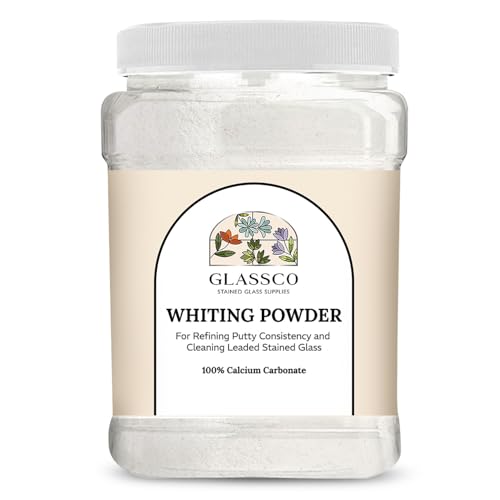
Best for professional clean-up and final glazing finishes. This Glassco powder quickly removes glazing oils, flux, and residue from stained glass and lead came, leaving a spotless surface with a high-shine finish. It also refines putty and enhances glazing compounds for finished projects. Best for artists who want a polished, consistent look after cementing and clean-up. A potential limitation is that it may require brushing and thorough rinsing to avoid residue on very delicate surfaces.
Who it’s best for: stained glass studios, glaziers, and hobbyists seeking a reliable wipe-down that supports a bright, professional finish. Why selected: it covers both cleaning and finishing needs in one product, improving overall presentation of lead came and glass surfaces.
Whiting Powder 12oz

Best for small studio use and frequent touch-ups. This fine calcium carbonate powder is commonly used with Sarco Window Glazing Putty, serves as a filler pigment to boost coverage, and helps remove fingerprints after glazing work. It is slightly abrasive, which aids cleaning without harsh scratching. Better for lighter-duty jobs or as a supplementary filler rather than heavy-duty cleanup.
Who it’s best for: individual artisans and small shops performing routine glazing and whitewashing. Why selected: compact size and versatile application support steady, precise work without excess material.
Whiting Powder 1 Quart

Best for studios with ongoing stained glass projects. This quart-sized package shares the same uses as smaller bags, including cleaning up putty and increasing coverage of paints and whitewash. It is a practical choice for those who routinely work with Sarco glazing putty and require a steady supply for multiple projects. Limitation: larger quantities may be difficult to store in small workspaces.
Who it’s best for: glass artists and small studios requiring a bulk option to streamline material planning. Why selected: a reliable, repeat-use option that keeps cleanup consistent across projects.
Calcium CARBONATES (Whiting Powder/Ultra Fine Marble Dust)

Best for crafts, coatings, and decorative finishes. This ultrafine marble dust contains a high calcium carbonate content, suitable for paints, whitewash, coatings, and as a mineral filler in various crafts. It supports finishes that require a very smooth texture or specific pigment blending. Caution: its multi-use nature means it might not be ideal as a direct cleanup powder for glazing; verify project needs first.
Whiting Powder 1 Gallon

Best for heavy-use environments and large projects. This gallon-size option provides the same calcium carbonate-based cleaning and whitewash capabilities at a reduced cost per unit for frequent glazing work. Advantage is extended supply for busy studios. Limitation: larger containers require proper storage and handling to prevent moisture exposure.
Buying Guide
What should you consider when choosing whiting powder for glazing?
- Project size: Choose larger quantities if you work on many windows or large installations; smaller amounts for casual or occasional projects.
- Clean-up vs. finishing: Some powders are optimized for cleaning oils and residue, others for finishing and polish—match to your workflow.
- Compatibility: Ensure the powder works with your glazing putty and glass types to avoid residue or streaking.
- Texture and abrasiveness: Finer powders are gentler on glass; slightly abrasive varieties help remove fingerprints and smudges more effectively.
- Storage and handling: Keep powders in dry, sealed containers to prevent clumping or moisture-related degradation.
- Cost efficiency: For frequent users, bulk options (quart or gallon) reduce per-unit cost while meeting output needs.
Frequently Asked Questions
- What is whiting powder primarily used for in stained glass?
It cleans glazing oils, flux, and residue, and can polish lead came and putty for a finished look. - Can whiting powder be used with all glazing putties?
It is commonly used with Sarco glazing putty and similar products to improve coverage and cleanup. - Is ultra-fine marble dust suitable for glass cleaning?
It is primarily a craft pigment and filler; it can be used in coatings and decorative applications, not as a direct cleaning powder for glazing. - What size of container should a beginner buy?
A small 12oz or 1 quart package is typically sufficient for entry-level projects and practice. - Are there safety considerations when using whiting powder?
Follow standard lab and art-room safety: avoid inhaling dust, use protective gear as needed, and store away from moisture. - How does whiting powder affect the appearance of lead came?
When used properly, it can enhance the depth of the lead came with a deeper, cleaner finish and reduce streaks.