In a modern smart home, Z-Wave motion sensors are a core component for automations, security, and energy efficiency. By selecting devices that balance reliability, range, and ease of use, homeowners can reduce false alarms and create smarter lighting, climate, and security routines. This guide spotlights five well-regarded Z-Wave motion sensors, highlighting their key capabilities, ideal use cases, and what to consider before buying. Each option is compatible with popular hubs and supports different installation preferences, from battery-powered to plug-in options.
Below is a quick summary table of the five choices to compare core specs at a glance.
| Product | Brand | Key Strength | Notes |
|---|---|---|---|
| Zooz 800LR Z-Wave Motion Sensor | Zooz | Long-range Z-Wave 800LR with adjustable sensitivity | Batteries or micro USB power; extender when powered |
| Ecolink Z-Wave PIR Motion Detector | Ecolink | Wide compatibility with major hubs; pet immune | 55 lb pet immunity; compatibility varies by hub |
| Enbrighten Z-Wave Smart Motion Sensor | Enbrighten | Flexible motion modes and light sensing | Occupancy; vacancy; manual modes; light sensor |
| HomeSeer MS100 G8 Motion Sensor | HomeSeer | 800 Series Long Range with advanced automation | Battery or micro USB power; strong range |
| Ring Alarm Motion Detector | Ring | Simple installation with Ring ecosystem | Base station required; alerts via subscription |
Zooz 800LR Z-Wave Motion Sensor

The Zooz 800LR motion sensor is designed for reliability in larger or complex networks. It reports motion to a Z-Wave hub, supporting light automation and security monitoring. A Z-Wave hub is required for operation, and certain platforms are not supported, so it’s important to confirm compatibility with your hub before purchase. A standout feature is adjustable motion sensitivity and retrigger time, which helps tailor responses to activity levels in different rooms.
Two power options increase flexibility. It can run on a single battery for up to a year, depending on traffic and settings, or on a micro USB cable (not included) for constant power. When powered via USB, the sensor can act as a signal extender, strengthening the mesh network across larger homes. The built-in range test tool simplifies network troubleshooting, a practical asset for maintaining robust coverage.
Overall, this Zooz model suits users who want a sturdy, configurable sensor with long-range capabilities and the option to extend their Z-Wave network. It pairs well with Hubitat, Home Assistant, and similar hubs, though some popular ecosystems like Wink, ADT, Vivint, or Alarm.com are not supported.
Ecolink Z-Wave PIR Motion Detector
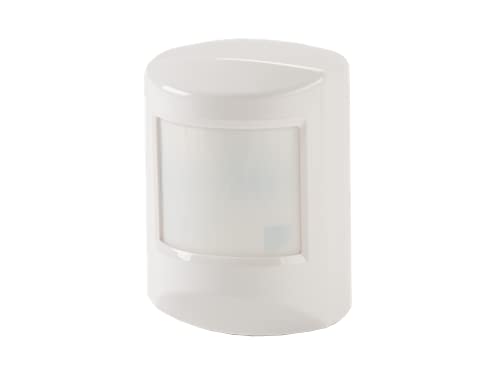
The Ecolink Z-Wave PIR Motion Detector emphasizes broad hub compatibility and flexible automation potential. It’s designed for security and home automation, capable of triggering events when motion is detected. The device is promoted for compatibility with major Z-Wave hubs, including Samsung SmartThings, Vera, Vera Plus, Vera Edge, Vera Lite, Homeseer, hubitat, and ezlo secure. While it may work with various Z-Wave hubs, manufacturers can’t always guarantee compatibility with every setup, so testing with your specific hub is advised.
False alarms can be reduced by leveraging its pet-immune design, which includes considerations for household pets. While the detector is positioned primarily for entryways and rooms where motion signals back to the hub, it’s valuable for security zones, lighting automation, ambiance control, and energy management. Always verify your hub’s integration steps to ensure reliable operation.
Enbrighten Z-Wave Smart Motion Sensor
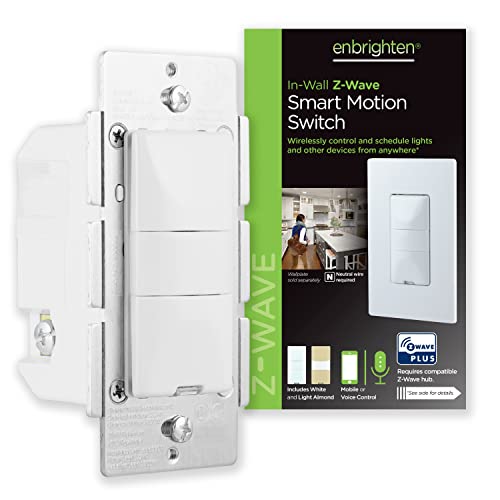
The Enbrighten Z-Wave Smart Motion Sensor offers flexible motion settings to fit different rooms and activities. Users can choose among three motion-detection options—occupancy, vacancy, and manual—to control how lights and other devices respond to activity. A light-sensing option adds another layer of automation, allowing lights to activate based on motion and ambient light levels. The sensor supports five timeout durations (from 5 seconds to 30 minutes) and three sensitivity levels, enabling tailored performance for busy family spaces or quiet rooms.
Designed to work with a Z-Wave hub, this device is compatible with popular ecosystems like SmartThings, Wink, and Alexa when paired with the appropriate hub. The combination of occupancy modes and light sensing makes it a strong pick for automating lighting while reducing energy waste, especially in hallways, stairs, or entryways where activity patterns vary throughout the day.
HomeSeer MS100 G8 Motion Sensor
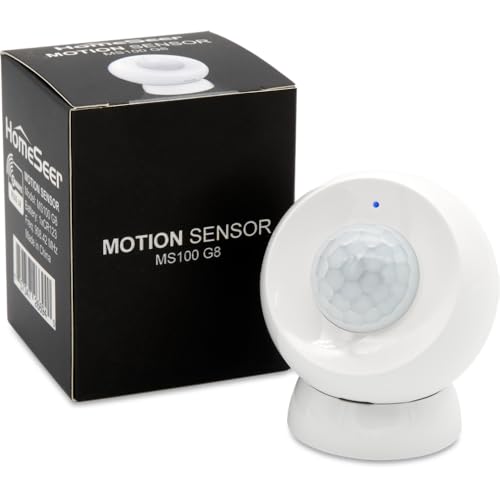
The HomeSeer MS100 G8 Motion Sensor leverages the Z-Wave 800 series for extended range and robust wireless performance. It provides motion detection and, importantly, inactivity tracking—keeping a log of when no motion is detected for defined periods. This enables advanced automations, such as turning off lights or adjusting climate settings when a room is unoccupied. Instant alerts push activity notices to the hub, ensuring timely awareness of changes in the environment.
Power flexibility is a key feature: it can run on a battery, or be powered by a micro USB adapter for continuous operation. The 800LR capability improves reach across larger homes, garages, basements, or outdoor-adjacent spaces where signal quality matters. Compatible with HomeSeer, Home Assistant, and other Z-Wave hubs, it’s well suited for users prioritizing long-range reliability and proactive automations.
Ring Alarm Motion Detector

The Ring Alarm Motion Detector is designed for straightforward setup within the Ring ecosystem. It delivers 90-degree coverage with up to 25 feet of detection range, making it suitable for entryways, hallways, and larger rooms. The device emphasizes easy installation and seamless integration with Ring’s base station and dashboard. It supports adjustable detection sensitivity to reduce false alarms from pets or varying activity levels, and it can trigger linked Ring cameras and alarms from the same app. A subscription is typically required to receive mobile alerts and remote monitoring features.
While Ring devices integrate tightly with Ring’s security platform, users should confirm compatibility with their existing hubs if a mixed-system setup is desired. This motion detector is ideal for homeowners already invested in the Ring ecosystem who value quick installation and a cohesive user experience for security alerts and automation routines.
Buying Guide
- Protocol and hub compatibility: Most models shown use Z-Wave, with some supporting Z-Wave 800 series LR for longer range. Verify your hub’s compatibility and whether you need a controller or can rely on a hub with built-in Z-Wave support. Some devices advertise broad compatibility but may not be guaranteed with every hub.
- Range and placement: If you have a large home or multi-story layout, prioritize LR (Long Range) options. Place sensors away from metallic obstacles and near the hub to maintain robust coverage. Consider adding a couple of sensors in key zones (entryways, stairs, and living areas) to improve automation reliability.
- Power options: Battery-powered sensors reduce wiring and can be installed anywhere, but expect periodic battery changes. USB-powered or plug-in variants offer continuous operation and can extend network reliability but may require easy access to a power source.
- False alarms and sensitivity: Look for adjustable motion sensitivity and retrigger settings. Pets, furniture movement, and ambient vibrations can trigger false alerts; sensors with customizable sensitivity help tailor responses to your household.
- Modes and automation capabilities: Occupancy versus vacancy modes affect how devices respond to motion. Some sensors also include a manual mode or light-sensing features that integrate with smart lighting for energy savings and convenience.
- Interoperability with lighting and security: If you want automatic lighting or thermostat adjustments, choose sensors with robust automation rules and reliable hub support. Some devices offer built-in light sensors or occupancy-based control for smarter energy management.
- Security and privacy: Local processing and offline control are important for privacy-minded users. If you rely on cloud alerts, ensure you understand whether notifications require a subscription or cloud connectivity.
- Installation and mounting options: Look for adjustable mounting hardware and design flexibility for placement in corners, doorways, or stairs. Some models include vibration alerts or mounting accessories to simplify setup.
- Future-proofing: With Matter support and hub ecosystems evolving, consider devices that offer firmware updates and compatibility with newer standards to maximize long-term value.